
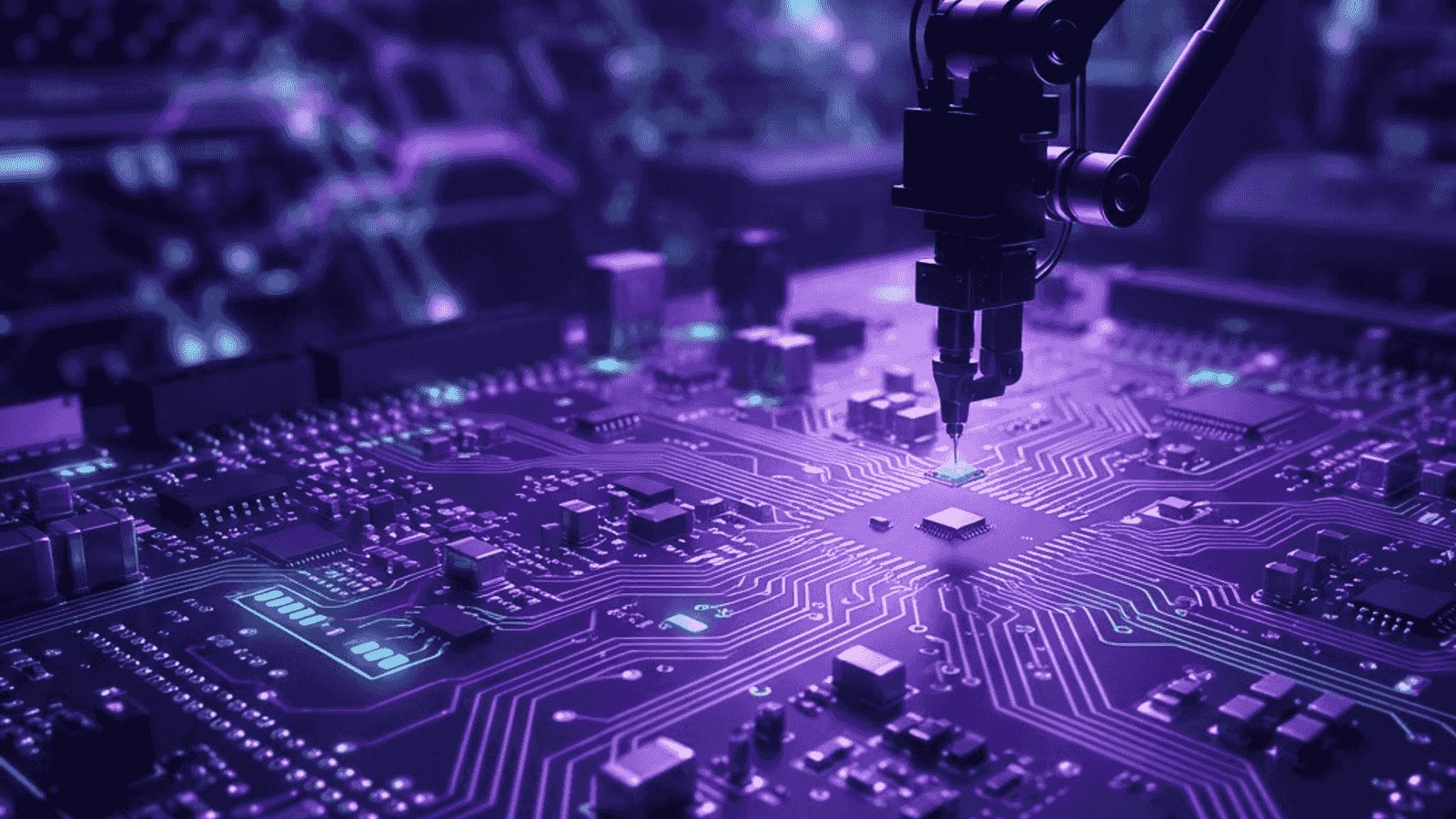
Electronics Manufacturing in a Post-Consumer Era
Consumer electronics assembly left the United States decades ago, but electronics manufacturing did not disappear from cities like Newark. It changed character. What thrives now is work where engineering support, intellectual property protection, regulatory documentation, and rapid iteration matter more than the lowest possible unit cost. Circuit board assembly for medical devices, industrial control panels, aerospace connectors, test equipment, and low-volume high-complexity products all fit that description.
Newark offers concrete advantages for this work. The New Jersey Institute of Technology and Rutgers supply engineering talent. The region retains a deep bench of technicians trained through decades of pharmaceutical, telecommunications, and defense manufacturing. Access to major airports and the port simplifies component importing and finished goods shipping. And a large base of nearby industrial customers means short logistics chains between manufacturer and end user.
The Top 10 Electronics Manufacturers Serving Newark
1. Contract Electronics Manufacturers Specializing in PCB Assembly
The core of the regional sector consists of contract manufacturers performing surface mount and through-hole circuit board assembly. These shops handle procurement, stencil printing, placement, reflow, inspection, and testing, typically serving customers who design products but do not want to own production equipment.
2. Amphenol
A major producer of connectors, cable assemblies, and interconnect systems, Amphenol serves aerospace, industrial, medical, and communications markets. Interconnect components are unglamorous but represent frequent points of failure, so precision manufacturing carries real value.
3. Curtiss-Wright
With a long New Jersey engineering heritage, Curtiss-Wright produces electronic and electromechanical systems for defense, aerospace, and industrial applications. Its work demands rigorous qualification testing and documentation far beyond commercial standards.
4. Honeywell Industrial Automation
Honeywell's automation and control businesses supply sensors, controllers, and process instrumentation used throughout regional manufacturing and utility operations. Products of this type combine electronics, firmware, and rugged packaging for harsh environments.
5. Thermo Fisher Scientific Instrument Operations
Laboratory and analytical instruments are electronics-intensive products, and the pharmaceutical and biotechnology concentration in New Jersey supports substantial instrument manufacturing and service activity. Precision, calibration, and validation dominate the engineering effort.
6. Kearfott and Precision Motion Electronics
Precision motion, guidance, and inertial systems represent a specialized regional niche with deep historical roots in northern New Jersey. These products require extraordinary mechanical tolerances integrated with sophisticated electronics.
7. Industrial Control Panel Builders
Panel shops assemble the enclosures containing programmable logic controllers, motor starters, drives, and wiring that run factories, water treatment plants, and building systems. Newark's industrial base and infrastructure projects sustain steady demand for custom panels built to electrical code.
8. Cable and Wire Harness Assemblers
Custom wire harness manufacturing serves transportation, machinery, and equipment builders. Harness work is labor-intensive and benefits from being near the customer, since design changes and fit issues are resolved far faster in person.
9. LED Lighting and Power Electronics Manufacturers
Lighting retrofits and electrification have created demand for LED fixtures, drivers, and power conversion equipment. Manufacturers in this space combine electronics with thermal management and optical design, and they benefit directly from regional efficiency incentive programs.
10. Electronics Repair, Refurbishment, and Recycling Operations
Newark hosts businesses that repair industrial electronics, refurbish equipment, and recycle end-of-life devices. Repair capability is economically important for factories running legacy machinery where original equipment replacements are no longer produced.
How Electronics Manufacturing Actually Works
Production begins with design for manufacturability review, where engineers examine component availability, board layout, testability, and assembly constraints. Catching problems here is dramatically cheaper than discovering them after tooling.
Procurement follows and has become the hardest part of the job. Semiconductor lead times fluctuate unpredictably, and manufacturers maintain approved alternate component lists to avoid line stoppages. Counterfeit component avoidance requires buying through authorized distribution and inspecting incoming parts.
Assembly proceeds through solder paste application, automated component placement, reflow soldering, optional through-hole and hand assembly, cleaning, and conformal coating where environmental protection is needed. Inspection uses automated optical systems and, for hidden joints under ball grid arrays, X-ray examination.
Testing closes the loop. In-circuit testing verifies individual connections, functional testing confirms the product behaves correctly, and burn-in stresses units to reveal early failures. For medical and aerospace products, every step generates traceable records.
What to Evaluate in a Manufacturing Partner
Check certifications relevant to your product, such as quality management standards, medical device requirements, aerospace qualification, or workmanship standards for soldering. These are not bureaucratic formalities; they indicate documented, repeatable process control.
Assess engineering support honestly. A partner who reviews your design and suggests improvements adds far more value than one who simply builds to print. Ask to speak with the engineer who would own your account.
Discuss volume flexibility and supply chain transparency. Some shops excel at prototypes but struggle to scale, while others require volumes a startup cannot commit to. Clarify how component shortages are communicated and who bears the cost of last-minute substitutions.
Conclusion
Newark's electronics manufacturing sector competes on engineering depth, regulatory capability, and responsiveness rather than price. The companies and categories above span connectors, precision systems, control panels, harnesses, lighting, and contract assembly. For product developers, the advantage of a nearby partner becomes obvious the first time a design problem surfaces and can be resolved on the factory floor the same afternoon rather than over weeks of email across time zones.