
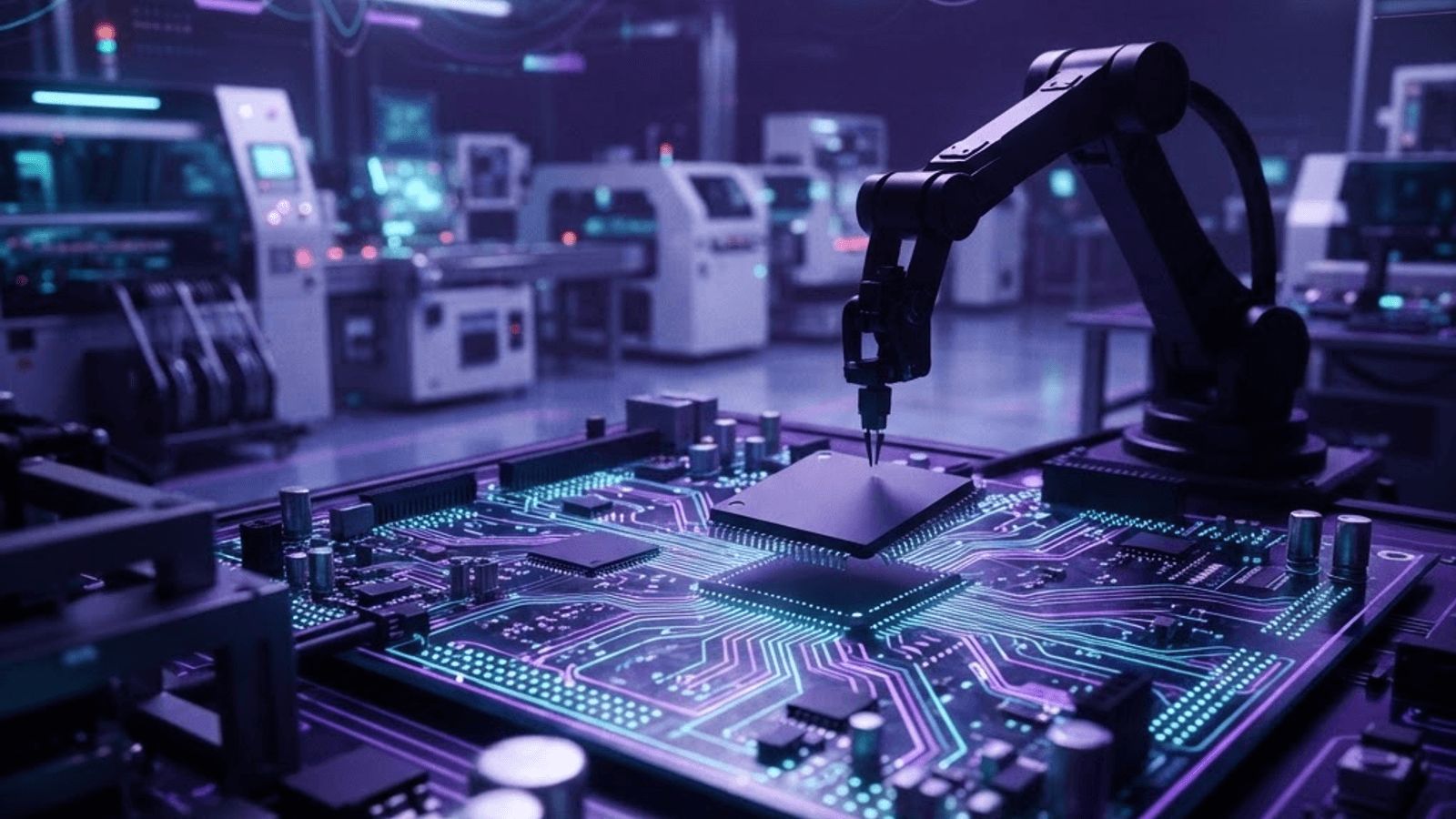
Electronics Manufacturing Beyond the Coasts
Electronics production is often assumed to happen exclusively in large overseas factories, and for consumer devices produced by the million that remains largely true. The domestic industry occupies a different position, serving customers whose volumes are moderate, whose specifications change frequently, or whose products require certification, traceability, and close engineering collaboration.
Huntington's electronics manufacturers operate in that space. They serve industrial equipment builders, medical device developers, energy sector instrumentation, transportation systems, and defense-adjacent suppliers. These customers value engineering support, documentation quality, and revision control far more than the lowest achievable unit price, which makes regional manufacturing viable and durable.
Evaluation Approach
Companies were assessed on manufacturing capability, quality certifications and process control, engineering and design support, testing capacity, supply chain management during component shortages, and customer retention.
1. Voltcraft Electronics Assembly
Voltcraft provides surface mount and through-hole printed circuit board assembly with automated optical inspection and X-ray inspection for hidden solder joints. The company handles prototype through mid-volume production and is known for rigorous first-article documentation that reduces downstream field failures.
2. Meridian Control Systems
Meridian designs and builds industrial control panels, programmable logic controller assemblies, and motor control centers for manufacturing and water treatment facilities. Panel wiring quality and as-built documentation are their strengths, which shortens commissioning time significantly.
3. Appalachian Sensor Technologies
Appalachian manufactures pressure, temperature, flow, and vibration sensors for energy and industrial applications, including calibration and certification services. Their instruments are designed for harsh field environments rather than laboratory conditions, which is exactly what regional customers require.
4. Cardinal Cable and Harness
Cardinal produces custom wire harnesses, cable assemblies, and molded connector solutions. Harness quality is a frequent source of intermittent electronic failures, and the company's continuity and hipot testing on every unit addresses that risk directly.
5. Summit Precision Electronics
Summit specializes in low-volume, high-reliability assemblies for medical and instrumentation customers, operating under documented process controls with full material traceability. Their willingness to take on complex builds with small quantities fills a real gap in the market.
6. Riverbend Power Electronics
Riverbend designs and manufactures power supplies, inverters, converters, and battery management electronics. Growing demand from renewable and electrification projects has expanded this niche considerably, and the company's thermal design capability is a notable strength.
7. Ironline Enclosure and Integration
Ironline builds enclosures, backplanes, and integrated electronic systems, combining sheet metal fabrication with electronic assembly. Single-source responsibility for the complete assembly simplifies accountability for customers tired of coordinating multiple vendors.
8. Valley Test and Certification Labs
Valley provides environmental testing, electromagnetic compatibility pre-compliance testing, vibration testing, and reliability analysis. Access to local testing capacity shortens development cycles substantially compared with shipping prototypes to distant laboratories.
9. Renew Electronics Recovery
Renew handles electronics recycling, component recovery, secure data destruction, and refurbishment. As equipment lifecycles shorten and disposal regulations tighten, responsible end-of-life handling has become a purchasing requirement for institutional buyers.
10. Foundry Electronics Training Institute
Foundry trains assembly technicians, solder specialists, and test operators to recognized workmanship standards. Consistent hand soldering and rework skill is difficult to hire and easy to underestimate, and this institution supplies much of the regional talent pipeline.
Trends in Regional Electronics Manufacturing
Component availability remains the industry's dominant concern, and manufacturers that maintain strong distributor relationships and design-for-substitution practices deliver more reliably than those competing on price alone. Miniaturization continues to demand better inspection equipment, favoring shops that invested in X-ray capability. Demand from electrification, sensing, and automation projects has grown steadily. And customers increasingly expect manufacturers to contribute design input rather than simply build to a fixed drawing.
How to Choose a Manufacturing Partner
Begin by matching volume and complexity to the shop's normal range; a high-volume line will not serve a fifty-unit medical build well, and a prototype shop will struggle with sustained production. Review quality certifications and ask to see actual inspection records. Discuss how component substitutions are approved and documented, since unapproved substitutions cause serious field problems. Confirm testing capability, whether in-house or through partners, and clarify who owns design files and test fixtures. Finally, visit the floor. Organization, static control discipline, and how rework is handled tell you more than any capability sheet.
Managing Component Risk in Design
The most expensive lesson of recent years was that component availability belongs in the design phase, not the purchasing phase. Products designed around a single sole-source part became unbuildable when that part went on long lead time, and redesigning a circuit under pressure is far costlier than designing flexibility in from the start.
Experienced local manufacturers now push customers toward footprint-compatible alternates, generic passive specifications where tolerance allows, and firmware that can accommodate more than one microcontroller variant. They also advise on lifecycle status before a part is designed in, flagging components already approaching end of production. This kind of input rarely appears in a quotation, yet it protects a product line more effectively than any inventory strategy.
Final Thoughts
Huntington's electronics manufacturers compete on engineering partnership, documentation, and reliability rather than volume pricing. The companies above cover assembly, controls, sensors, harnesses, power electronics, integration, testing, recycling, and workforce development. For product developers who need a responsive partner within driving distance, the local ecosystem is stronger than most expect.