
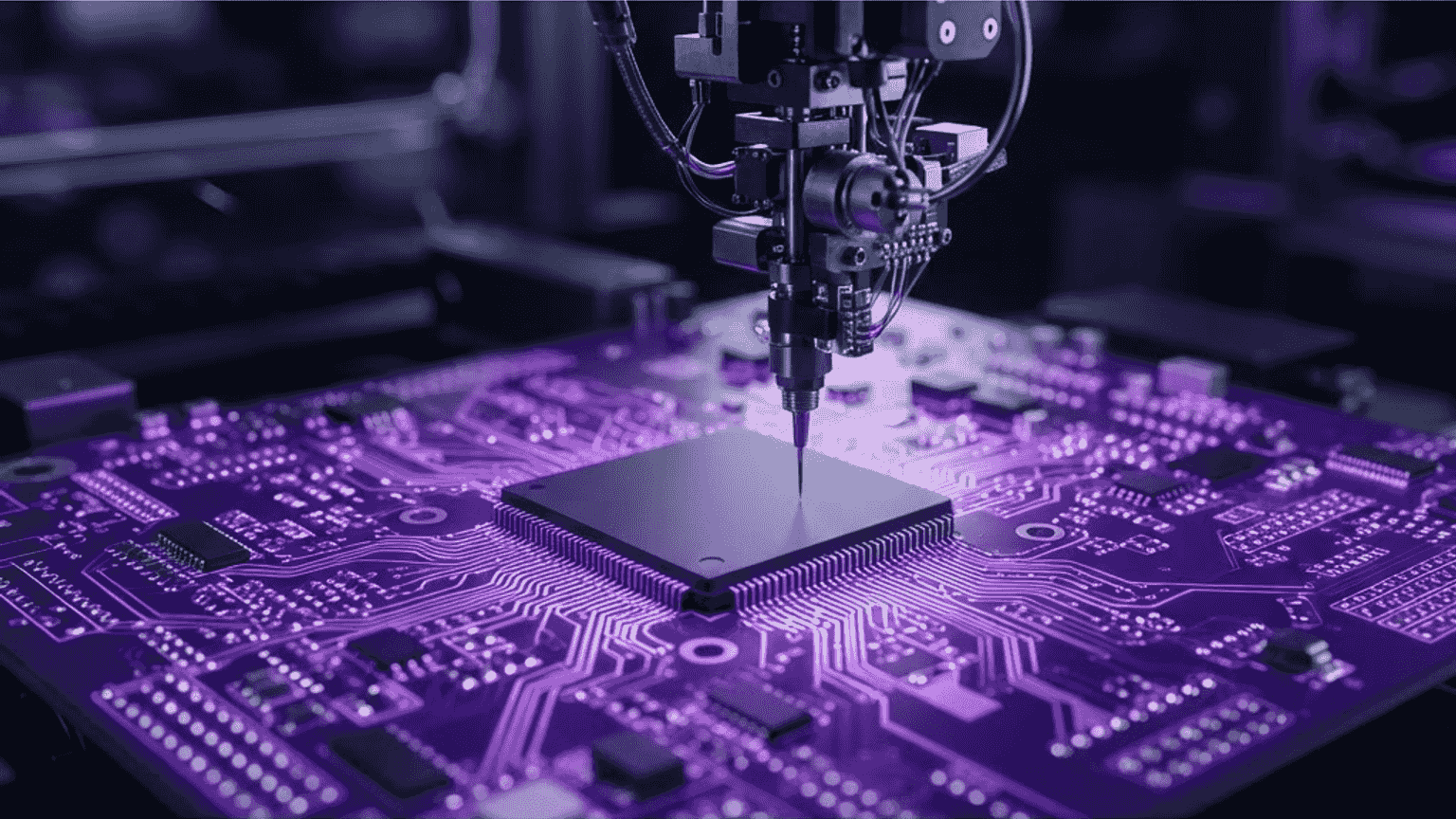
Why Henderson Became an Electronics Manufacturing Hub
Henderson's rise as an electronics manufacturing location was not accidental. A business-friendly regulatory environment, competitive industrial real estate compared with coastal alternatives, straightforward logistics access to West Coast ports and inland distribution corridors, and a growing pool of technical talent combined to attract contract manufacturers and product companies alike. Reliable power infrastructure and low natural disaster risk relative to some competing regions added further appeal for operations where downtime is expensive.
The resulting cluster covers a wide range of capability. Some firms perform printed circuit board assembly at high volume with automated surface-mount lines. Others focus on low-volume, high-complexity builds for aerospace, medical, and industrial customers where traceability requirements are demanding. Cable and wire harness assembly, sheet metal and plastic enclosure fabrication, box build and system integration, and test engineering services all have credible local representation.
Trends Defining the Sector
Supply chain resilience now drives more purchasing decisions than unit cost alone. Component shortages taught product companies that a manufacturer with strong distributor relationships, alternate-part engineering capability, and disciplined inventory practices protects revenue far more effectively than a marginally cheaper quote. Manufacturers offering component lifecycle monitoring and proactive obsolescence management have become genuinely valuable partners.
Automation and inspection technology continue to advance. Automated optical inspection, in-circuit testing, X-ray inspection for hidden solder joints beneath ball grid arrays, and increasingly sophisticated process monitoring have raised achievable quality levels while reducing reliance on scarce skilled labor. Buyers should understand which of these capabilities a prospective partner actually possesses.
Design for manufacturability collaboration has also expanded. The most effective manufacturers now engage during design rather than after release, flagging component choices, footprint issues, thermal concerns, and test access problems while changes remain inexpensive. This shift from order taker to engineering partner marks the clearest dividing line in the market.
The Top 10 Best Electronics Manufacturers in Henderson
1. Silver State Circuit Assembly
Silver State Circuit Assembly is among the most respected contract manufacturers in the region, running automated surface-mount lines alongside selective and hand assembly for mixed-technology boards. The company maintains rigorous process controls and provides detailed traceability suitable for regulated industries. Its engineering team is known for substantive design for manufacturability feedback that improves yield before the first production run.
2. Black Mountain Electronics Group
Black Mountain Electronics Group specializes in low-volume, high-complexity builds for aerospace, defense-adjacent, and scientific instrumentation customers. Documentation discipline, configuration control, and component traceability are central to its operation rather than afterthoughts. Clients with demanding quality requirements value its willingness to accommodate customer-specific process instructions.
3. Anthem Cable and Harness Systems
Anthem Cable and Harness Systems produces custom wire harnesses, cable assemblies, and control panels for industrial equipment, transportation, and gaming machinery. The firm handles crimping, overmolding, potting, and continuity testing in-house with full electrical verification. Equipment makers appreciate its ability to work from drawings, samples, or a functional description alone.
4. Cardinal Precision Electronics
Cardinal Precision Electronics offers full box build and system integration, taking boards, enclosures, wiring, and firmware and delivering finished, tested products ready for shipment. The company can also manage direct fulfillment, which appeals to hardware startups without warehouse operations. Its functional test development capability reduces field failures meaningfully.
5. Redrock Enclosure Manufacturing
Redrock Enclosure Manufacturing fabricates sheet metal and machined enclosures, chassis, brackets, and panels for electronics products, with finishing including powder coating and silk screening. Its engineers routinely suggest design revisions that reduce part count and cost without compromising function. Rapid prototype turnaround makes it a common choice during hardware development.
6. Sunrise Ridge Test Engineering
Sunrise Ridge Test Engineering develops and builds functional test fixtures, in-circuit test programs, and burn-in systems for manufacturers who lack internal test engineering resources. Good test strategy dramatically reduces warranty exposure, and this firm makes that argument with data rather than assertion. Its fixtures are known for durability under high cycle counts.
7. Copper Canyon Microelectronics
Copper Canyon Microelectronics handles specialized assembly work including fine-pitch components, chip-on-board, wire bonding, and conformal coating for harsh environments. This kind of capability is uncommon outside major technology corridors, making the firm a valuable regional resource. Medical device and sensor companies form a substantial part of its client base.
8. Vista Verde Electronics Recycling and Refurbishment
Vista Verde Electronics Recycling and Refurbishment provides reverse logistics, repair, refurbishment, and responsible end-of-life processing for electronic products. The company handles data destruction and provides documentation supporting environmental compliance and corporate reporting. Its repair depot services extend product lifecycles for equipment fleets.
9. Pinnacle Power Electronics
Pinnacle Power Electronics designs and manufactures power supplies, converters, battery management systems, and charging electronics for industrial and mobility applications. Thermal management and efficiency optimization are its recognized strengths, and its engineers are comfortable with the safety and regulatory requirements involved. It also supports customers through certification testing.
10. Horizon Point Prototype Labs
Horizon Point Prototype Labs focuses on rapid prototyping and pilot production, producing small quantities of assembled boards and mechanical parts in days rather than weeks. Hardware teams use it to iterate quickly before committing to volume tooling. The lab's willingness to take on messy, evolving designs makes it particularly useful during early development.
How to Select an Electronics Manufacturing Partner
Match volume and complexity to the manufacturer's sweet spot. A high-volume automated line will treat a fifty-unit build as an inconvenience, while a prototype shop cannot scale to fifty thousand. Ask directly what a typical order looks like on their floor, and be wary of a firm that claims to be ideal for every scenario.
Verify quality systems rather than assuming them. Ask which quality management standards the facility is certified to, whether it holds industry-specific approvals relevant to your market, and how it documents corrective actions. Request evidence of inspection capability such as automated optical inspection and X-ray, and ask to see a sample first article inspection report.
Discuss supply chain practice explicitly. Understand who buys components, how alternate parts are approved, what happens when a part goes on allocation, and how excess inventory is handled if a program ends. Clarify tooling ownership, intellectual property protections, and the process for engineering change orders. Finally, tour the facility and speak with the engineers who would handle your product, since capability ultimately resides in people rather than equipment lists.
Final Thoughts
Henderson's electronics manufacturers span the full arc from a rough prototype to volume production and eventual end-of-life processing. The strongest partnerships form when a buyer chooses a firm whose scale, certifications, and engineering culture align with the product's real requirements. Invest the time in that assessment, involve the manufacturer early in design, and the resulting relationship will pay back through better yields, fewer field failures, and a supply chain that holds up under pressure.