
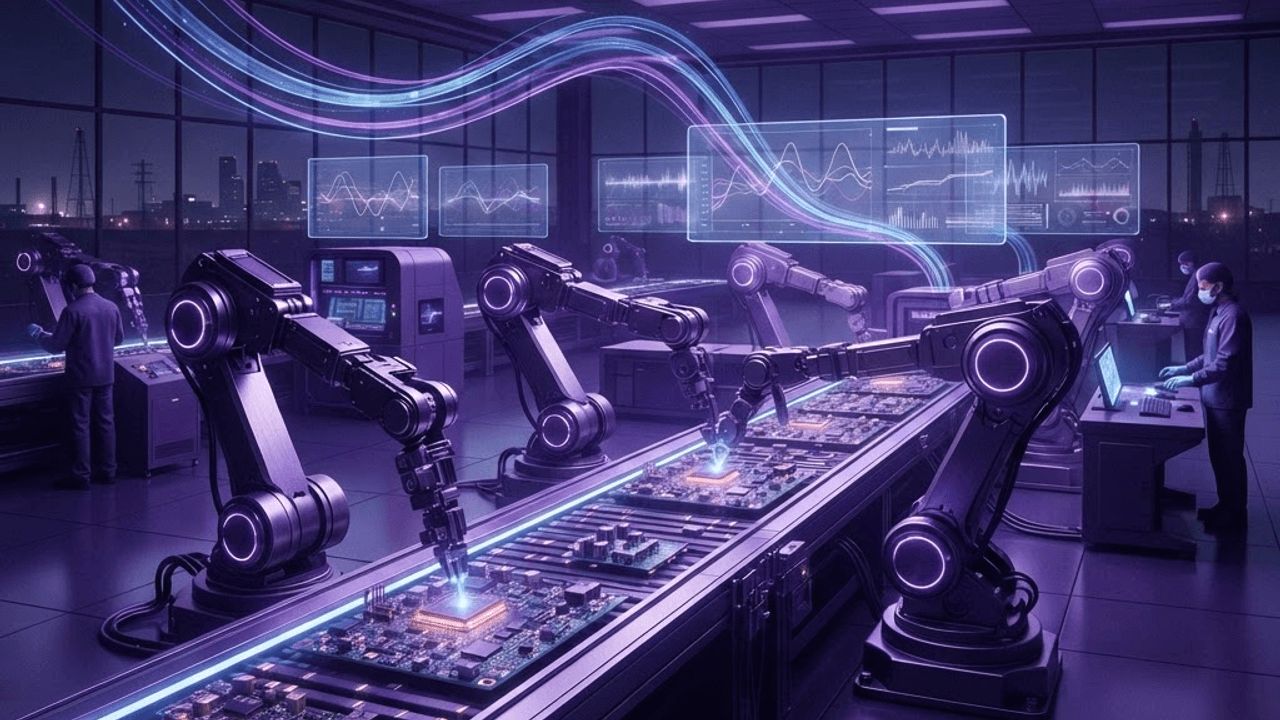
Why Grand Prairie Became an Electronics Manufacturing Hub
Grand Prairie sits in the middle of the Dallas-Fort Worth industrial triangle, with State Highway 161, Interstate 20 and Interstate 30 converging within minutes of most of its industrial parks. That location gives electronics manufacturers something rare: same-day access to two international airports, a deep regional supplier base for metal enclosures and plastics, and a labor pool trained by decades of aerospace and defense work at nearby facilities.
The city's electronics sector is unusually diverse for its size. You will find high-mix, low-volume contract manufacturers building fifty boards at a time for medical device startups, alongside larger operations running automated surface-mount lines around the clock for industrial controls, energy monitoring and transportation customers. Cable and harness assembly, box build, potting and conformal coating, and full test engineering are all available inside the city limits, which means a hardware company can often keep an entire product launch within a twenty-minute drive.
What Separates a Strong Electronics Manufacturer
Before comparing individual companies, it helps to know what actually predicts a good outcome. The first signal is process control. Ask whether the shop runs to IPC-A-610 workmanship standards, holds ISO 9001 certification, and maintains AS9100 or ISO 13485 if your product touches aerospace or medical markets. The second signal is test capability. Automated optical inspection, X-ray for BGA and bottom-terminated components, in-circuit test and functional test fixtures all reduce the number of defects that reach your customers.
The third signal is supply chain maturity. Component shortages have not disappeared, and the manufacturers who protect their clients are the ones with franchised distributor relationships, documented counterfeit-avoidance procedures and engineers willing to propose approved alternates instead of quietly substituting parts. Finally, look at engineering support. A partner who performs design-for-manufacturing review before the first build will typically save you more money in avoided rework than any per-board price difference.
The Top 10 Electronics Manufacturers in Grand Prairie
1. Prairie Circuit Technologies
A high-mix contract manufacturer known for taking on complex, low-volume assemblies that larger plants decline. Prairie Circuit Technologies runs multiple lead-free surface-mount lines with automated optical inspection on every pass and offers full turnkey procurement. Engineering teams appreciate the documented design-for-manufacturing feedback that accompanies every quote, and the shop's reputation for holding schedule during component shortages has made it a long-term partner for industrial instrumentation clients.
2. Lone Star Electronics Assembly
One of the more established names in the local market, Lone Star Electronics Assembly specializes in mid-volume production for energy, transportation and building automation customers. Its strengths are repeatability and traceability: serialized build records, statistical process control on solder paste inspection, and a dedicated first-article inspection cell. The company also maintains an in-house rework department staffed by certified specialists, which shortens the loop when a legacy product needs field-return repair.
3. Grand Prairie Precision Electronics
This firm built its reputation on tight-tolerance work for aerospace and defense programs, including ruggedized assemblies that must survive vibration, humidity and thermal cycling. Capabilities include conformal coating, potting and encapsulation, environmental stress screening and full documentation packages suited to regulated programs. Buyers often cite the company's configuration management discipline as its real differentiator.
4. Trinity Board Works
Trinity Board Works focuses on rapid prototyping and new product introduction. Quick-turn builds, flexible kitting options and a willingness to work from imperfect documentation make it a favorite of hardware startups and internal R&D groups. As programs mature, the company transitions them to scheduled production runs without changing the engineering contact, which preserves institutional knowledge.
5. Metroplex Micro Systems
Specializing in embedded computing and control assemblies, Metroplex Micro Systems combines board-level manufacturing with box build, firmware loading and functional testing. Customers receive finished, tested units ready for distribution rather than bare assemblies. The company's test engineering group develops custom fixtures in-house, which reduces both cost and lead time for functional validation.
6. Summit Cable and Harness
Wire harnesses and cable assemblies rarely get attention until they fail, and Summit Cable and Harness has built a durable business on doing them properly. The shop handles molded cables, complex multi-branch harnesses, panel wiring and control boxes, with crimp pull testing and continuity verification on every unit. Its work supports machinery builders, transit equipment and agricultural technology firms across North Texas.
7. Vantage Power Electronics
Vantage Power Electronics concentrates on power conversion and distribution products, including transformers, filtered power supplies and custom magnetics. Thermal design support and high-current testing capability set it apart, and the company routinely partners with clients early in development to validate efficiency and heat dissipation targets before tooling is committed.
8. Pioneer Sensor Industries
Sensors and instrumentation modules demand calibration discipline, and Pioneer Sensor Industries provides it with a controlled calibration lab and traceable measurement standards. The company manufactures pressure, temperature and flow sensing assemblies used in oil and gas, water treatment and HVAC applications, and offers documented calibration certificates with each shipment.
9. Crossroads Contract Manufacturing
Crossroads Contract Manufacturing serves as a full-service partner for companies that want one supplier to handle boards, sheet metal enclosures, labeling, packaging and drop shipping. Vertical breadth is the appeal here: coordinating fewer vendors reduces both administrative overhead and the finger-pointing that occurs when an assembly does not fit its housing.
10. Skyline Electronic Solutions
Rounding out the list, Skyline Electronic Solutions has carved a niche in legacy product support and obsolescence management. When original components go end-of-life, the company sources approved replacements, updates documentation and requalifies the assembly so long-lived industrial products stay in production. For manufacturers with twenty-year product cycles, that service is genuinely difficult to replace.
Industry Trends Shaping Local Electronics Production
Three forces are reshaping electronics manufacturing in Grand Prairie. The first is reshoring. Companies burned by long ocean transit times and opaque overseas quality systems are moving mid-volume production closer to their engineering teams, and North Texas has absorbed a meaningful share of that work. The second is automation. Local shops are investing in automated inspection, machine-tended placement and digital traceability not to reduce headcount but to make skilled technicians more productive on complex builds.
The third is component intelligence. Manufacturers now compete on how well they anticipate shortages, maintain alternate part libraries and communicate risk before it becomes a stoppage. The best partners treat sourcing as an engineering discipline rather than a purchasing task.
How to Choose the Right Partner for Your Product
Start by matching volume to shop profile. A prototype house will struggle with ten thousand units a month, and a high-volume plant will price a fifty-piece build out of reach. Next, request a facility tour and watch how material is handled, how electrostatic discharge controls are enforced and how visible quality data is on the floor. Ask for references from customers with products similar to yours in complexity, not just industry.
Finally, evaluate communication. The single most common source of failed manufacturing relationships is not technical incapability but slow, incomplete information flow. A partner who tells you about a problem early is worth more than one who quotes a slightly lower price and explains delays after the fact. Grand Prairie offers enough qualified options that you can insist on both competence and candor.