
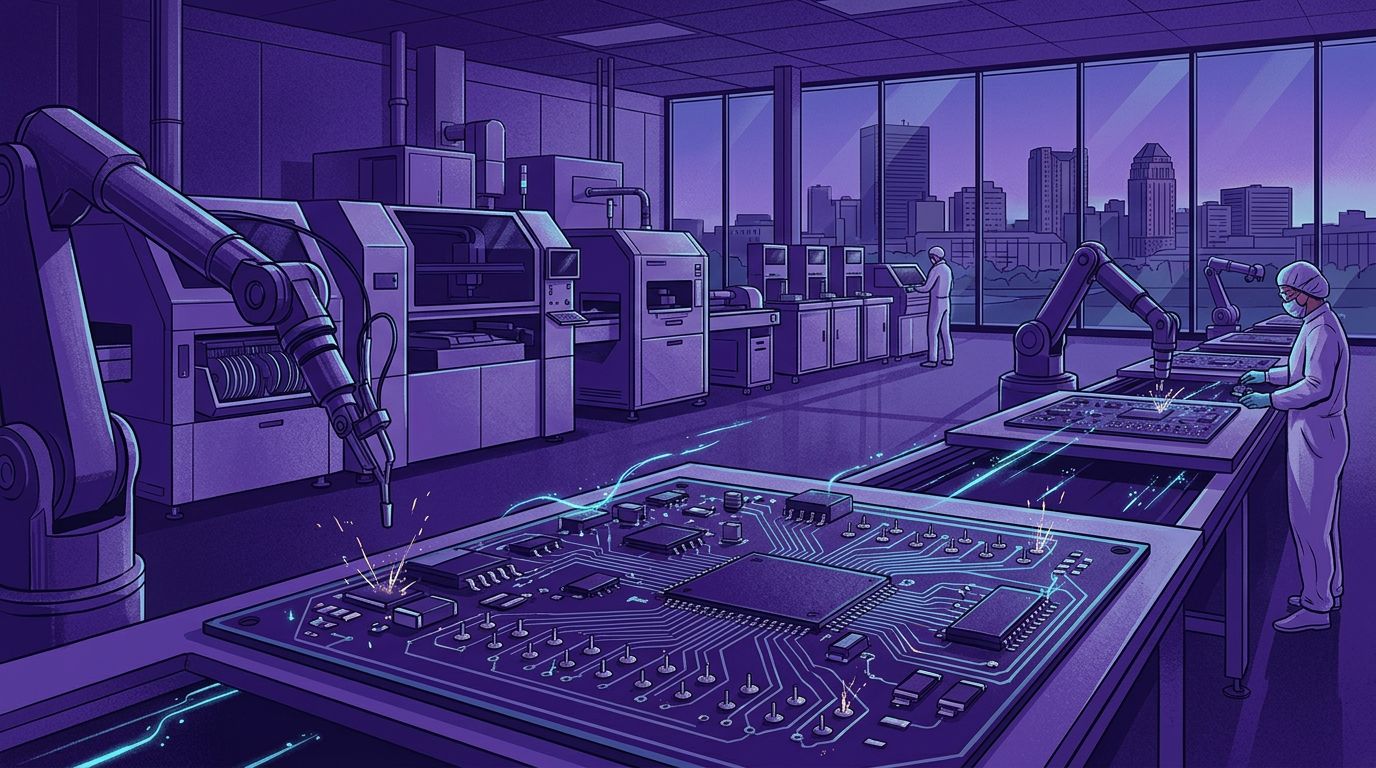
Electronics manufacturing in the Miami Valley
Electronics production ranges from printed circuit board assembly and cable harnesses to embedded controls, sensors, power systems, and finished devices. Dayton-area manufacturers benefit from a strong engineering and aerospace ecosystem, but sourcing decisions still depend on volumes, certification needs, component availability, and product lifecycle. A manufacturer that excels at prototypes may not be equipped for high-volume production, so define expected demand and technical risk before requesting quotations.
Companies to include in market research
Potential manufacturers and technology companies connected to Ohio or regional production include Norwood Medical, Yaskawa Motoman, GE Aerospace, Collins Aerospace, Emerson, Parker Hannifin, Jabil, Flex, Benchmark Electronics, and Sanmina. These names span medical manufacturing, automation, aerospace, industrial controls, and contract electronics; not all operate a Dayton electronics assembly line. Verify current local capability, business-unit scope, and willingness to serve your market. Regional electronic manufacturing services providers may be a better fit for smaller or specialized runs.
Qualify the production partner
Ask whether the supplier provides design-for-manufacture feedback, sourcing, PCB assembly, mechanical integration, firmware loading, functional testing, and final packaging. Review quality certifications relevant to your industry, traceability at component and lot level, engineering-change control, and counterfeit-parts prevention. Request a process walk-through and sample inspection records. Clarify who owns tooling, test fixtures, firmware, and product documentation. For aerospace, medical, or automotive applications, confirm the precise standards and audit requirements rather than relying on generic claims of quality.
Reduce risk over the product lifecycle
Component shortages and end-of-life notices can disrupt deliveries long after a design is approved. Ask how the supplier monitors obsolescence, qualifies alternates, and protects forecasted capacity. Compare total landed cost, not only quoted unit price: tooling, testing, freight, scrap, and rework can change the economics. Dayton buyers may benefit from local engineering access and shorter collaboration loops, while diversified contract manufacturers can provide scale. Use this guide as a starting shortlist and validate each company’s actual Ohio facilities and current services before selecting a production partner.
Understanding the local market
Dayton’s regional economy rewards providers that understand both the local operating environment and the requirements of the work. Electronics production depends on component availability, design controls, assembly quality, and traceable testing. Buyers should look for practical familiarity with regional customers, suppliers, regulations, and delivery patterns rather than assume that a broad service list proves local fit. A thoughtful shortlist begins with the intended outcome, the constraints that cannot change, and the areas where flexibility is possible. This context helps make comparisons more meaningful and keeps a search focused on relevant capabilities.
Matching the provider to the need
Before comparing names, define the assignment in enough detail that each candidate can respond to the same requirements. Manufacturers may specialize in circuit boards, box builds, prototypes, regulated products, or higher-volume programs. Ask candidates to explain the people, process, and resources they would assign, including how they handle unusual requests or schedule changes. Strong providers make tradeoffs visible and distinguish what is confirmed from what still needs investigation. That clarity is useful whether the buyer is an individual, a growing company, or an established organization with several stakeholders.
How to compare quality and capability
Capability is best assessed through evidence tied to the work, not polished general claims. Check engineering collaboration, process certifications, test coverage, change control, and component sourcing transparency. Request examples of comparable work, sample documentation where appropriate, and an explanation of how quality is checked at each important handoff. References and case examples should illuminate the provider’s role and approach without disclosing another customer’s confidential information. Consistent methods, clear accountability, and a willingness to discuss limitations are meaningful signals of dependable performance.
Looking beyond the quoted price
The lowest initial quote does not always represent the best long-term value. Compare prototype, tooling, assembly, testing, packaging, and expedited-shipping charges rather than unit price alone. Ask each provider to separate included work from optional services, assumptions, pass-through expenses, and conditions that could change the estimate. A useful comparison considers the cost of rework, delays, administration, and ongoing support as well as the direct purchase price. When scope is uncertain, staged commitments and written decision points can reduce surprises while preserving room to adapt as new facts emerge.
Technology and changing expectations
Industry changes are creating new ways to improve efficiency, consistency, and customer experience, but tools alone do not guarantee better results. Miniaturization, automation, and connected products raise the value of robust design and supply-chain visibility. Evaluate whether proposed technology or process improvements solve a demonstrated need, fit existing systems, and can be supported by the people who will use them. Ask how data is protected, how exceptions are handled, and what happens when a system or supplier is unavailable. Practical innovation should make outcomes easier to measure, not make the underlying process harder to understand.
Managing risk and continuity
A strong selection process also considers what could interrupt service or create an unexpected obligation. Counterfeit components, obsolescence, firmware errors, and supplier concentration can threaten continuity. Identify the most consequential risks early, then ask how the provider detects issues, communicates changes, and restores normal operations. Written terms should clarify responsibilities, insurance or warranty coverage where relevant, escalation paths, records, and exit options. Contingency planning is not pessimism; it helps both sides respond calmly when schedules, demand, regulations, or operating conditions change.
A practical decision process
Use a consistent final review before making a commitment. Ask how revisions are approved, defects are contained, and critical components are tracked by lot. Summarize the required outcome, compare each candidate against the same criteria, verify any licenses or credentials that apply, and read the final scope carefully. Record open questions and resolve them in writing rather than relying on assumptions made during an introductory conversation. A clear decision should explain why the selected provider fits the work, how success will be assessed, and what the next review point will be. The best choice is the one supported by evidence and a workable relationship.