
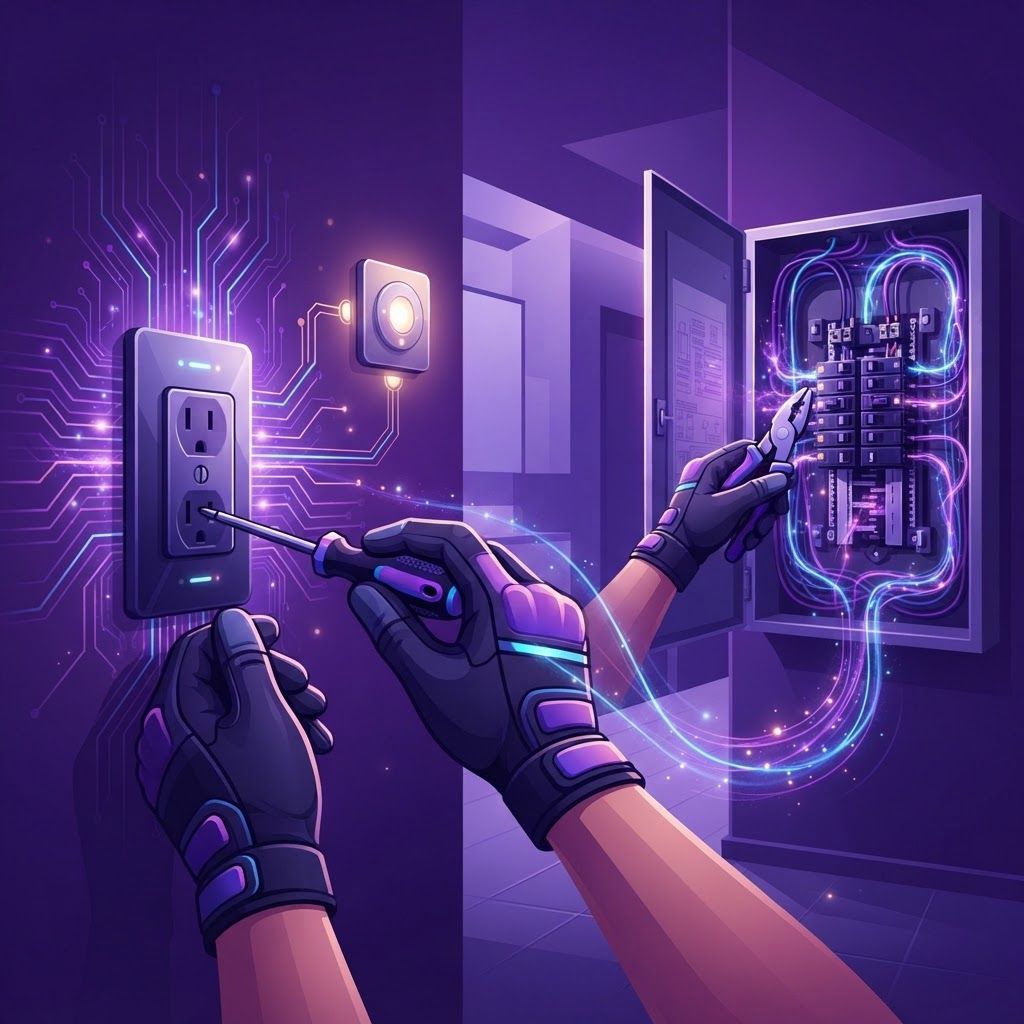
Why Electrician Selection Deserves Care
Electrical work is the one home trade where mistakes are both invisible and dangerous. A poorly installed junction box behind drywall or an overloaded circuit hidden in a wall cavity can go undetected for years before causing a failure. Licensed electricians exist precisely because the consequences of unqualified work are disproportionate to its apparent simplicity.
In Rochester, the added variable is age. A significant share of the housing stock predates modern wiring standards, and many homes have accumulated layers of amateur modifications over the decades. Electricians here spend as much time correcting past work as installing new circuits, and the ability to read an unfamiliar and undocumented system is a genuine skill.
Services Homeowners Request Most
Troubleshooting leads the list. Flickering lights, breakers that trip without obvious cause, dead outlets, and buzzing switches all point to conditions that require tracing rather than guessing. Adding circuits is next, driven by home offices, kitchen appliances, workshop tools, and basement finishing.
Panel and service upgrades follow, particularly in homes still operating on fuse boxes or 100-amp service. Fixture and lighting installation covers recessed lighting, ceiling fans, under-cabinet lighting, and exterior fixtures. Safety upgrades such as GFCI and arc fault protection, along with smoke and carbon monoxide detector wiring, round out routine residential demand.
Ten Electricians Serving Rochester
Genesee Residential Electric handles the full range of household work from small repairs to panel replacement, with a reputation for clear labeling and thorough documentation.
Flour City Troubleshooters specializes in diagnostic work, tracing intermittent faults and unlabeled circuits in older homes with undocumented wiring histories.
Heritage Rewire Specialists concentrates on knob-and-tube and cloth wiring replacement, minimizing plaster damage during cable routing.
Voltage Point Electricians focuses on EV charger installation and load management, evaluating whether existing service capacity supports charging without an upgrade.
Northern Lights Lighting Co. designs and installs interior and landscape lighting, including LED retrofits and dimming controls.
Lakeside Generator Services installs standby generators and transfer switches, sizing systems for whole-home or essential-circuit backup.
Monroe Panel Upgrades works primarily on service capacity increases, coordinating utility scheduling, permits, and inspection.
Canalside Smart Wiring integrates networking, automation, and smart switching alongside conventional electrical work during renovations.
Empire Safety Electric performs home electrical inspections for buyers, sellers, and insurance requirements, producing documented deficiency reports.
Riverbend Electric Repairs is a small owner-operated firm favored for prompt response on outlet, switch, and fixture-level work.
Permits, Inspections, and Insurance
Most substantive electrical work requires a permit and inspection. Skipping that step creates two long-term problems: insurance claims can be contested if unpermitted work contributes to a loss, and unpermitted modifications surface during home sale inspections, often at the worst possible moment. Reputable electricians treat permitting as standard rather than optional.
Homeowners should verify licensing directly and confirm both liability and workers' compensation coverage. Requesting written scope and pricing, rather than verbal estimates, protects both parties.
Warning Signs Worth Immediate Attention
Warm outlet covers, scorch marks, a burning smell near a panel, repeated breaker trips on the same circuit, and lights that dim noticeably when large appliances start all indicate conditions that should be evaluated promptly. Two-prong ungrounded outlets, missing GFCI protection in wet locations, and aluminum branch wiring from certain construction eras are additional deficiencies commonly found locally.
Extension cords used as permanent wiring, power strips daisy-chained together, and outlets added without dedicated circuits are symptoms of insufficient capacity rather than user error. Adding properly sized circuits addresses the underlying problem.
Planning Electrical Work Around Renovation
Electrical work is dramatically cheaper when walls are already open. Coordinating rewiring, circuit additions, and lighting changes with a planned kitchen, bath, or basement project avoids paying twice for access and repair. Providing the electrician with a list of intended appliances, equipment, and future plans allows correct capacity planning rather than incremental additions later.
For smart home integration, discussing the plan before rough-in matters, since neutral wires at switch locations and adequate box depth determine which devices can be used.
Electrification and Future Capacity
Household electrical demand is rising steadily, and Rochester homeowners are feeling it earlier than most because so many properties were wired for mid-century loads. Heat pumps, induction cooking, electric water heaters, workshop equipment, and vehicle charging each add substantial draw, and adding them incrementally without a capacity plan leads to repeated upgrade costs.
The better approach is to discuss a five to ten year plan with an electrician before the first major addition. A single service upgrade sized for anticipated equipment costs less than two smaller upgrades performed years apart, and panel space can be reserved for future circuits during the initial work.
Load management technology offers an alternative where a service upgrade is impractical or expensive. These devices prioritize circuits dynamically, allowing an electric vehicle charger or additional appliance to operate within existing capacity by shedding load when demand peaks.
Final Thoughts
Electrical work is the least visible and most consequential system in a Rochester home. The electricians who build lasting reputations here diagnose methodically, pull permits as a matter of course, upgrade capacity honestly rather than patching around it, and leave behind labeled panels that make future work safer. That combination protects both the household and the value of the property.