
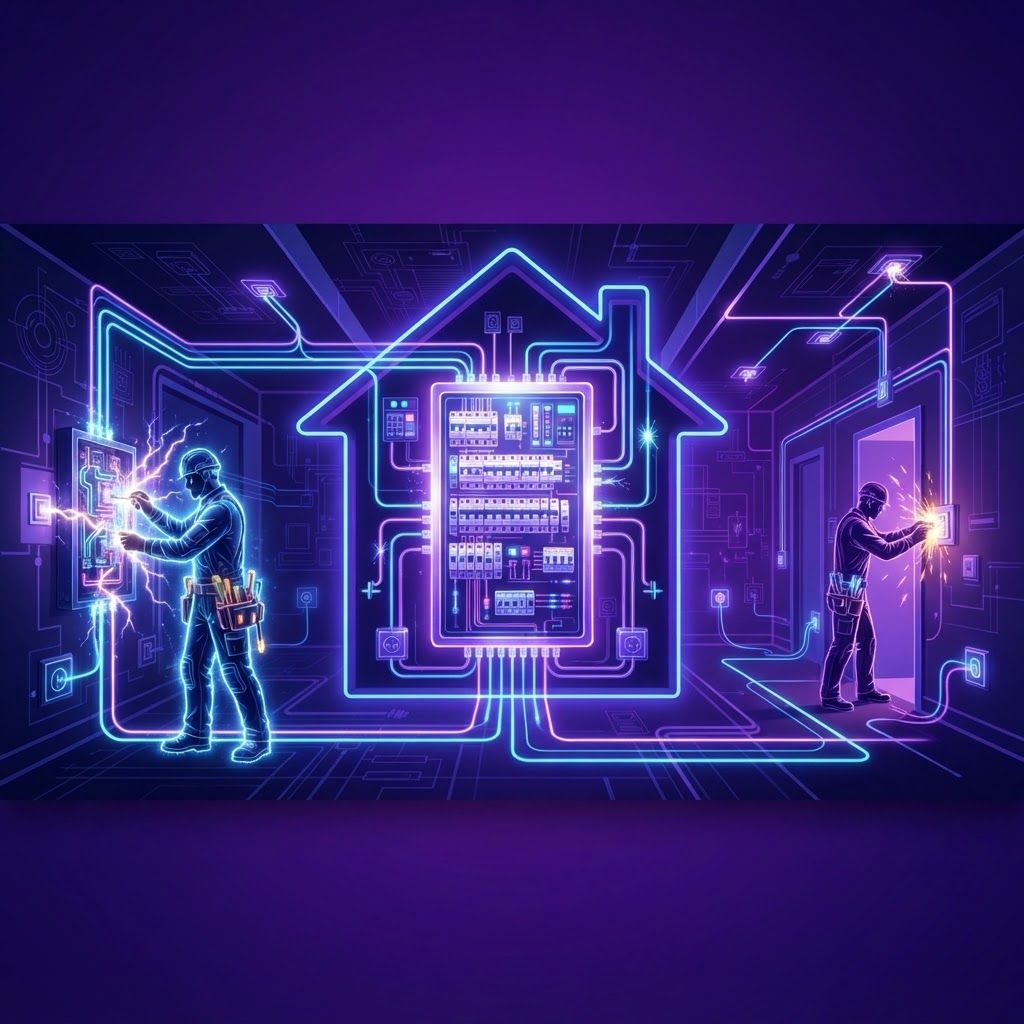
Electrical Work Is Not a Place for Compromise
Of all the trades a homeowner engages, electrical work has the least tolerance for error. A poorly done paint job looks bad. A poorly done electrical connection can start a fire inside a wall cavity years after the work was completed. That asymmetry is why licensing, permitting, and inspection matter more here than almost anywhere else in home improvement.
In Moreno Valley, the demands on residential electrical systems have grown substantially. Air conditioning runs hard for months at a time. Solar arrays and battery systems are common. Electric vehicles are increasingly the norm rather than the exception. Homes originally wired for a much simpler load profile are being asked to do considerably more, and the panel is usually the limiting factor.
Common Residential Electrical Needs
Routine work includes outlet and switch replacement, ceiling fan and light fixture installation, recessed lighting, ground fault and arc fault protection retrofits, dedicated appliance circuits, and troubleshooting circuits that trip or behave inconsistently.
Larger projects include main panel replacement and service upgrades, whole-house rewiring in older properties, electric vehicle charger installation, generator and transfer switch installation, solar and battery interconnection, subpanel installation for garages and workshops, and exterior and landscape lighting systems.
Ten Electricians Serving Moreno Valley
Valley Current Electric handles the full range of residential work with a diagnostic-first approach, tracing faults methodically rather than replacing components speculatively.
Sunnymead Electrical Contractors has deep experience with panel replacements and rewiring in the city's older neighborhoods, including utility coordination and permit management.
Heacock EV Infrastructure specializes in electric vehicle charging installation, performing proper load calculations and offering load management solutions where a full service upgrade is impractical.
Alessandro Electric Company serves homeowners with everything from small fixture jobs to whole-home generator installations and transfer switch wiring.
Box Springs Solar and Electric integrates photovoltaic and battery systems with the electrical upgrades those installations require, delivering the whole scope under one contractor.
Cactus Ridge Lighting and Power focuses on lighting: recessed layouts, under-cabinet systems, exterior and landscape lighting, and dimming controls that work reliably with LED fixtures.
Ironwood Low Voltage and Electric combines electrical work with data cabling, security wiring, and smart home device integration, an efficient pairing during renovations.
March Field Electrical Services handles remodel and addition electrical, coordinating rough-in and finish stages with general contractors.
Perris Basin Electric is a smaller shop valued for responsive service calls, clear pricing, and patient explanation of what a repair involves and why.
Nason Street Electric is an owner-operated business focused on residential troubleshooting and repair, where the licensed electrician quoting the job performs it personally.
Panel Capacity Is the Central Question
Nearly every significant electrical addition depends on available panel capacity. A two-hundred-amp service with open breaker positions accommodates solar, an EV charger, and electrified appliances without difficulty. Older one-hundred-amp panels frequently cannot support these additions safely, and installing them without a load calculation creates both hazard and code violation.
Some panel brands from earlier decades have documented reliability problems and are worth proactive replacement even without symptoms. A licensed electrician can identify these on sight and explain the specific concern.
Where a full service upgrade requires expensive utility work, load management devices offer a practical alternative. These allow an EV charger to share capacity with other large loads by reducing charging current automatically when demand peaks, often at a small fraction of the cost of a service upgrade.
Safety Upgrades Worth Prioritizing
Ground fault circuit interrupter protection in bathrooms, kitchens, garages, laundry areas, and exterior locations prevents electrocution and is inexpensive to add. Arc fault protection in bedrooms and living areas detects the specific electrical signature of arcing that precedes many electrical fires.
Replacing two-prong ungrounded outlets with properly grounded receptacles protects sensitive electronics and provides a fault current path. Whole-house surge protection installed at the panel guards against transients that damage appliances and electronics, and costs far less than the equipment it protects.
Smoke and carbon monoxide alarm systems, particularly interconnected hardwired units, are within an electrician's scope and represent one of the highest-value safety investments available.
Permits and Inspections Are Protection, Not Obstacles
Panel replacements, service upgrades, new circuits, and rewiring require permits, and the resulting inspection provides an independent verification of the work. Homeowners sometimes view permitting as unnecessary cost and delay, but unpermitted electrical work creates problems at resale, may void insurance coverage in a claim, and removes the only outside check on workmanship.
The contractor should pull the permit, never the homeowner. When a homeowner pulls a permit for contracted work, they assume responsibility that properly belongs to the licensed professional.
Selecting Your Electrician
Confirm the C-10 license is active and that the individuals performing work are state-certified electricians. Verify liability insurance and workers' compensation. Request a written scope specifying circuit and conductor sizing, device locations, and warranty terms.
Value diagnostic ability highly. Intermittent electrical problems are genuinely difficult to isolate, and an electrician who invests time in systematic testing will solve a problem that a parts-swapper will chase indefinitely.
Final Thoughts
Electrical systems are the backbone of a modern home, and as Moreno Valley households add solar, storage, and vehicle charging, the importance of thoughtful electrical planning keeps growing. Choose a licensed electrician who calculates loads properly, pulls permits as a matter of course, and treats the panel as a system to be planned rather than a box to be filled. The electricians profiled here cover the full spectrum of residential need across the city.