
Electrical Demand Is Rising Faster Than Housing Stock Can Handle
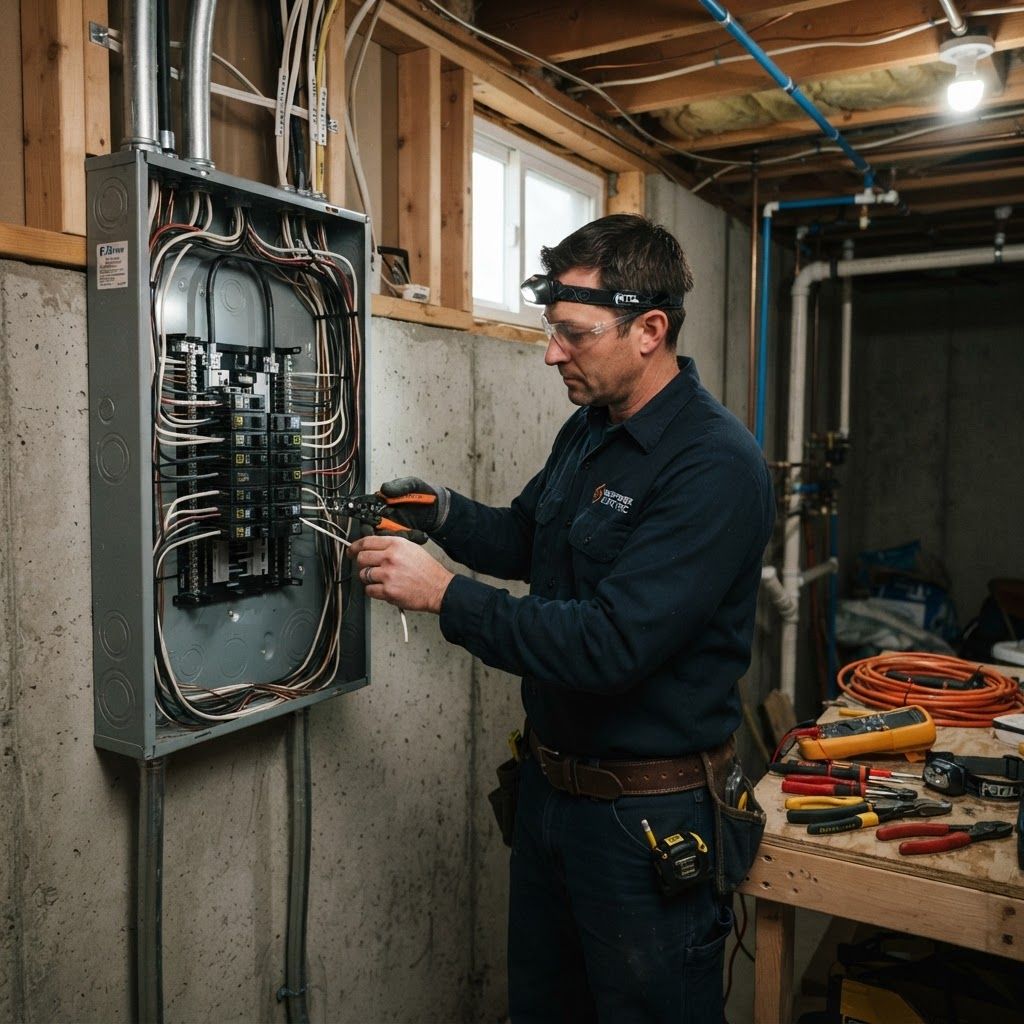
Electrical capacity has become one of the most pressing infrastructure issues in St. Paul homes and small commercial buildings. Many properties still operate on one hundred amp service, or in older cases sixty amp, which was adequate when a home had a furnace, a refrigerator, and a few lamps. Today the same house may need to support a heat pump, an induction range, a heat pump water heater, a vehicle charger, and a home office full of equipment. That arithmetic rarely works without a service upgrade.
Older wiring methods compound the issue. Knob-and-tube wiring, still present in portions of pre-1930s homes, has no equipment grounding conductor and degrades where insulation has been added over it. Early aluminum branch circuit wiring from the 1960s and 1970s requires specific connection treatments to prevent overheating at devices. Neither situation is automatically dangerous, but both require professional evaluation rather than assumption.
What Licensed Electrical Contractors Actually Do
Beyond outlets and fixtures, electrical contractors handle service and panel upgrades, subpanel installation, whole-house rewiring, dedicated circuits for appliances, grounding and bonding correction, arc fault and ground fault protection compliance, surge protection, generator and transfer switch installation, vehicle charging equipment, low-voltage and data cabling, lighting design and controls, and commercial power distribution.
All meaningful electrical work in Minnesota requires a licensed electrical contractor and an electrical permit with state inspection. This is not bureaucratic overhead. Inspection catches connection errors, improper conductor sizing, and grounding faults that create fire risk. Unpermitted electrical work also complicates insurance claims and home sales.
Ten Electrical Contractors Serving St. Paul
Capital Current Electric handles residential service upgrades and panel replacements at volume, with strong utility coordination for meter and service entrance work.
Heritage Wiring Specialists focuses on knob-and-tube and early aluminum remediation in historic homes, working carefully around plaster and original finishes.
Northstar Electrical Contractors serves commercial and institutional clients with switchgear, three-phase distribution, and emergency power systems.
Summit EV and Energy Electric specializes in vehicle charging installation, solar interconnection, and battery storage integration.
Great River Electric Company provides full-service residential and light commercial work with a large service fleet and same-day availability.
Frostline Electrical Services is known for generator installation and transfer switch work, valuable during winter outage events.
Eastside Industrial Electric handles manufacturing and warehouse power, including motor controls, machine feeds, and high-bay lighting retrofits.
Union Park Electric operates as a neighborhood contractor with a reputation for clear explanations and reasonable service pricing.
Landmark Lighting and Controls concentrates on lighting design, dimming systems, and commercial control programming.
Riverfront Data and Power completes the list combining electrical work with structured cabling, network infrastructure, and low-voltage systems.
Electrification Is Reshaping the Trade
The most significant trend is load growth. Heat pumps, induction cooking, electric water heating, and vehicle charging are collectively pushing homes toward two hundred amp service as the practical baseline. Smart panels and load management devices offer an alternative path, allowing a home to add a vehicle charger without a full service upgrade by intelligently shedding or staging loads.
Backup power interest has grown after several notable storm outages. Options range from portable generator inlets with manual transfer switches to permanently installed standby generators and, increasingly, battery systems that pair with solar. Each carries different cost, fuel, noise, and permitting considerations.
Code requirements have also tightened. Arc fault protection now covers most habitable room circuits, ground fault protection extends to additional locations including some appliance outlets, and tamper-resistant receptacles are required in dwellings. Contractors bringing older homes up to current standards during remodels should explain which upgrades are mandatory versus recommended.
Cost Expectations
Service upgrades to two hundred amps typically involve panel replacement, new service entrance conductors, meter socket, grounding electrode system, and utility coordination, which makes them a multi-thousand dollar project rather than a simple swap. Vehicle charger installation cost depends heavily on distance from the panel and available capacity. Whole-house rewiring is the most disruptive electrical project and is usually best combined with other renovation work while walls are already open.
Utility rebate programs in Minnesota can offset costs on lighting retrofits, heat pump installations, and load management equipment. A knowledgeable contractor should raise these proactively.
Selecting an Electrician
Verify the contractor license number and confirm the individual performing work is a licensed journeyworker or master electrician. Ask whether permits are included in the quoted price and who schedules inspection. Request a written scope specifying panel brand, circuit count, device types, and whether drywall repair is included, since electrical work often requires wall openings.
Prioritize safety findings honestly reported over the cheapest bid. An electrician who documents double-tapped breakers, missing grounds, or overloaded circuits is giving you valuable information even when it enlarges the project.
Conclusion
Electrical work is the least forgiving trade in a home, and St. Paul's aging service capacity combined with rapid electrification makes qualified contractors more important than ever. The ten firms above cover residential upgrades, historic rewiring, commercial distribution, backup power, and charging infrastructure. Insist on licensing, permits, and inspection, and treat capacity planning as a long-term investment rather than a one-time fix.