
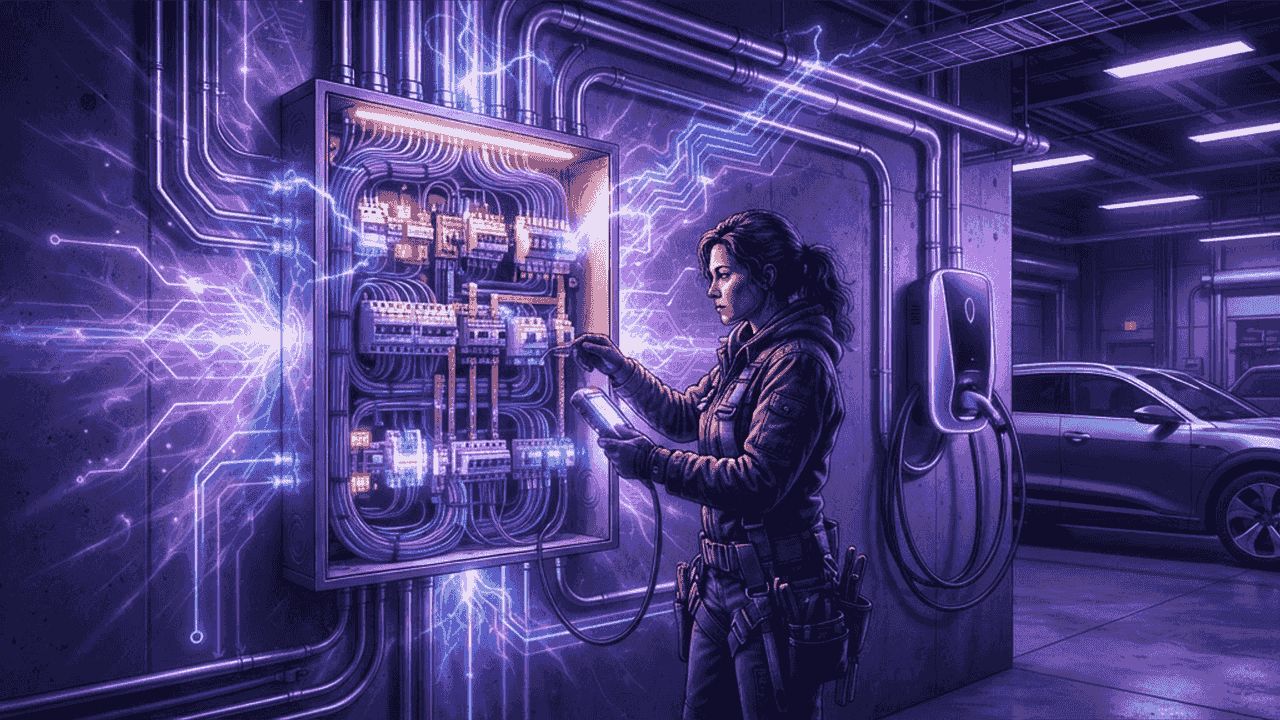
Electrical Demand Is Rising Across Bakersfield
Electrical work in Bakersfield has changed substantially over the past decade. Homes that once needed one hundred amps of service now support high-efficiency air conditioning, electric vehicle charging, rooftop solar with battery storage, heat pump water heating and a growing number of always-connected devices. Commercial and industrial clients face parallel pressure from refrigeration, warehouse automation, data infrastructure and process equipment.
Summer heat compounds everything. Electrical systems run hardest exactly when ambient temperatures are highest, which accelerates the failure of loose connections, undersized conductors and ageing panels. Licensed electrical contractors are therefore doing far more capacity assessment and upgrade work than straightforward repair.
Why Licensing and Safety Culture Matter
Electrical work is the one trade where shortcuts cause fires. California requires licensed contractors and certified electricians for a reason, and permitted work receives an independent inspection that verifies grounding, bonding, conductor sizing, breaker coordination and arc fault and ground fault protection. Unpermitted work not only creates risk but frequently surfaces as a problem during property sale or insurance review.
Beyond licensing, look for evidence of a real safety programme: proper personal protective equipment, lockout procedures, torque-verified terminations and thermal imaging used to detect hot spots before failure. These practices distinguish professional firms from casual operators.
The Ten Best Electrical Contractors in Bakersfield
1. Bakersfield Electric Company
A long-standing local electrical contractor serving residential and commercial clients. Customers cite meticulous panel work, clear explanations of code requirements and reliable permit and inspection coordination.
2. Valley Electrical Contractors
Valley Electrical Contractors handles commercial and industrial installations, including service upgrades, switchgear, motor controls and lighting retrofits for warehouses and manufacturing facilities.
3. Kern Power Systems
Kern Power Systems focuses on heavier power distribution work for agricultural and energy sector clients, including pump controls, transformers and outdoor equipment engineered for dust and heat exposure.
4. Golden Empire Electric
Golden Empire Electric concentrates on residential service, particularly main panel replacement, subpanels, whole-house rewiring in older homes and dedicated circuits for modern appliance loads.
5. Sierra Solar and Electric
Combining licensed electrical work with solar and battery installation, this firm manages interconnection requirements, load calculations and utility coordination as a single scope rather than separate contracts.
6. Pacific EV and Energy Solutions
Specialising in electric vehicle charging, this contractor assesses panel capacity, installs residential and commercial charging equipment and addresses load management where service capacity is limited.
7. Central Valley Lighting and Electric
This company focuses on lighting design and retrofits, upgrading commercial interiors, parking lots and warehouses to controlled LED systems that reduce energy use and improve safety.
8. Panorama Electrical Services
Panorama Electrical Services supports tenant improvements and remodels, coordinating rough-in with other trades and handling the inspection sequence for offices, clinics and retail buildouts.
9. Stonecrest Electrical Contractors
Stonecrest Electrical Contractors serves new residential and light commercial construction, providing complete rough and finish electrical packages with attention to circuit planning and future capacity.
10. Bakersfield Emergency Electric
Focused on urgent service, this provider responds to outages, tripped or damaged panels, storm-related faults and generator connection needs, with diagnostic work prioritised before permanent repair.
How to Choose an Electrical Contractor
Verify the licence classification and insurance, and confirm that the electricians performing the work hold state certification. Ask for a written scope that lists panel and breaker manufacturer, conductor sizes, circuit assignments, permit responsibility and warranty terms. For larger projects, request a load calculation rather than a verbal assurance that capacity is adequate.
Ask directly whether the work will be permitted. A contractor who suggests skipping permits to save money is signalling how they treat code generally. Also confirm who handles patching and painting after wall openings, as that boundary often causes disputes.
Upgrades Worth Considering
Panel replacement is the foundation of most modern electrical improvements, especially in homes with obsolete or discontinued equipment. Whole-home surge protection is inexpensive relative to the electronics it protects. Ground fault and arc fault protection in kitchens, bathrooms, garages and bedrooms significantly reduces fire and shock risk. Dedicated circuits for air conditioning, EV charging and heavy appliances prevent nuisance tripping and overheating.
For businesses, LED retrofits combined with occupancy and daylight controls deliver quick returns, while thermal inspection of panels and switchgear catches developing faults before they cause downtime.
Warning Signs That Require a Licensed Electrician
Breakers that trip repeatedly on the same circuit indicate either an overload or a fault, and repeatedly resetting them without diagnosis is genuinely dangerous. Warm or discoloured outlet covers, a faint burning smell near a panel, buzzing from a switch, or lights that dim noticeably when a large appliance starts all warrant immediate professional attention.
Older properties may still contain fuse boxes, ungrounded two-prong receptacles, aluminium branch wiring or panel brands with known failure histories. These conditions often pass unnoticed for years and then surface during an inspection or insurance review. A licensed electrical contractor can assess the system, prioritise remediation and produce a documented upgrade plan rather than replacing components piecemeal.
Final Thoughts
Electrical capacity is becoming the limiting factor in many Bakersfield properties as cooling, transportation and appliances all electrify. Choosing a licensed contractor who calculates loads properly, pulls permits and documents the installation protects both safety and property value. Plan capacity for the next decade rather than the current minimum, and the system will support upgrades instead of blocking them.