
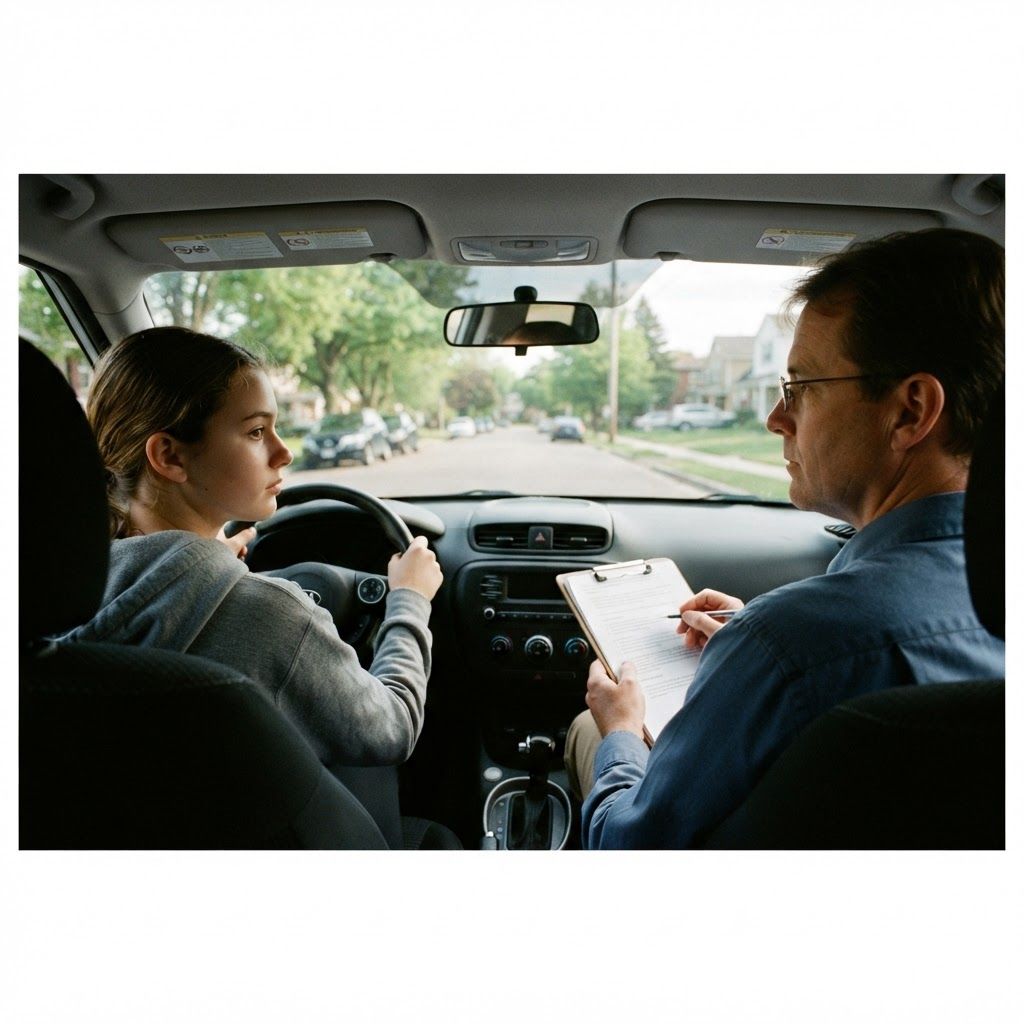
Learning to Drive in the St. Louis Metro
St. Louis presents a genuinely challenging environment for new drivers. The metro area combines high-speed interstate driving on corridors like Interstates 64, 44, 70 and 270 with older city street grids, complex multi-lane interchanges, river bridge crossings and highway merges that offer very short acceleration lanes. Add winter ice, summer thunderstorms that reduce visibility abruptly, and the fact that many teens will cross state lines regularly, and it becomes clear why structured professional instruction produces measurably better outcomes than parent-only teaching.
Missouri uses a graduated driver licensing system, beginning with an instruction permit, moving to an intermediate license and finally to a full license, with supervised driving hour requirements at each stage. Illinois residents in the metro east follow their own graduated system with mandatory driver education for younger applicants. Families should confirm requirements for their state of residence before enrolling, since school programs are structured around those rules.
Ten Strong Driving Instruction Options in the Region
1. Missouri Driving School is among the more established providers in the metro area, offering permit preparation, behind-the-wheel instruction and road test preparation with instructors familiar with local testing routes and examiner expectations.
2. Ken Ryan Driving School has a long-standing local reputation for patient instruction with anxious teen drivers and for structured progression from quiet residential streets to interstate driving.
3. Kirkwood, Rockwood and other public school district driver education programs remain excellent value where available. Programs offered through school districts and community education departments combine classroom instruction with supervised driving at costs well below private rates.
4. Community college continuing education programs in the region periodically offer driver education and defensive driving courses. These are especially useful for adult learners who never obtained a license and prefer a classroom setting.
5. AAA driver training resources provide well-regarded curriculum materials, parent-teen coaching guides and defensive driving instruction. The parent supervision guidance alone is worth reviewing, since most supervised hours happen with family rather than instructors.
6. Private one-on-one behind-the-wheel instructors licensed in Missouri serve students who need targeted work, such as highway merging confidence, parallel parking or road test rehearsal. Hourly instruction is often the most efficient spend for a student who already has substantial supervised practice.
7. Adult and immigrant driver programs address a significant regional need. These programs accommodate learners without family driving support, provide instruction in multiple languages where possible, and prepare students for both written and road testing from the beginning.
8. Defensive driving and traffic safety course providers serve drivers seeking insurance discounts or addressing citations. Certified courses cover hazard recognition, following distance and speed management, and the insurance savings frequently exceed the course cost.
9. Commercial driver license training schools in the St. Louis area prepare students for careers in trucking and transit. Given the region's role as a freight and distribution hub, demand for licensed commercial drivers remains strong and these programs offer a legitimate path to well-paid work.
10. Advanced and performance driving programs, including car control clinics run by regional motorsport organizations, teach skid recovery, threshold braking and emergency avoidance in controlled conditions. For a new driver, a single day of this instruction can be transformative in building genuine vehicle control.
What Distinguishes a Quality Program
Instructor credentials and vehicle equipment come first. Confirm that instructors are licensed and background checked and that training vehicles have dual controls and current safety inspections. Ask about the ratio of classroom to behind-the-wheel time, and specifically how many hours the student will spend actually driving rather than observing.
Curriculum breadth matters. Strong programs deliberately expose students to interstate merging, night driving, rain, heavy traffic and highway lane discipline rather than confining lessons to empty residential streets. Programs should also cover distraction avoidance explicitly, since phone use remains a leading factor in crashes involving young drivers.
Finally, evaluate parent communication. The best schools send progress notes after each session identifying what to practice, which makes supervised family driving productive instead of aimless.
Cost, Insurance and Practical Considerations
Driver education completion frequently qualifies families for insurance discounts, and the savings over several years can offset a meaningful portion of tuition. Ask insurers about good student discounts and telematics programs as well. When comparing school pricing, confirm exactly how many driving hours are included, whether road test use of the school vehicle is included, and how rescheduling is handled.
Building Skills After Licensing
Licensing is the beginning rather than the end of learning. New drivers should gradually expand their operating conditions, adding night driving, rain, highway distance and unfamiliar routes with supervision before attempting them alone. Families benefit from written agreements about passengers, curfews and phone use during the first year, when crash risk is highest. Practicing winter driving in an empty lot after the first snow teaches skid recognition safely.
Conclusion
St. Louis offers a solid range of driving instruction, from cost-effective school district programs to private behind-the-wheel instructors, adult learner services, commercial licensing schools and advanced car control clinics. Prioritize programs that deliver substantial real driving hours in genuinely challenging local conditions, verify instructor credentials, and treat the first year after licensing as a continued training period rather than a finish line.