
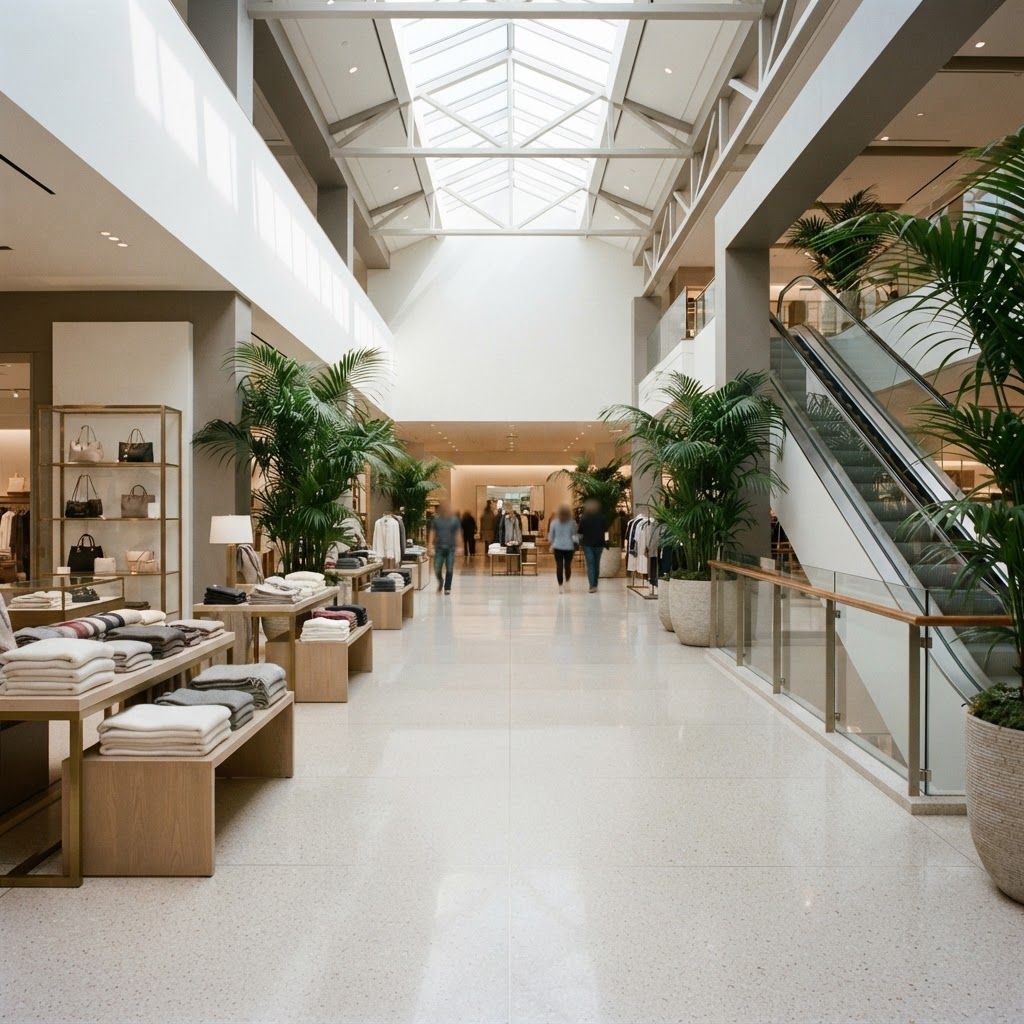
The Role of Department Stores in Chula Vista
Department stores have been under pressure nationally for two decades, but in Chula Vista they remain genuinely relevant. The reason is structural: the city's retail geography is organized around large shopping centers, and department stores serve as the anchors that make those centers worth a dedicated trip. For households consolidating errands, particularly families managing school clothing, home goods and gift shopping in a single outing, the format still works.
Local demographics reinforce that. Chula Vista skews younger and more family-oriented than California averages, and back-to-school, holiday and occasion shopping all cluster in ways that favor broad-assortment retailers. The city's proximity to the international border also brings cross-border shoppers into the market, particularly during major promotional periods, which supports store footprints larger than local population alone would justify.
Mid-Market Anchors
Macy's is the most recognizable full-line department store serving the market, with genuine depth across women's and men's apparel, cosmetics, accessories, housewares and bedding. Its cosmetics and fragrance departments are among the strongest in the area, offering brand counters with trained staff and sampling that online channels cannot replicate. Its frequent promotional calendar means patient shoppers rarely need to pay full price, though it also makes list pricing largely notional.
Kohl's competes effectively on a different model: convenient off-mall locations, strong value pricing and a rewards structure that generates repeat visits. Its children's and activewear assortments perform particularly well with Chula Vista's family demographic, and its in-store returns partnership for online orders has become a significant traffic driver in its own right. Store layouts are simpler to navigate quickly than traditional multi-level department stores, which suits time-constrained shoppers.
JCPenney holds a durable position with services that pure-play retailers struggle to match, including in-store salon services, custom window treatments and portrait photography. Its private-label apparel offers reasonable quality at accessible pricing, and its home departments serve first-time homeowners well. Its jewelry and watch counters also handle a meaningful share of local gift purchasing.
Off-Price and Discount Formats
Nordstrom Rack has become one of the most productive retail formats in the region, offering genuinely discounted premium and designer merchandise. The model rewards frequent visits and flexible expectations: inventory turns quickly, sizes and colors are inconsistent, and the shopper who arrives with a specific item in mind is often disappointed while the shopper browsing for value regularly does well. Its shoe department is a particular strength.
Ross Dress for Less operates at the value end of off-price with a broad mix spanning apparel, home decor, kitchenware and seasonal goods. Its appeal locally is straightforward: very low price points on a constantly changing assortment. Quality is uneven, and careful inspection of stitching and finishing is warranted, but the home and gift categories in particular deliver real value.
Marshalls and T.J. Maxx, operating under the same parent, follow a similar off-price model with somewhat more emphasis on brand names and a stronger home goods presentation. Their buying strategy, purchasing overstock and end-of-season inventory from full-price retailers, means genuine designer merchandise appears regularly at substantial discounts. Both are strong for handbags, bedding and small home accents.
Burlington rounds out the off-price group with unusual depth in coats and outerwear, its historical specialty, alongside broad apparel, baby gear and home assortments. Its baby department is one of the better-stocked value options in the area for expecting parents.
Mass Merchants Functioning as Department Stores
Target functions as a de facto department store for many Chula Vista households, and treating it otherwise misreads how residents actually shop. Its combination of apparel, home goods, electronics, beauty and grocery in a single well-organized store, paired with same-day pickup and delivery services, addresses the convenience need that traditional department stores were built to serve. Its designer collaboration collections have also given it genuine fashion credibility at accessible pricing.
Walmart competes on breadth and price, adding full grocery to an assortment that otherwise mirrors a department store. For households managing tight budgets, the ability to complete apparel, household and grocery shopping in one trip at consistently low prices is decisive. Presentation and service levels are lower than dedicated apparel retailers, which is the explicit tradeoff.
Costco closes the list, and while its format differs sharply, its role overlaps considerably. Its apparel, home textiles, seasonal goods and jewelry offerings are narrow but selectively strong, and its return policy is the most generous of any retailer in the market. For bulk household goods paired with occasional high-value apparel and home purchases, it functions as a department store with an unusually short assortment and unusually good pricing.
Getting Better Results as a Shopper
Timing matters more in department store retail than in almost any other category. Seasonal apparel is marked down predictably, with the deepest reductions arriving after a season's peak rather than during it. Home goods follow similar patterns around major holidays. Buying one season ahead, particularly for children's clothing where sizing changes anyway, produces significant savings.
Loyalty programs across these retailers vary widely in actual value. The strongest combine points accumulation with member-only pricing and flexible redemption; the weakest issue vouchers with short expiration windows and category restrictions that push additional spending. Read the redemption terms rather than the enrollment pitch.
On credit offers, store cards frequently provide meaningful ongoing discounts but carry interest rates well above general-purpose cards. They make sense only for shoppers who clear balances monthly. For everyone else, the discount is quickly consumed by finance charges.
Trends Reshaping the Format
Two shifts stand out. First, fulfillment has become the department store's most defensible advantage: same-day pickup, curbside collection and free in-store returns for online purchases give physical stores a role that pure e-commerce cannot easily match. Second, off-price has continued taking share from full-price department retail, and several traditional anchors have responded by opening their own off-price formats rather than defending full-price positioning.
Beauty and services have also become disproportionately important. Cosmetics counters, salon services, alterations and optical departments generate visits that pull through broader purchasing, and stores investing in these categories are outperforming those treating them as afterthoughts.
Final Thoughts
Chula Vista is well served across the department store spectrum, from full-line traditional anchors through off-price and mass merchant formats. The practical approach is to match the store to the purchase: traditional anchors for cosmetics, fragrance and occasion apparel where service and selection matter; off-price for home goods, handbags and opportunistic brand buying; and mass merchants for household basics and everyday apparel. Shoppers who move between formats rather than defaulting to one consistently spend less and find more.