
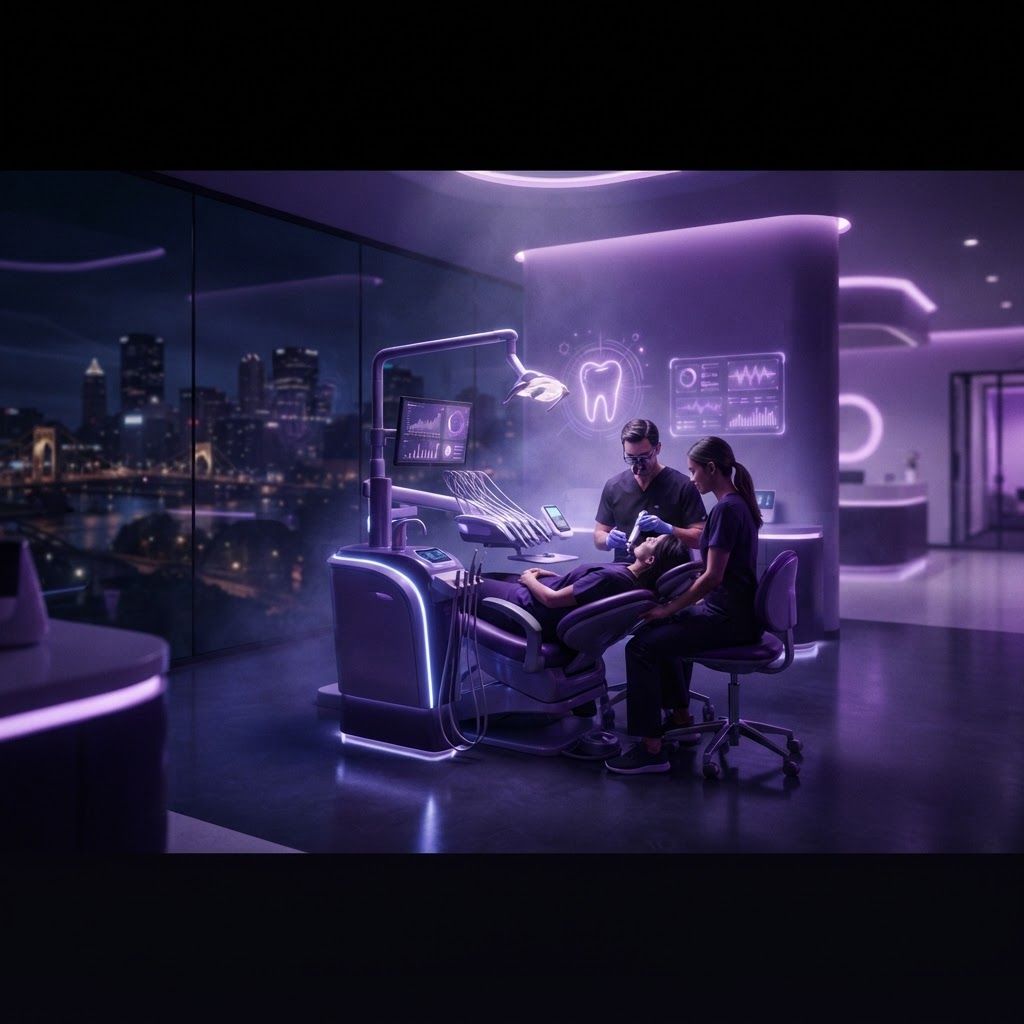
Pittsburgh's Dental Care Landscape
Dental care in Pittsburgh reflects the city itself: a mix of long-established neighborhood practices passed between generations of dentists and a newer wave of technology-forward clinics offering same-day crowns, digital scanning, and sedation options. The presence of a respected university dental school means many local practitioners trained here, stayed here, and maintain teaching relationships that keep their techniques current.
That depth matters because dentistry has changed dramatically in a decade. Intraoral scanners have largely replaced impression trays, cone beam imaging allows precise implant planning, and clear aligner therapy has moved orthodontics into general practice. Patients now have real choices about how their care is delivered, not just who delivers it.
What to Look for in a Dental Practice
Start with scope. A general dentist who handles cleanings, fillings, crowns, and simple extractions covers most needs, but complex cases benefit from in-house specialists or a reliable referral network of periodontists, endodontists, and oral surgeons. Practices that keep specialists under one roof reduce the coordination burden on patients undergoing multi-stage treatment.
Next, evaluate comfort and communication. The best clinics explain findings with images you can actually see, present treatment in phases with clear costs, and never pressure patients into elective work. Anxiety management is a legitimate criterion too; nitrous oxide, oral sedation, and genuinely patient staff turn avoided appointments into completed ones.
The Top 10 Dental Clinics in Pittsburgh
1. University of Pittsburgh School of Dental Medicine offers faculty and supervised student clinics covering nearly every specialty, from pediatric dentistry to prosthodontics. Treatment takes longer, but the diagnostic rigor and reduced fees make it exceptional value for complex or costly cases.
2. Pittsburgh Dental Spa built its reputation on cosmetic dentistry delivered in a relaxed, service-oriented environment. Veneers, whitening, and full smile design work are its focus, supported by digital previews that let patients see outcomes before committing.
3. Wagner Dental Arts is known for restorative and implant dentistry with careful attention to bite mechanics. Patients with worn dentition, failed old crowns, or long-standing jaw discomfort often end up here after less thorough evaluations elsewhere.
4. Shadyside Dental Associates serves the East End with a straightforward family practice model, strong hygiene programs, and a reputation for conservative treatment planning that prioritizes monitoring over premature drilling.
5. South Hills Dental Arts combines general dentistry with cosmetic and Invisalign services, drawing a broad suburban patient base. Extended hours and efficient scheduling are frequently cited advantages for working families.
6. Steel City Dental targets patients who want modern convenience: online booking, digital records, same-visit crowns, and clear itemized estimates. It has become a common choice for young professionals new to the city.
7. Pittsburgh Dental Sleep Medicine occupies a specialized niche, treating sleep-disordered breathing and bruxism with oral appliances rather than surgery. Its collaboration with local sleep physicians distinguishes it from general practices that dabble in the field.
8. Kids Dental Care of Pittsburgh focuses entirely on pediatric patients, with age-appropriate explanations, preventive sealant programs, and behavioral techniques that make early visits genuinely uneventful. Establishing care by age one is increasingly the recommended standard.
9. Beltz, Kes, Wilson and Sheppard Orthodontics is among the region's better-known orthodontic groups, treating both adolescents and adults with braces and aligner systems. Multiple locations across the metro reduce travel for long treatment courses.
10. Community dental clinics affiliated with local health centers deserve inclusion for their public health role. Sliding-scale fees, Medicaid acceptance, and emergency extraction access keep essential care available to patients who would otherwise go without.
Technology That Actually Improves Outcomes
Not every gadget matters, but several genuinely change results. Cone beam computed tomography allows implant placement to be planned around nerves and sinuses rather than estimated. Digital scanning eliminates the gag-inducing impression material and produces better-fitting restorations. Caries detection using laser fluorescence catches decay earlier than visual inspection alone, and in-office milling means a single appointment can replace two.
Teledentistry has also gained traction for triage. A photo-based consultation can determine whether swelling requires same-day attention or whether a chipped tooth can wait until Monday, which is particularly useful across Pittsburgh's spread-out neighborhoods and river crossings.
Costs, Insurance, and Value
Dental insurance typically covers preventive care generously and major work sparingly, with annual maximums that have barely moved in decades. That reality makes cost transparency essential. Ask for written treatment plans with procedure codes, confirm whether the practice is in network, and inquire about membership plans, which many Pittsburgh offices now offer for uninsured patients at a flat annual rate covering cleanings, exams, and radiographs.
For expensive restorative work, second opinions are reasonable and widely accepted. Reputable practitioners welcome them, particularly when full-mouth rehabilitation or multiple implants are proposed.
Preventive Habits That Reduce Dental Spending
The most effective dental strategy remains unglamorous. Twice-daily brushing with fluoride toothpaste, daily interdental cleaning, limiting frequent sugar exposure rather than total quantity, and professional cleanings twice yearly prevent the overwhelming majority of expensive interventions. Patients with dry mouth from medication, acid reflux, or a history of gum disease may need three or four cleanings annually, and good clinics adjust intervals to risk instead of applying a universal schedule.
Making Your Choice
Consider location realistically, because a practice you can reach before work will see you more consistently than a highly rated office across two bridges. Read reviews for patterns rather than outliers, verify licensure and continuing education, and schedule a new patient exam before you have an emergency. Pittsburgh's dental market is competitive and skilled, which means patients who ask informed questions rarely settle for less than excellent care.