
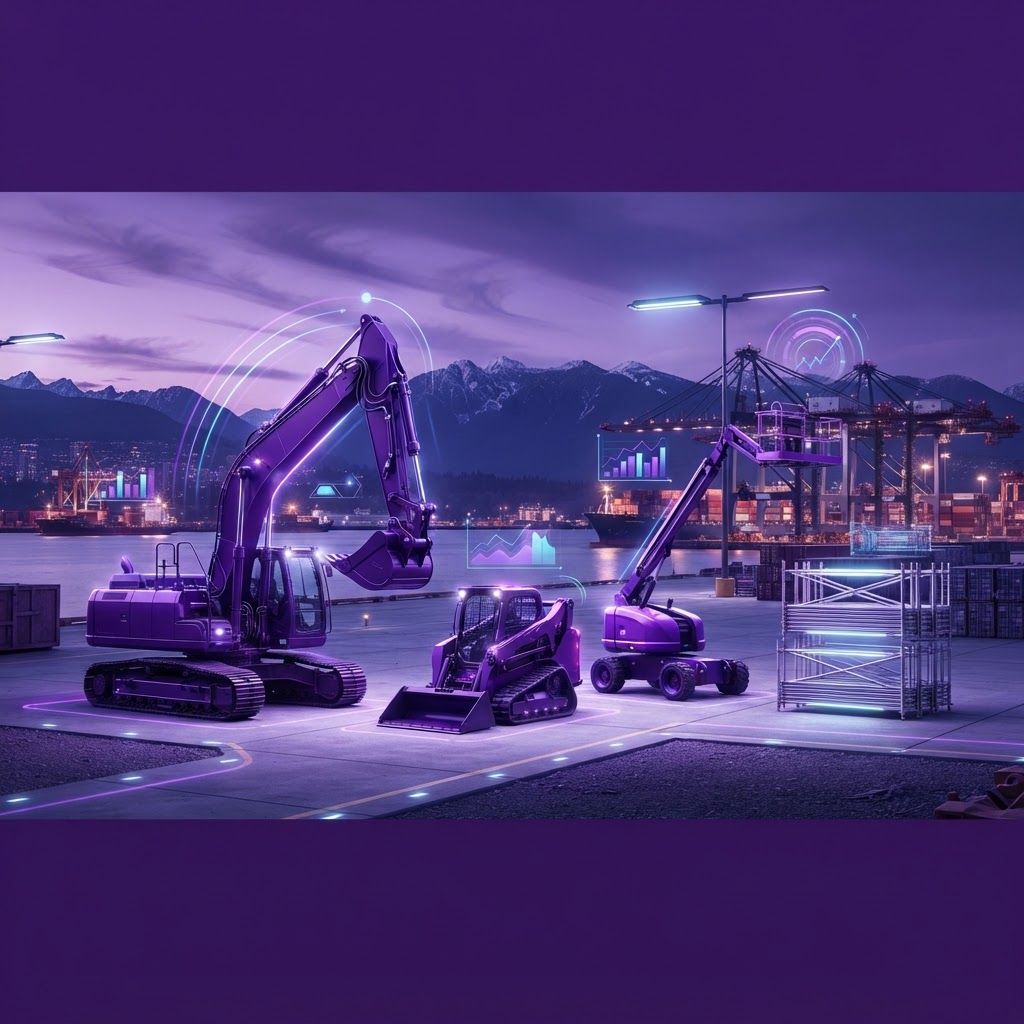
Why Renting Dominates Vancouver Construction
Equipment rental has become the default model across Metro Vancouver for reasons specific to the region. Land is extremely expensive, so contractors have little room to store idle machines. Urban job sites are tight, meaning the right compact machine matters more than owning a large one. Project mixes change constantly for renovation and trades businesses. And rapidly evolving emissions and battery technology makes owning equipment a depreciating bet when rental fleets refresh continuously.
For homeowners, rental provides access to professional-grade tools for a weekend project that would be uneconomic to buy, from concrete saws to aerial lifts for exterior work.
How to Rent Well
Understand rate structures first: daily, weekly and monthly rates differ dramatically, and a four-day rental often costs the same as a week. Confirm what is included, including delivery and pickup, environmental and fuel charges, damage waivers and insurance requirements. Ask about attachment availability, since a machine without the right bucket or breaker is useless. Verify operator certification requirements, particularly for aerial work platforms, forklifts and excavators, and confirm the supplier's service response if a machine fails mid-project. Inspect and document condition at pickup to avoid disputes on return.
1. National Full-Line Rental Companies
Large national rental companies operate multiple branches across Metro Vancouver with the broadest fleets: excavators, loaders, aerial lifts, compaction equipment, generators, pumps, trench safety systems and climate control units. Their advantages are availability, fleet age, consistent maintenance programs, twenty-four hour support and online account management with telematics reporting. For contractors running multiple sites, this consistency is worth a premium.
2. Independent Local Rental Yards
Independent yards compete on service and flexibility. They tend to know their customers by name, accommodate short-notice needs, negotiate rates on longer terms and give practical advice about which machine suits a specific job. For small contractors and trades businesses working across the Lower Mainland, a strong relationship with an independent yard is often more valuable than a national account.
3. Earthmoving and Heavy Equipment Specialists
Excavation-focused suppliers rent mini and full-size excavators, skid steers, compact track loaders, dozers, rollers and articulated dump trucks, along with the attachments that make them versatile: breakers, augers, compaction plates, grapples and thumbs. In Vancouver, compact and zero-tail-swing machines are in constant demand because urban lots leave no room to swing a conventional counterweight.
4. Aerial Lift and Access Equipment Providers
Access equipment includes scissor lifts, boom lifts, telehandlers, mast lifts and towable units, used for envelope work, roofing, electrical installation, sign work and warehouse maintenance. Suppliers in this category typically provide required operator familiarisation and can advise on ground conditions, reach requirements and indoor versus outdoor rating. Certification requirements are strictly enforced under provincial safety regulation.
5. Scaffolding and Shoring Rental Companies
Scaffold suppliers rent and erect tube-and-clamp and system scaffolding, swing stages for mid-rise envelope work, shoring for concrete formwork and temporary weather protection enclosures. Weather enclosure demand is high in Vancouver because rain protection allows work to continue through the wet season. Engineered drawings and professional erection are required above certain heights and configurations.
6. Concrete Equipment and Formwork Suppliers
These suppliers rent mixers, power screeds, trowels, vibrators, saws, core drills, grinders, formwork panels, ties and shoring posts. Concrete cutting and drilling equipment is particularly in demand for renovation work in the region's concrete condo stock, where new openings and anchor installations require diamond tooling and dust control equipment.
7. Pump, Dewatering and Trench Safety Rental Firms
Given high groundwater in much of the Fraser delta and heavy rainfall, dewatering is a routine requirement rather than an exception. Suppliers provide submersible and diesel pumps, hoses, settling tanks and filtration for compliant discharge, plus trench boxes, shoring plates and hydraulic shores required for safe excavation entry. Compliance in this category is a safety issue with serious regulatory consequences.
8. Power Generation and Temporary Utilities Providers
Temporary power suppliers rent generators from small portable units to large towable sets, along with distribution panels, cable, lighting towers, heaters and temporary climate control. Demand spikes during storm-related outages and on sites where permanent power has not yet been energised. Battery and hybrid power units are appearing in this fleet, driven by noise restrictions and emissions requirements in urban neighbourhoods.
9. Tool and Small Equipment Rental Outlets
Small tool rental serves both trades and homeowners: rotary hammers, tile saws, floor sanders, paint sprayers, plate compactors, augers, pressure washers, drain snakes and carpet extractors. These outlets are the most accessible entry point to the rental market and often provide the most useful advice, since staff see the same weekend projects repeatedly and know what commonly goes wrong.
10. Specialty and Environmental Equipment Suppliers
Specialty suppliers cover niches such as concrete grinding and dust extraction systems, asbestos and mould abatement containment equipment, drying and dehumidification for restoration work, surveying instruments, traffic control equipment and material handling gear. Their value lies in having the exact item a project needs occasionally but never often enough to justify purchase.
Cost Control and Site Efficiency
The largest hidden cost in rental is idle time. Machines sitting on a site over a weekend still accrue charges, so schedule delivery to align with the work rather than as a hedge. Compare weekly against daily rates carefully, bundle attachments into one agreement, and consider operated rentals with a qualified operator when the work is short and specialised. On longer projects, monthly rates plus a maintenance agreement often beat both short-term rental and purchase.
Safety and Compliance
Provincial regulation requires operator training and certification for many machine categories, and equipment must be inspected before use. Confirm who is responsible for maintenance during the rental term, ensure daily inspection logs are kept, and never allow untrained personnel to operate lifts or excavators. Emissions and noise bylaws in Vancouver restrict certain equipment hours in residential areas, so plan noisy operations within permitted windows. Renting from suppliers who maintain their fleet properly is both a cost decision and a safety decision.