
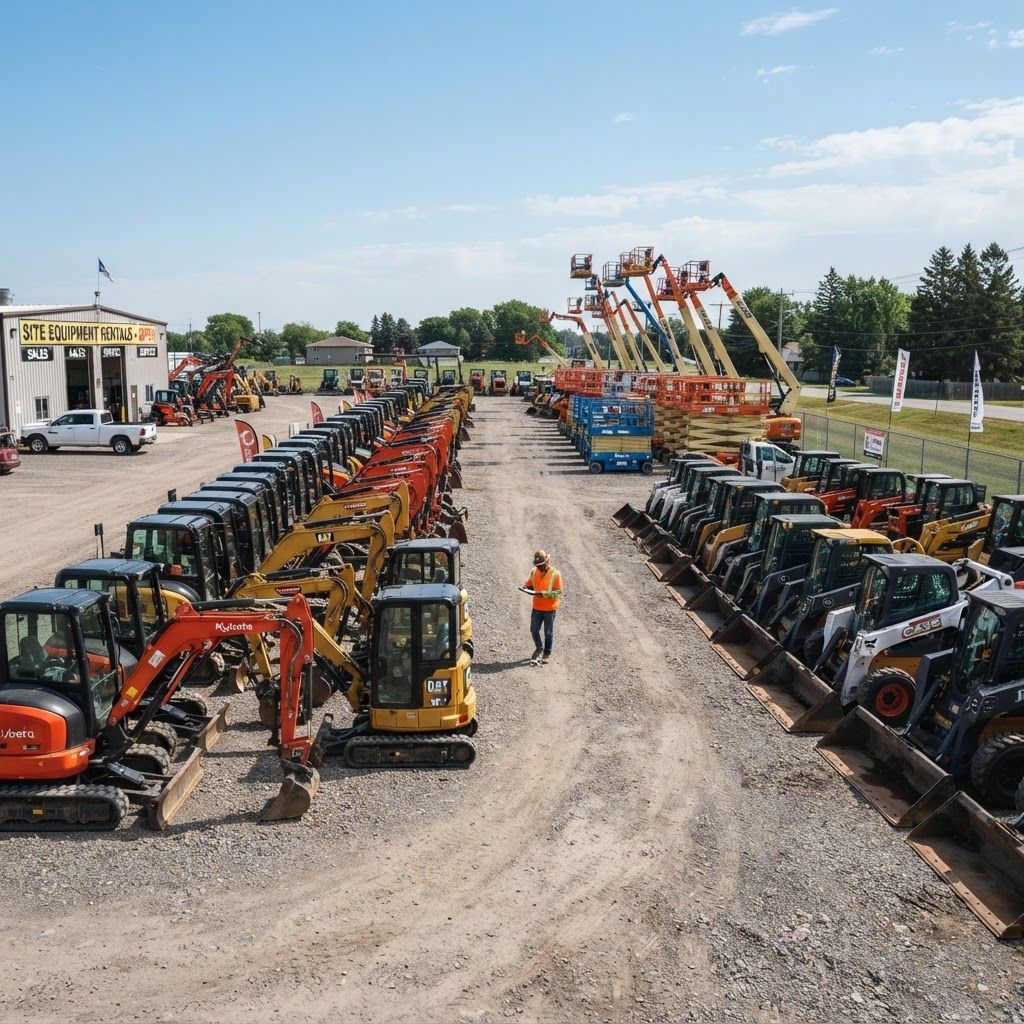
Why Equipment Rental Dominates the Local Market
Equipment ownership carries costs that extend far beyond purchase price. Depreciation, storage, insurance, maintenance, transport, and idle time all erode the economics of owning machines used intermittently. For most contractors in the St. Paul area, and certainly for homeowners tackling a single project, renting delivers access to newer, better-maintained equipment without capital commitment.
The seasonal nature of Minnesota construction reinforces this. Earthwork, concrete, paving, and exterior projects concentrate into a compressed window from spring thaw through late fall. Owning equipment that sits idle through a long winter is expensive, while rental lets contractors scale their fleet to actual workload. Winter demand shifts toward heaters, ground thawing equipment, concrete blankets, and snow handling machines, which rental yards stock accordingly.
Equipment Categories to Understand
Earthmoving includes mini excavators, standard excavators, skid steer and compact track loaders, backhoes, and dozers. Compaction covers plate compactors, rammers, and ride-on rollers. Aerial equipment includes scissor lifts, boom lifts, and telehandlers, essential for commercial interior and exterior work at height. Concrete equipment covers mixers, power trowels, saws, and vibrators. Trenching and boring machines handle utility work.
Support equipment matters as much as the headline machines. Generators, light towers, temporary heaters, dewatering pumps, dumpsters, trench boxes, and scaffolding often determine whether a jobsite functions efficiently. Specialty tool rental including concrete grinders, floor sanders, tile saws, and demolition hammers serves both trades and homeowners.
Ten Equipment Rental Providers Serving St. Paul
Capital City Equipment Rental offers a broad general fleet with delivery service across the metro and weekend rate options.
Riverfront Heavy Equipment focuses on earthmoving machines including excavators, loaders, and dozers with operator training support.
Northern Aerial Lift Rentals specializes in scissor lifts, boom lifts, and telehandlers, including narrow electric units for interior work.
Summit Contractor Supply and Rental combines rental with materials and consumables, convenient for trades needing both in one stop.
Frostline Heating and Temporary Power concentrates on winter equipment such as indirect fired heaters, ground thaw units, generators, and light towers.
Great River Concrete Equipment serves concrete contractors with mixers, screeds, power trowels, saws, and finishing tools.
Eastside Compact Equipment targets residential and small commercial contractors with mini excavators and compact track loaders suited to tight urban lots.
Union Park Tool Rental operates as a neighborhood counter serving homeowners with hand tools, small machines, and short-term rates.
Landmark Trench and Utility Rentals provides trenchers, boring equipment, trench shoring, and pipe handling gear.
Twin Rivers Rental Services completes the list with fleet management contracts for larger contractors requiring sustained multi-machine supply.
Getting the Most From a Rental Relationship
Availability planning is the most common failure point. Peak season demand for popular machines such as mini excavators and skid steers can exceed supply, so reserving well in advance protects your schedule. Confirm delivery and pickup windows in writing, since a machine arriving a day late can idle an entire crew.
Understand the rate structure. Daily, weekly, and monthly rates differ substantially in effective cost, and a project running five days is often cheaper at a weekly rate. Clarify what counts as a rental day, whether hour meters trigger additional charges, and how fuel is handled. Delivery and pickup fees, environmental charges, and damage waiver costs should all be disclosed upfront.
Inspect equipment at delivery and document existing damage with photographs. Verify that safety equipment, attachments, and required accessories are included. Confirm whether attachment changes such as buckets, augers, or breakers carry separate charges.
Safety and Compliance
Operator competence is the renter's responsibility. Aerial lifts require documented training and fall protection. Excavation work requires utility locating before digging, which is a legal requirement and a practical necessity given the density of buried infrastructure in St. Paul. Trench work beyond specified depths requires protective systems, and rental yards can supply trench boxes but cannot make the safety decision for you.
Confirm insurance requirements. Most rental agreements require the renter to carry coverage or purchase a damage waiver, and commercial general liability is typically mandatory for contractor accounts.
Trends in the Rental Industry
Electrification is arriving in equipment fleets. Battery-powered compact loaders, electric scissor lifts, and battery tool platforms reduce emissions and noise, which matters on interior work and in residential neighborhoods with early start times. Telematics on rental machines now track location, hours, and fault codes, improving maintenance and reducing downtime.
Online reservation and account portals have become standard, letting contractors book, extend, and request pickup without phone calls. Fleet age has become a competitive differentiator, with providers advertising average machine age as a proxy for reliability.
Conclusion
Equipment rental in St. Paul is a service business as much as a machine business, and the best providers win on availability, delivery reliability, and fleet condition. The ten companies above cover earthmoving, aerial work, concrete, utilities, winter equipment, and homeowner tools. Reserve early, read the rate terms carefully, and build a relationship with a yard that answers the phone during peak season.