
Why Rental Dominates Equipment Access in Sonoma County
Construction equipment represents enormous capital investment, and most of it sits idle for the majority of its life. Rental converts that fixed cost into a variable one, letting contractors match equipment to project requirements rather than forcing projects to fit owned machinery. For property owners tackling their own work, rental provides access to capability that purchase could never justify.
Sonoma County's rental market serves an unusually varied customer base. General contractors, landscape companies, vineyard operations, winery facilities, municipal crews, event producers, and homeowners all draw from the same supply. That breadth has produced rental yards with deeper and more specialized inventories than many comparable markets. The categories below describe what is available.
1. Earthmoving and Excavation Equipment
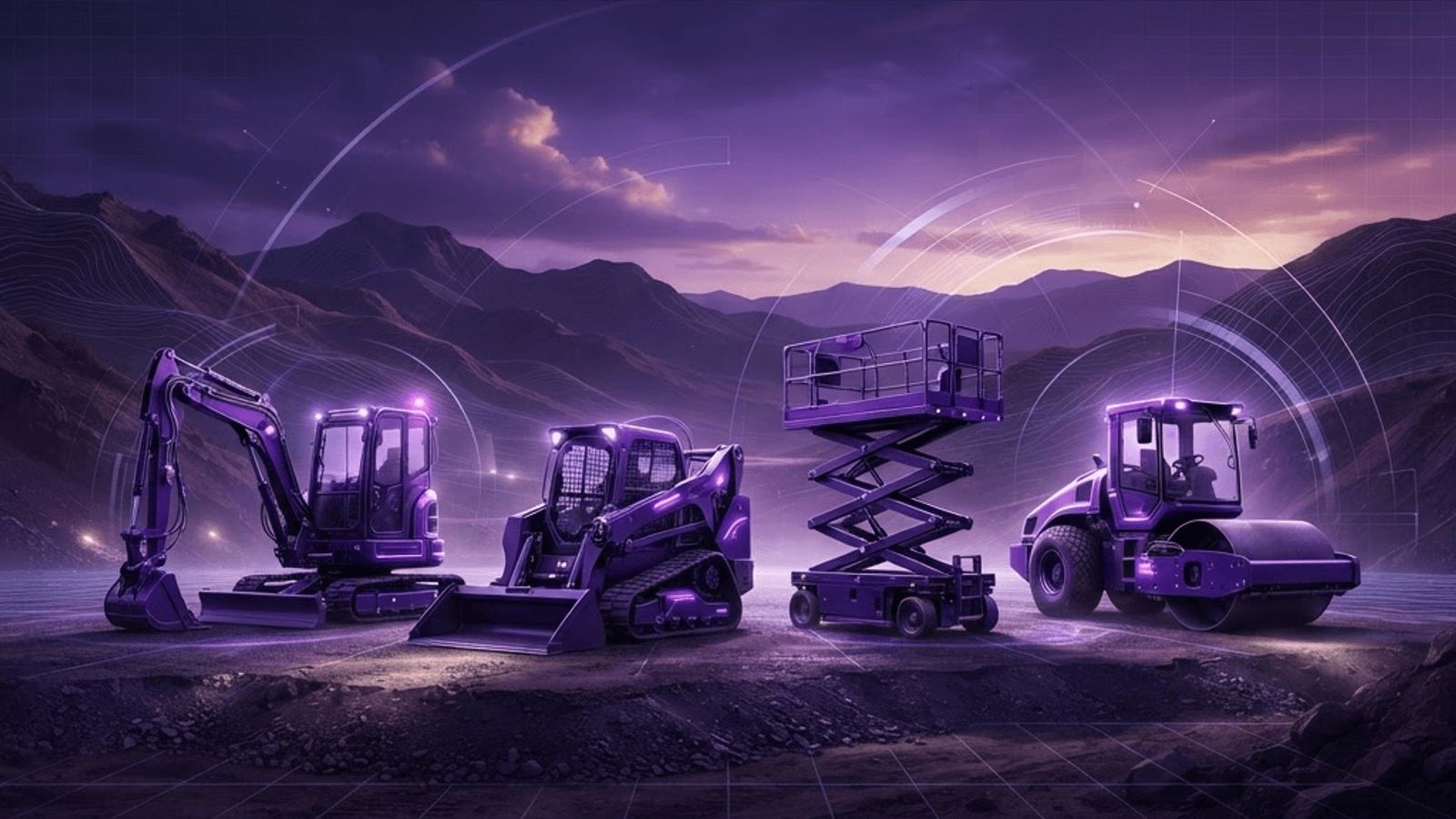
Compact and mid-size excavators are the workhorses of residential and light commercial construction, handling foundation work, utility trenching, drainage installation, and demolition. Skid steer and compact track loaders provide versatility through attachment systems. Sonoma County's hillside terrain and clay soils make track machines particularly useful, since they distribute weight better on soft ground and slopes.
2. Compaction and Soil Preparation Equipment
Proper compaction determines whether pavement, slabs, and foundations perform over time. Rental inventories include plate compactors for confined areas, jumping jack rammers for trenches, walk-behind rollers, and ride-on drum rollers for larger areas. Trench compaction in particular is frequently shortcut, and the resulting settlement shows up years later as cracked pavement and sunken utility lines.
3. Aerial Lifts and Access Equipment
Scissor lifts, boom lifts, and telehandlers provide safe elevated access for construction, maintenance, tree work, and installation. Operator training and certification are required for most powered access equipment, and reputable rental providers verify credentials or offer familiarization training. Terrain-capable rough terrain lifts matter on the unimproved sites common in rural Sonoma County.
4. Concrete Equipment
Concrete work requires specialized tools: mixers, power buggies, vibrators, power trowels, screeds, and saws for cutting cured slabs. Core drills handle penetrations through existing concrete. For decorative work, rental yards stock grinders and polishers that produce the polished concrete finishes popular in contemporary commercial interiors and winery spaces.
5. Trenching and Utility Equipment
Trenchers, cable plows, and directional boring equipment install utilities with varying degrees of surface disruption. Directional boring in particular allows utility installation beneath driveways, landscaping, and roadways without excavation, which frequently justifies its higher cost through avoided restoration expense.
6. Demolition and Breaking Equipment
Demolition rentals range from handheld breakers and demolition hammers to hydraulic breakers mounted on excavators, along with concrete crushers and shears for larger work. Dust suppression equipment accompanies this category, since California silica exposure regulations require engineering controls when cutting or breaking concrete and masonry.
7. Material Handling and Lifting
Forklifts, telehandlers, and material lifts move materials around sites efficiently. Rough terrain forklifts handle unimproved ground, while telehandlers combine reach and lifting capacity for placing materials at height. Agricultural operations across the county use this equipment heavily during harvest and facility maintenance.
8. Landscaping and Site Work Equipment
Landscape rentals include stump grinders, chippers, tillers, sod cutters, augers, and trenchers. Given Sonoma County's extensive vineyard and rural residential property, this category stays busy year-round. Brush and vegetation management equipment has taken on additional importance as defensible space requirements around structures became more rigorously enforced.
9. Power Generation, Lighting, and Temporary Utilities
Generators, light towers, temporary power distribution, portable heaters, and air compressors support work where permanent utilities are unavailable. In Sonoma County, generator rental also spikes during public safety power shutoff events, when businesses and property owners need temporary power to maintain operations and preserve refrigerated inventory.
10. Specialty and Agricultural Equipment
Wine country generates demand for equipment that general rental yards elsewhere would not stock: vineyard tractors with narrow track widths, post pounders for trellis installation, orchard and vineyard sprayers, and harvest support equipment. Specialty rental also covers pumps for dewatering, scaffolding systems, and event infrastructure.
Rental Economics
Rental rates typically offer daily, weekly, and monthly tiers, with the weekly rate usually around three times the daily rate and the monthly around three times the weekly. That structure means a job expected to run four or five days often costs the same to rent for a full week, and planning around the tiers reduces cost meaningfully.
The general decision rule is straightforward. If equipment will be used less than sixty percent of available working time, rental almost always costs less than ownership once maintenance, storage, insurance, transport, and depreciation are counted. Ownership makes sense only for equipment used continuously across projects.
Insurance and Liability
Rental agreements place responsibility for damage on the renter. Contractors should verify that their general liability and equipment coverage extends to rented machinery, and homeowners should check whether their policy provides any coverage before declining the rental company's damage waiver. The waiver often represents reasonable value for occasional renters, since a single incident with a compact excavator can exceed the cost of many rentals.
Transport is a separate consideration. Many machines exceed the towing capacity of ordinary pickup trucks, and improper trailering causes serious accidents. Rental companies offer delivery and pickup, which usually costs less than the risk and equipment required to transport safely.
Safe and Effective Use
Always call for underground utility marking before any excavation, which is legally required and free. Inspect rented equipment before accepting it, documenting existing damage with photographs to avoid disputes at return. Request operational familiarization on unfamiliar machines, since rental staff generally provide it at no cost and it prevents both damage and injury.
Match equipment to the actual task rather than renting the largest machine available. Oversized equipment is harder to maneuver in confined residential sites, causes more collateral damage to landscaping and hardscape, and costs more to rent and transport. The right-sized machine finishes work faster in practice.