
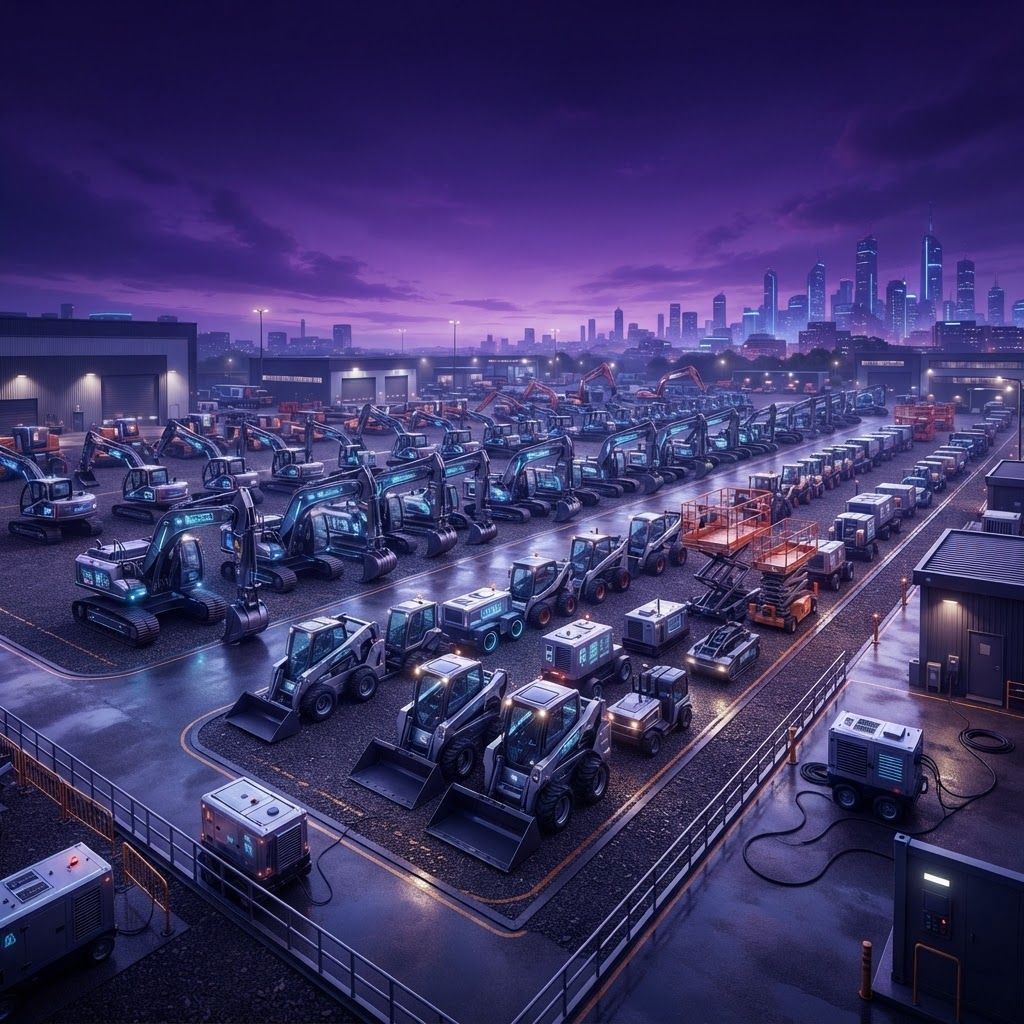
Why Rental Dominates Equipment Access
Construction equipment is expensive to buy, expensive to maintain, and idle most of the time on any single project. Renting converts that capital cost into a project expense, transfers maintenance responsibility to the rental company, and gives access to newer, better-maintained machines than most contractors could justify purchasing. For homeowners tackling a substantial project, rental is the only realistic path to using professional-grade equipment.
Hialeah is well served in this market. Its concentration of construction, industrial, and logistics activity supports a dense network of rental yards carrying everything from compaction plates and concrete saws to excavators, telehandlers, and generators. Understanding what each type of provider offers, and how rental agreements actually work, prevents both project delays and unpleasant invoices.
1. General Contractor Equipment Rental Yards
Full-line rental yards carry a broad inventory covering most trades: skid steers, mini excavators, compactors, generators, light towers, pumps, saws, mixers, and hand tools. Their advantage is convenience, since a contractor can source most needs from one account with consolidated billing and a single delivery. The best yards maintain equipment rigorously, deliver on schedule, and provide substitution when a machine fails, which matters because equipment breakdown stalls entire crews.
2. Earthmoving and Heavy Equipment Rental Providers
Specialists in heavy machinery supply excavators, backhoes, dozers, loaders, and graders for site work, foundation excavation, and utility installation. In South Florida, the high water table makes excavation work particularly demanding, so these providers also rent dewatering pumps and well point systems. Rental typically includes transport to and from the site, which is a significant cost element for tracked machines.
3. Aerial Lift and Access Equipment Rentals
Scissor lifts, boom lifts, articulating lifts, and telehandlers provide safe elevated access for construction, maintenance, roofing, signage, and electrical work. Operators must hold appropriate training certification, and rental companies frequently provide familiarization at delivery. Selecting the right machine involves working height, horizontal reach, platform capacity, and whether the surface can support the machine, all of which the rental representative should help evaluate.
4. Concrete and Masonry Equipment Rental Specialists
Given the dominance of concrete construction locally, this category is heavily used. Inventory includes mixers, power buggies, concrete saws and walk-behind cutters, core drills, vibrators, power trowels, grinders, and finishing tools. Providers also supply forming accessories and rebar tools. Because concrete work is time-sensitive once a pour begins, equipment reliability and backup availability are critical selection factors.
5. Compaction and Soil Preparation Equipment Rentals
Plate compactors, jumping jack rammers, walk-behind and ride-on rollers are essential for preparing subgrade beneath slabs, driveways, and pavement. In sandy South Florida soils, achieving specified compaction requires correct equipment selection and appropriate moisture conditioning, and inadequate compaction leads to settlement and cracking. Rental staff who understand these requirements provide genuine value beyond simply handing over a machine.
6. Power Generation and Temporary Utility Rentals
Generators, distribution panels, cable, light towers, and temporary heating and cooling equipment support job sites without permanent utilities and provide backup during outages. Hurricane season creates surge demand for generators across both construction and general commercial use. Providers in this segment size units to actual load, supply fuel service on larger units, and handle the grounding and connection requirements that safe temporary power demands.
7. Pump, Dewatering, and Water Management Rentals
South Florida high water table and intense rainfall make dewatering equipment essential. Providers rent trash pumps, submersible pumps, diaphragm pumps, well point systems, hose and piping, and filtration for discharge compliance. Excavation below the water table is routine locally and requires proper dewatering design, so providers with technical support rather than just inventory are worth seeking out.
8. Scaffolding and Shoring Rental Companies
Scaffolding, shoring, and formwork support rental serves masonry, stucco, painting, and concrete work. These providers supply frame and system scaffolding, planks, guardrails, shoring posts, and slab forming systems, and many offer erection and dismantling services. Because scaffold collapse is among the most serious construction hazards, using competent erection services and inspecting daily are not optional practices.
9. Trench Safety and Specialty Equipment Rentals
Trench boxes, shoring systems, road plates, traffic control devices, and confined space equipment address safety compliance requirements. Excavation cave-in is one of the deadliest construction hazards, and protective systems are mandatory beyond specified depths. Providers in this segment supply engineered systems with the documentation inspectors expect, along with the technical guidance to select an appropriate system for soil conditions.
10. Homeowner and Small Project Tool Rental Outlets
Serving homeowners and small contractors, these outlets rent tile saws, floor sanders, pressure washers, augers, trenchers, chainsaws, paint sprayers, carpet cleaners, and small dumpsters or debris trailers. Daily and half-day rates make short projects economical. Staff at good outlets provide operating instruction and safety guidance, which matters significantly for users unfamiliar with the equipment.
Understanding Rental Pricing
Rental rates are typically structured by day, week, and month, with progressively better effective daily rates for longer terms. A weekly rate often costs little more than three days, so a project expected to take four days should generally be booked weekly. Additional charges commonly include delivery and pickup, fuel, environmental fees, and damage waivers. Meter-based limits may apply to larger equipment, with overage charges beyond specified hours per day, which matters for double-shift operations.
Fuel policy varies and should be clarified upfront, since returning a machine unfueled at retail-plus rates is a common avoidable expense. Also confirm whether the rental clock runs on calendar days or only working days, and whether weekends count on a weekday-only project.
Insurance, Damage Waivers, and Liability
Renters are responsible for equipment while it is in their possession. Rental companies offer damage waivers that limit liability for accidental damage, though these typically exclude theft in some circumstances, misuse, and overturning. Contractors with commercial equipment coverage should compare their existing policy limits against waiver cost. Theft from job sites is a real risk, so secure storage, immobilization, and site security matter. Always inspect equipment at delivery, document existing damage with photographs, and note it on the rental agreement to avoid disputes at return.
Operator Requirements and Safety
Certain equipment requires documented operator training, including aerial lifts and powered industrial trucks, and rental companies may require proof before release. Beyond compliance, operator competence determines both safety and productivity. Request familiarization at delivery even for equipment you have used before, since controls differ between models. Confirm underground utility locating before any excavation, which is both legally required and the single most important step in preventing serious incidents.
Avoiding Common Rental Mistakes
Several errors recur frequently. Renting equipment too small for the task extends the schedule and often costs more than the correct machine. Failing to verify site access, including gate width, overhead clearance, and ground bearing capacity, results in equipment that cannot reach the work. Booking too late during busy periods leaves crews idle when inventory is unavailable, so reserving popular items in advance is wise. Neglecting to plan for weather during the rainy season leads to paying rental on equipment that cannot operate. Finally, returning equipment dirty or damaged without documentation invites charges that a five-minute inspection at delivery would have prevented.
Choosing a Rental Provider
Evaluate providers on fleet age and maintenance condition, since newer well-maintained equipment breaks down less and works more efficiently. Ask about response policy when a machine fails mid-project, because a provider who delivers a replacement within hours is worth more than one with slightly lower rates. Confirm delivery windows and whether weekend delivery or pickup is available. For contractors, establishing an account relationship yields negotiated rates, priority allocation during busy periods, and consolidated billing that simplifies job costing.
Final Thoughts
Equipment rental in Hialeah spans general yards, heavy earthmoving, aerial access, concrete tools, compaction, power generation, dewatering, scaffolding, trench safety, and homeowner outlets. The keys to getting value are selecting correctly sized equipment, understanding rate structures and fuel and damage terms, documenting condition at delivery, ensuring operators are trained, and choosing providers who support you when a machine fails. Handled thoughtfully, rental gives access to professional capability without the capital and maintenance burden of ownership.