
Why Renting Dominates Panhandle Job Sites
Equipment ownership carries costs that rarely show up in a purchase price: financing, insurance, storage, transport, preventive maintenance, depreciation, and idle time. For most Amarillo contractors, the math favors renting anything used less than roughly sixty percent of the year. That logic applies broadly across the local economy, where residential builders, commercial general contractors, agricultural operations, oil and gas service companies, municipal crews, and event organizers all draw on the same rental supply chain.
The Panhandle adds specific pressures. Wind is a scheduling factor for aerial work, since manufacturers publish maximum wind speeds for boom and scissor lifts and responsible suppliers enforce them. Caliche and hard-packed soils dull trenching teeth and demand more machine power than soft loam. Winter freeze means concrete work compresses into narrower windows, spiking demand for heaters, ground thaw equipment, and power troweling gear. A rental partner who understands those local rhythms keeps you productive rather than waiting.
The Major Equipment Categories
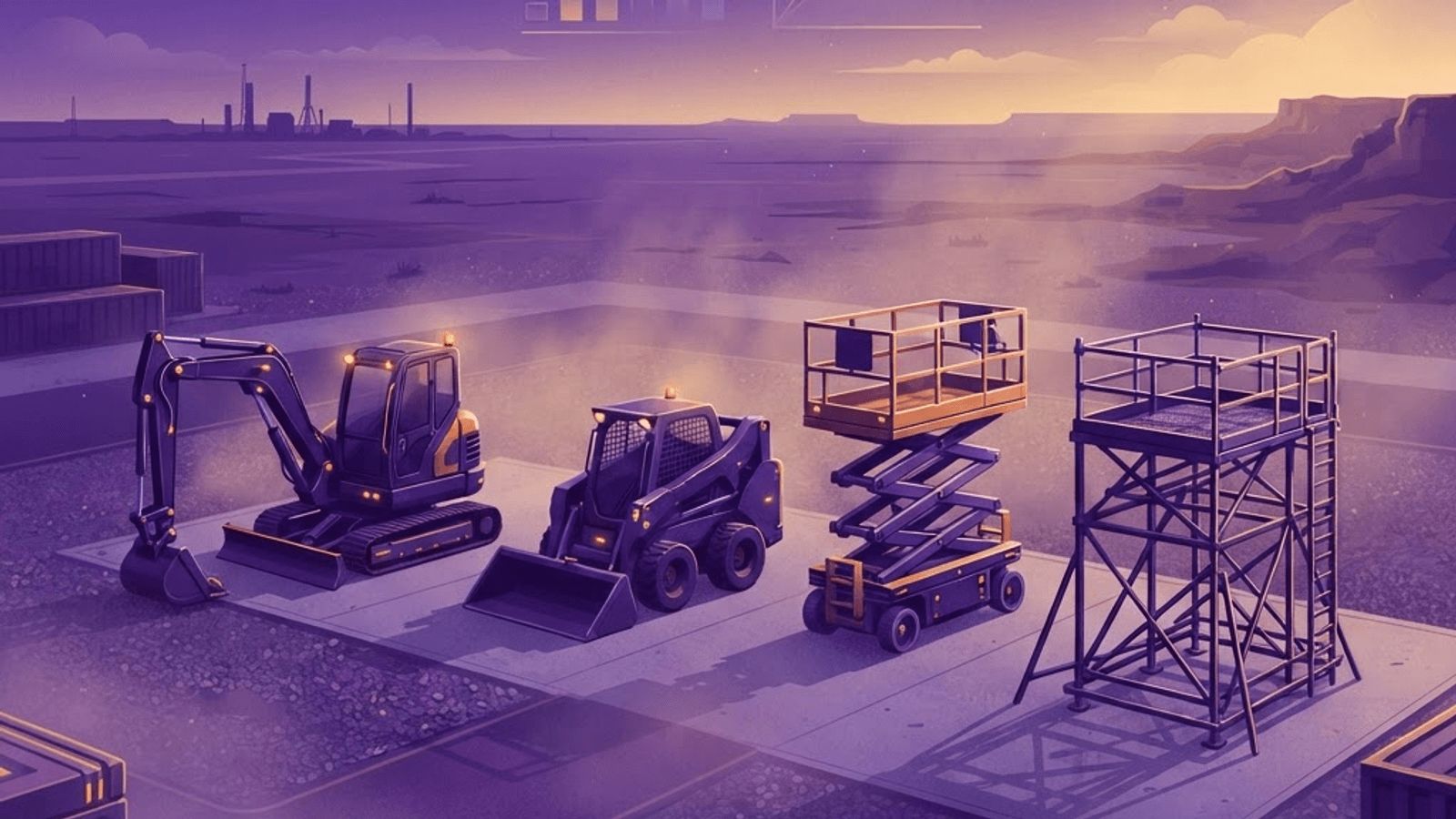
Earthmoving is the largest segment: mini excavators, standard excavators, skid steers and compact track loaders, backhoes, wheel loaders, dozers, and motor graders, along with the buckets, breakers, augers, grapples, and mulching heads that make them versatile. Compaction and site work covers plate compactors, rammers, walk-behind and ride-on rollers, and trench shoring systems.
Aerial access includes scissor lifts for interior work, telescoping and articulating boom lifts for exterior reach, telehandlers for material placement, and towable lifts for lighter tasks. Concrete equipment spans mixers, power buggies, screeds, power trowels, saws, core drills, and finishing tools. Power and climate rentals cover portable generators, light towers, air compressors, indirect-fired heaters, dehumidifiers, and evaporative coolers. Support categories include scaffolding, pumps, welders, dump trailers, and material handling gear. Finally, most yards carry a homeowner tier: augers, tillers, aerators, stump grinders, pressure washers, tile saws, and carpet cleaners rented by the day or half day.
National Networks and Local Independents
Amarillo is served by both national rental chains and regional independents. National operations such as Sunbelt Rentals, United Rentals, Herc Rentals, and the rental programs at large home improvement retailers offer breadth of fleet, newer machines, standardized rental agreements, online reservation systems, and the ability to source a specialty machine from another branch when the local yard is out. Their maintenance programs are documented, and telematics on newer units track hours and faults.
Independent and regional yards compete on service depth and flexibility. They often provide faster delivery inside the metro, more willingness to negotiate weekly and monthly rates, better familiarity with local soil and site conditions, and personal relationships that matter when a machine goes down at four in the afternoon. Many also specialize, with strong inventories in agricultural implements, trailers, or trenching equipment. Serious contractors typically maintain accounts with two or three suppliers so a single shortage never stops a job.
Understanding Rental Pricing
Rental rates are quoted daily, weekly, and monthly, with sharply better effective pricing as duration extends. A weekly rate is usually around three daily rates, and a monthly rate often equals roughly three weekly rates, so honestly estimating duration up front saves money. Most agreements define a day as eight hours of meter time and a week as forty, with overtime hours billed additionally, which matters if your crew runs long shifts.
Budget for the additional line items that surprise first-time renters: delivery and pickup charges based on distance and machine size, environmental or fuel surcharges, refueling fees if a unit is returned low, cleaning fees for equipment returned caked in mud or concrete, and damage waiver charges that are typically optional but frequently misunderstood. A damage waiver is not insurance in the traditional sense; it limits your liability for accidental damage but usually excludes theft without a police report, misuse, overturning, and tire or undercarriage wear. Contractors with commercial inland marine coverage often decline the waiver and provide a certificate of insurance instead.
Safety, Certification, and Compliance
Rental yards will require operator competency for certain equipment. Aerial lift operation falls under federal standards that mandate training and familiarization, and reputable suppliers provide familiarization at delivery and offer formal training courses. Forklift and telehandler operation requires documented operator certification. Excavation work triggers utility locating obligations, and in Texas that means calling the state one-call system before digging. Trench safety rules require protective systems at depths beyond five feet, which is why shoring boxes and trench shields are standard rental items rather than optional extras.
Good suppliers reinforce compliance: they inspect equipment between rentals, provide current operating manuals, verify functional safety systems, and document pre-delivery condition with photos. When you receive a machine, walk it with the driver, note existing damage in writing, confirm fluid levels and meter reading, and test controls before signing.
Trends in the Rental Industry
Telematics has become standard on newer fleets, allowing suppliers to monitor hours, location, and fault codes, which improves maintenance timing and reduces breakdowns. Battery-electric compact equipment is entering the market, offering zero emissions and much lower noise for indoor demolition, interior lifts, and noise-sensitive sites. Digital rental platforms now let contractors reserve, extend, and off-rent from a phone, along with viewing invoices and usage reports, which shortens administrative cycles considerably.
Attachment-driven versatility is another shift. Rather than renting multiple machines, contractors increasingly rent one compact track loader and rotate through attachments for grading, trenching, breaking, drilling, and brush clearing. Rental fleets have grown their attachment inventories accordingly.
How to Choose a Rental Partner
Evaluate fleet age, since newer equipment fails less and burns less fuel. Ask about service response commitments: how quickly will a technician reach a downed machine, and will a replacement unit be delivered if repair exceeds a set window. Confirm delivery windows and whether they are guaranteed. Review the rental contract carefully for liability language, indemnification clauses, and fee schedules before signing an account agreement.
Practical tips reduce cost: reserve seasonal equipment in advance because heaters vanish in December and lifts tighten during commercial construction season, schedule pickup promptly to stop the meter, refuel before return, pressure wash the machine, and keep a photo record of condition at drop-off and pickup to avoid damage disputes.
Final Perspective
Equipment rental in Amarillo is a logistics business as much as a machinery business. The strongest suppliers pair modern, well-maintained fleets with reliable delivery, real service response, transparent fee structures, and staff who can recommend the right machine and attachment for Panhandle soil and wind conditions. Build relationships with more than one yard, read the agreement closely, plan durations honestly, and rental becomes a competitive advantage rather than a line item you dread.