
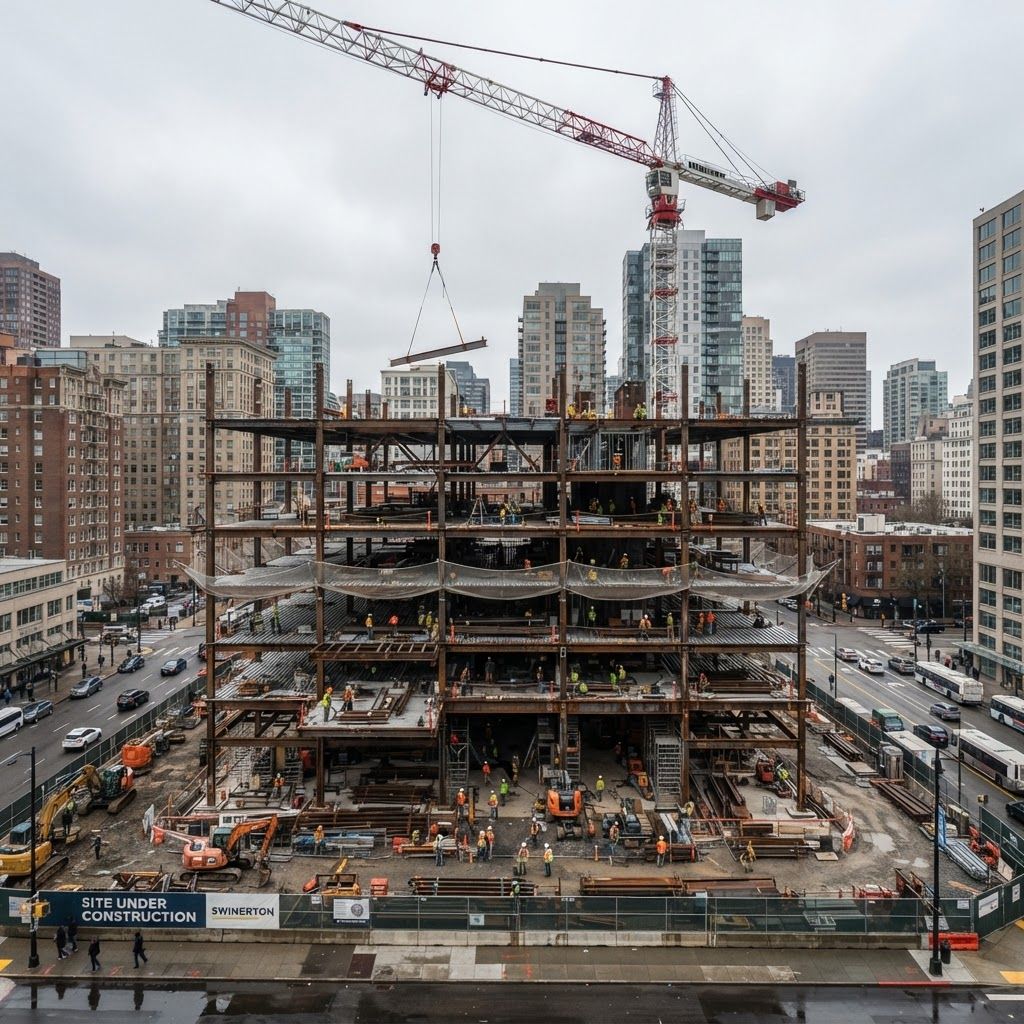
The State of Commercial Construction in St. Paul
St. Paul commercial construction has shifted meaningfully over the past decade. Ground-up office towers are rare, while adaptive reuse, tenant improvement work, healthcare facilities, light industrial space, and mixed-use development along transit corridors now dominate the pipeline. This changes what clients should look for in a general contractor. The ability to work inside occupied buildings, phase construction around active operations, and navigate historic tax credit requirements has become more valuable than raw volume capacity.
Labor availability remains the defining constraint. Skilled electricians, sheet metal workers, and commercial framers are in high demand across the metro. Contractors who maintain long-standing subcontractor relationships and buy out projects early consistently outperform those chasing the lowest bid at the last minute. Clients feel this difference directly in schedule reliability.
Key Capabilities That Matter for Commercial Projects
Preconstruction quality is the single strongest predictor of project success. A capable commercial builder produces conceptual estimates with clear assumptions, runs constructability reviews on design documents, identifies long-lead equipment early, and flags code conflicts before drawings go to permit. Mechanical switchgear, rooftop units, and elevator equipment can carry lead times that dictate the entire schedule, so early procurement planning is not optional.
Digital delivery also separates firms. Coordinated building information models reduce field conflicts between ductwork, sprinkler mains, and structural steel. Cloud-based project management gives owners real-time visibility into requests for information, submittals, and change order status. Reality capture through laser scanning is increasingly used on renovation projects where as-built conditions never match the original drawings.
Ten Commercial Construction Companies Serving St. Paul
Riverfront Commercial Builders handles mid-size ground-up projects and has particular strength in light industrial and warehouse distribution work where slab flatness and dock design matter.
Lowertown Construction Group is known for adaptive reuse of masonry warehouse buildings, including structural upgrades, elevator additions, and coordination with heritage preservation reviewers.
Capitol Region Contractors works extensively on institutional and civic facilities, bringing familiarity with prevailing wage requirements, bid bonds, and public procurement documentation.
Midway Build Partners focuses on retail and restaurant buildouts with fast-track schedules, an area where speed to opening directly affects tenant revenue.
Northstar Commercial Construction serves healthcare and clinical clients, managing infection control risk assessment protocols and phased work in occupied medical environments.
Iron Bridge Contracting specializes in structural steel-heavy projects and complex site work, often self-performing concrete to keep critical path activities under direct control.
Summit Commercial Services is a tenant improvement specialist working across office, coworking, and professional service spaces with strong furniture and technology coordination.
Great River Construction Management operates primarily as a construction manager at risk, giving owners open-book pricing and shared savings incentives on larger budgets.
Eastside Industrial Builders handles manufacturing and production facility work, including process equipment pads, heavy power distribution, and specialized ventilation.
Selby Avenue Development Builders completes the list with mixed-use residential and commercial projects along neighborhood commercial corridors.
Delivery Methods and What They Mean for Owners
Design-bid-build remains common for well-defined projects with complete drawings and a fixed budget. It offers competitive pricing but limited contractor input during design. Design-build consolidates responsibility under one contract, compressing schedules and reducing owner-managed coordination, which suits owners who value speed and single-point accountability. Construction manager at risk sits between the two, bringing the builder in during design while still establishing a guaranteed maximum price.
Owners should choose the method before selecting a contractor, because each attracts different firms and requires different contract structures. Mismatched delivery methods create friction that no amount of goodwill resolves later.
Cost Drivers to Watch in the Current Market
Mechanical and electrical systems now consume a larger share of commercial budgets than they did historically, driven by ventilation standards, energy code performance requirements, and increased technology infrastructure. Site utilities and stormwater management can also surprise owners, particularly on urban infill lots where existing services are undersized or poorly documented.
Sustainability requirements add cost but often return value. Energy modeling, high-efficiency rooftop equipment, LED lighting with daylight harvesting, and improved roof insulation reduce operating expense over a building lifecycle. Utility rebate programs in Minnesota can offset a meaningful portion of the upfront premium when applications are filed correctly and early.
Vetting a Commercial Contractor
Request a bonding capacity letter and confirm that your project size sits comfortably within it. Ask for the specific project team, not the company resume, because the superintendent assigned to your job matters more than the firm logo. Review safety metrics including experience modification rate and recordable incident history. Request a sample monthly owner report so you know what reporting cadence to expect.
Finally, talk to references about problems rather than successes. Every commercial project encounters an unforeseen condition, a design gap, or a supply delay. The relevant question is how the contractor responded, documented, and resolved it.
Conclusion
Commercial construction in St. Paul rewards contractors with deep local relationships, disciplined preconstruction, and genuine expertise in the specific building type at hand. The firms listed here cover industrial, institutional, retail, healthcare, and adaptive reuse work. Match your project profile to a contractor whose portfolio proves they have solved your problem before, and the rest of the process becomes far more predictable.