
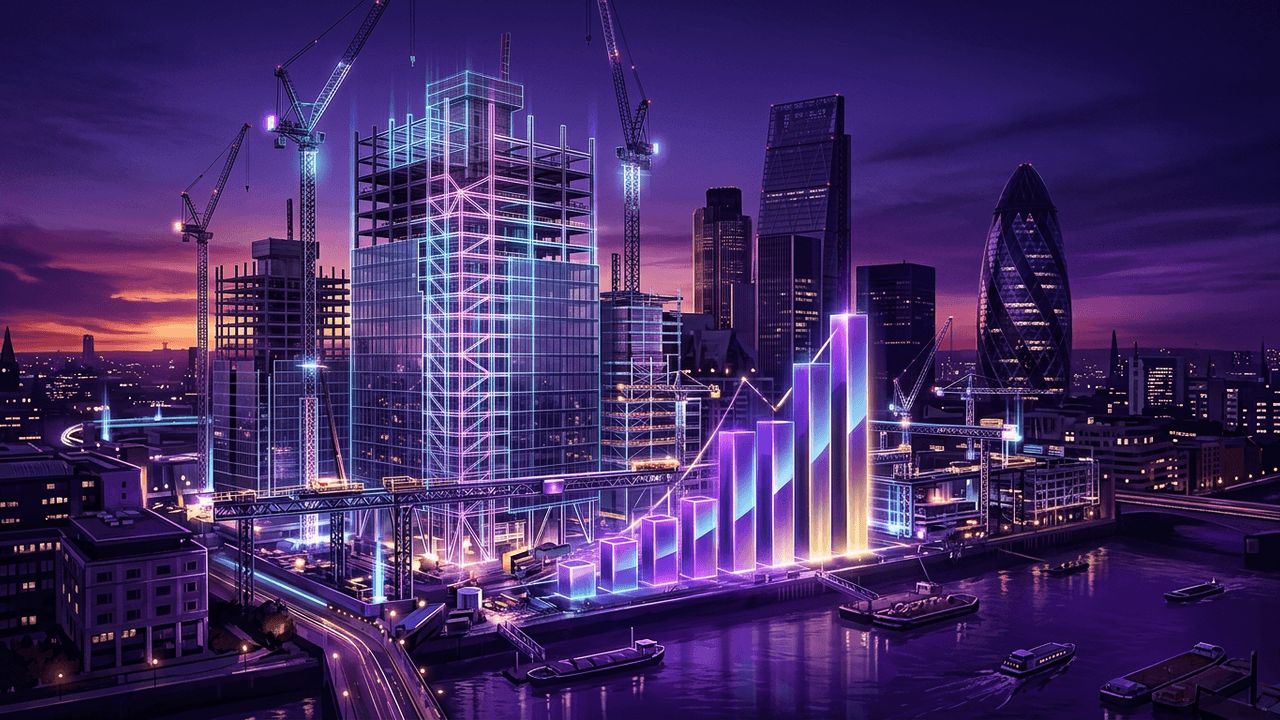
Commercial Construction in London
London's commercial property market is one of the most dynamic in the world. Offices, retail destinations, hotels, data centres, laboratories and mixed-use developments are constantly being built or transformed. The City of London, Canary Wharf, King's Cross and the West End have seen major investment, and the shift to hybrid working has driven demand for high-quality, sustainable, amenity-rich workplaces.
Commercial construction in London requires expertise in complex engineering, tight logistics, sustainability standards and client expectations. Here are ten of the best commercial construction companies in the capital.
How We Selected These Companies
We considered portfolio of commercial projects, technical expertise, sustainability performance, safety, innovation, client feedback and reputation.
The Top 10 Commercial Construction Companies in London
1. Mace
Mace has delivered many of London's most recognisable commercial buildings and is known for construction management on complex, high-profile projects. Its expertise spans offices, hotels, life sciences and mixed-use developments.
2. Multiplex
Multiplex is renowned for delivering tall commercial towers in the City of London and other central locations. Its experience with complex high-rise construction and innovative engineering make it a leader in the commercial sector.
3. Laing O'Rourke
Laing O'Rourke combines engineering expertise with offsite manufacturing to deliver high-quality commercial buildings. Its digital engineering approach improves efficiency and reduces risk on complex projects.
4. Sir Robert McAlpine
Sir Robert McAlpine has delivered landmark commercial and cultural buildings across London. Its long history and engineering capabilities give clients confidence on challenging projects.
5. Skanska UK
Skanska delivers commercial office buildings with a strong emphasis on sustainability and wellbeing. Its projects often achieve top environmental ratings, supporting clients' net zero goals.
6. Wates
Wates delivers commercial, retail and mixed-use projects, as well as office refurbishments and fit-outs through its specialist divisions. Its family ownership and long-term perspective support strong client relationships.
7. Overbury
Overbury, part of Morgan Sindall Group, is a leading fit-out and refurbishment specialist. It transforms office interiors for major corporations across London, creating modern, flexible workplaces. Its expertise in Category A and Category B fit-outs makes it a go-to partner for occupiers.
8. Willmott Dixon
Willmott Dixon delivers commercial, education and public sector projects with a strong focus on sustainability and social value. Its interiors division also specialises in refurbishments and fit-outs.
9. Bouygues UK
Bouygues UK, part of the international Bouygues Group, delivers commercial, residential and public projects in London. Its expertise in complex buildings and sustainability supports high-quality outcomes.
10. Lendlease
Lendlease is an international property and infrastructure group that has led major London regeneration and commercial projects. Its integrated approach to development and construction supports large-scale mixed-use destinations.
Key Trends in Commercial Construction
Workplace design is evolving, with employers seeking offices that offer collaboration spaces, wellness features, outdoor terraces and excellent air quality. Sustainability is paramount, with clients targeting net zero operational carbon and reduced embodied carbon. Refurbishing existing buildings rather than demolishing them is increasingly favoured. Life sciences laboratories and data centres are also growing sectors in London.
Technology and Innovation
Commercial contractors are adopting building information modelling, digital twins, drone surveys and modern methods of construction. Smart building technologies allow occupiers to monitor energy use, occupancy and air quality. Prefabricated components improve quality and reduce disruption on constrained city-centre sites.
Challenges in the Sector
Contractors must manage rising costs, planning complexity, skills shortages and the logistical challenges of central London sites. Stringent sustainability requirements demand careful selection of materials and systems. Collaboration between developers, designers and contractors is essential to deliver projects successfully.
How to Select a Commercial Contractor
Clients should evaluate contractors' experience with similar projects, their financial stability, safety record and sustainability credentials. Early contractor involvement improves buildability and cost certainty. For fit-out projects, specialists like Overbury bring focused expertise and quicker delivery.
London's Key Commercial Districts
Each of London's commercial districts brings its own construction challenges. The City of London combines ancient street patterns and archaeological remains with some of Europe's tallest towers, requiring careful foundation design and crane coordination. Canary Wharf offers larger plots and modern infrastructure but demands sophisticated logistics around the waterfront. King's Cross has become a model for mixed-use regeneration, blending restored industrial buildings with new offices for technology and life sciences companies. The West End, with its many listed buildings and conservation areas, favours sensitive refurbishment and facade retention over new construction.
Emerging hubs such as Stratford, White City, Old Oak and the Southbank continue to attract investment, creating new opportunities for contractors with expertise in large-scale masterplans. Understanding the planning context, heritage constraints and stakeholder expectations of each district is essential for delivering commercial projects successfully.
Choosing Between Construction Management and Design and Build
Commercial clients in London often choose between construction management, where the client contracts trade packages directly with a manager coordinating them, and design and build, where a single contractor takes responsibility for both design development and delivery. Construction management offers flexibility and control on complex landmark schemes, while design and build provides greater cost certainty and a single point of responsibility. The right route depends on the client's risk appetite, programme and level of design maturity at the time of tender.
Conclusion
London's commercial construction companies are delivering workplaces and destinations that define the future of the city. From the skyscrapers built by Multiplex and Mace to the sustainable offices of Skanska and the innovative fit-outs of Overbury, these companies combine skill and ambition to keep London at the forefront of global business.