
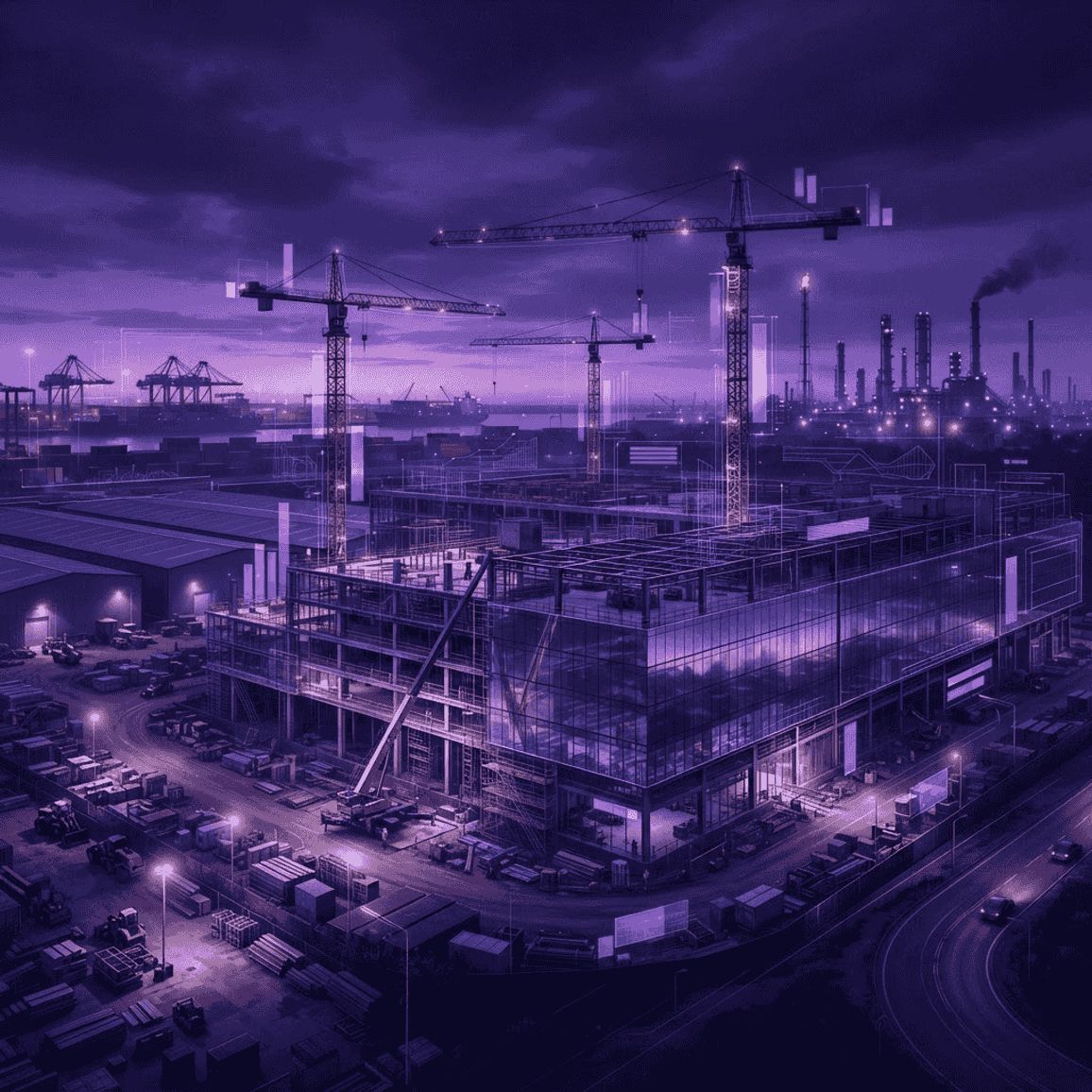
The Commercial Construction Market on the Coastal Bend
Commercial construction in Corpus Christi is driven by a genuinely diversified economy. The Port of Corpus Christi is among the busiest in the United States by tonnage, supporting logistics, warehousing, and export infrastructure. The refining and petrochemical corridor sustains industrial capital projects. A growing healthcare sector, expanding university presence, military installations, and a tourism economy centered on the beaches all generate their own building programs.
Commercial work here carries technical demands beyond typical inland projects. Structures must satisfy high wind-load provisions and, in some zones, flood-resistant construction below design elevation. Exposed steel, roofing systems, mechanical equipment, and facade fasteners all face accelerated corrosion from salt air. Contractors who succeed locally build these realities into their material specifications and detailing from the start. The categories below define the market.
1. Large General Contractors and Construction Managers
At the top of the market sit firms capable of delivering multi-million dollar projects: hospitals, schools, civic buildings, and large commercial developments. Their capabilities include bonding capacity for large contracts, in-house preconstruction and estimating teams, sophisticated scheduling, and formal quality and safety management systems. They typically work under construction manager at risk or design-build agreements with guaranteed maximum price structures that give owners cost certainty.
2. Industrial and Petrochemical Contractors
The refining and chemical corridor supports contractors specialized in industrial construction and maintenance. This work involves structural steel, process piping and equipment setting, heavy foundations, and turnaround support during scheduled plant outages. Credentials here are stringent and specific: contractor safety prequalification, documented incident rates, trained crews for confined space and elevated work, and the ability to mobilize large workforces on compressed schedules.
3. Port, Marine, and Heavy Civil Contractors
Port expansion, dock construction, bulkheads, dredging support, and terminal infrastructure require marine construction capability. These contractors operate barges, cranes on floating platforms, and pile-driving equipment, and they work within environmental permitting frameworks that govern coastal waters. The engineering focus is on structures that survive decades of immersion, tidal cycling, and wave action, which demands very different material specifications than land-based work.
4. Design-Build Commercial Firms
Design-build delivery has become popular for commercial owners who want a single accountable party and a faster path from concept to occupancy. The contractor holds both design and construction responsibility, allowing overlapping phases and early cost certainty. For projects where coastal code compliance and constructability drive design decisions, resolving those questions collaboratively during design avoids expensive field changes later.
5. Warehouse, Distribution, and Logistics Builders
Port activity generates continuous demand for warehousing and distribution facilities. Builders in this category specialize in tilt-wall concrete and pre-engineered metal buildings, large slab-on-grade floors engineered for rack loading and forklift traffic, dock levelers and truck court design, and clear-span structures. Speed and cost efficiency per square foot are the competitive metrics, and experienced firms deliver these buildings on notably compressed schedules.
6. Retail, Restaurant, and Hospitality Contractors
Retail centers, restaurants, and hotels require contractors who understand brand standards, franchise specifications, and the commercial urgency of an opening date. Restaurant construction is particularly technical, involving commercial kitchen ventilation, grease interception, health department review, and durable finish requirements. Hospitality projects along the beach corridor add coastal exposure and often phased construction around continuing operations.
7. Healthcare and Medical Facility Builders
Medical construction demands specialized knowledge: infection control risk assessment during renovation in occupied facilities, medical gas system installation and certification, specialized electrical redundancy, imaging suite shielding, and stringent air handling and pressure relationships. Corpus Christi's expanding healthcare sector has supported contractors with genuine depth in this area, including experience with the regulatory review that accompanies licensed facilities.
8. Educational and Institutional Contractors
School districts, the university, and community college campuses across the Coastal Bend run ongoing capital programs. Contractors in this space manage public bidding and prevailing wage requirements, work within academic calendars that compress construction into summer windows, and coordinate on occupied campuses where student safety governs site logistics. Bond program experience and public sector references are the meaningful credentials here.
9. Tenant Improvement and Interior Commercial Contractors
A large share of commercial construction volume is interior work in existing buildings: office reconfiguration, medical clinic build-outs, retail fit-outs, and adaptive reuse of older downtown structures. These contractors excel at working in occupied buildings, coordinating with landlords and building engineers, and completing accessibility and life-safety upgrades triggered by change of use. Schedule reliability is their primary selling point.
10. Specialty Structure and Pre-Engineered Building Contractors
Metal buildings, aircraft hangars, agricultural and equipment structures, cold storage facilities, and parking structures each require particular expertise. Pre-engineered metal building contractors work with manufacturer engineering packages and must verify wind and corrosion specifications appropriate to the coast. Cold storage adds vapor barrier and insulation continuity requirements where errors cause persistent condensation problems.
What Owners Should Verify
Confirm bonding capacity relative to project size, and review the surety's letter rather than a self-reported figure. Request the firm's experience modification rate and recordable incident history, since safety performance correlates strongly with overall project management quality. Ask who the assigned project manager and superintendent will be, and check their individual references. Review the contract structure carefully: define the change-order process, contingency handling, schedule liquidated damages, and warranty and closeout documentation obligations before signing.
Final Thoughts
Corpus Christi's commercial construction sector is unusually capable for a metro of its size, largely because industrial and port work has raised the technical baseline. The right partner depends on project type, but the qualifying factors are consistent: relevant recent experience, demonstrated safety and schedule performance, financial stability, and genuine understanding of coastal durability. Owners who weigh those factors above the lowest bid consistently end up with buildings that cost less to own.