
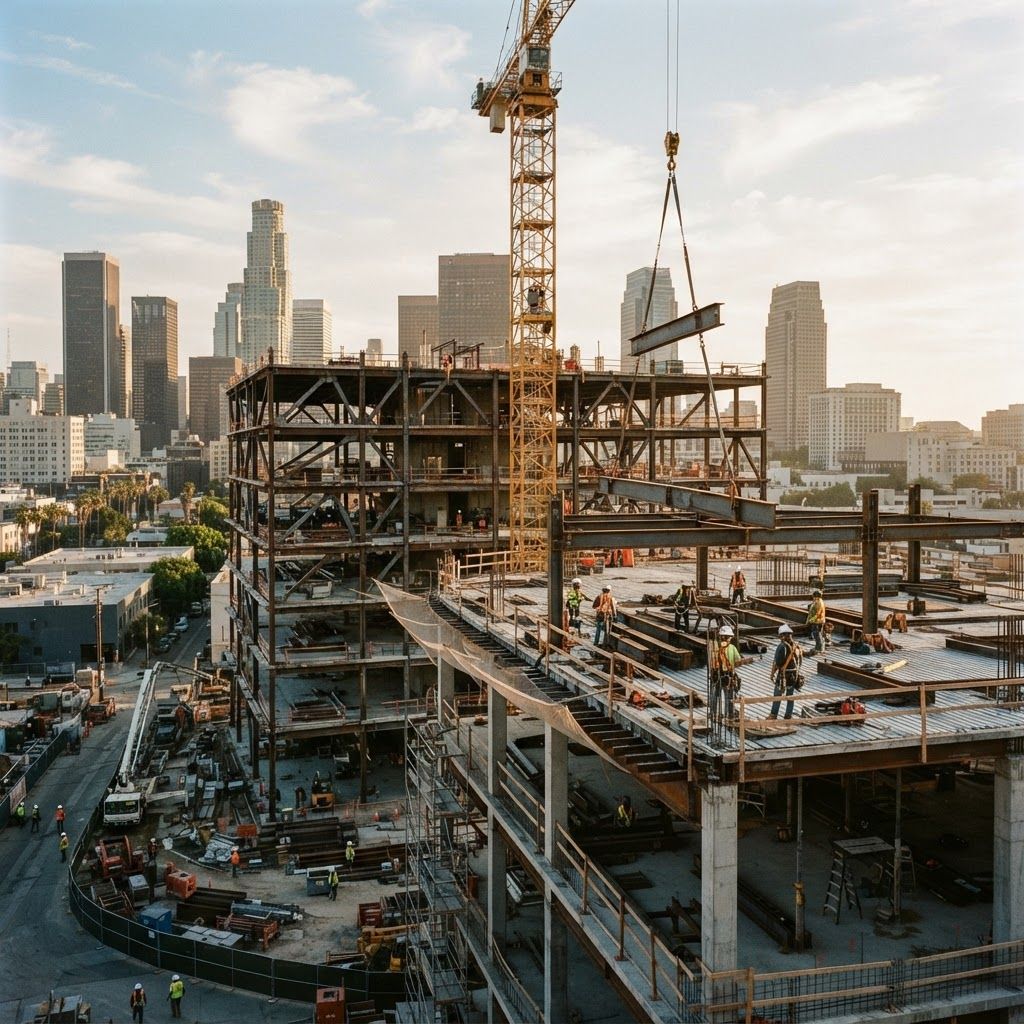
The Commercial Construction Environment in Chula Vista
Chula Vista has become one of the more compelling commercial development markets in San Diego County. Sustained population growth in the eastern communities supports retail, medical and service development. The Bayfront redevelopment initiative has attracted hospitality and mixed-use investment. Proximity to the Otay Mesa commercial border crossing generates continuous demand for warehouse, distribution and light industrial facilities. Together these forces create a market where competent commercial contractors stay busy and where selecting the right one has substantial financial consequences.
Commercial work differs fundamentally from residential construction. Projects operate under lease deadlines where delay carries direct revenue cost. Code requirements are more extensive, covering accessibility compliance, fire and life safety systems, occupancy classifications, mechanical and electrical engineering coordination and energy performance. Bonding, insurance limits and financial capacity requirements are far higher. Documentation, submittal processes and inspection coordination demand professional administrative infrastructure rather than a contractor working from a truck.
The Top 10 Commercial Construction Companies Serving Chula Vista
1. South Bay Commercial Builders
South Bay Commercial Builders delivers ground-up commercial construction across retail, office and light industrial sectors. The firm's core strength is preconstruction service: realistic budgeting, constructability review and schedule modeling before commitments are made. Clients report that early cost transparency prevents the mid-project value engineering scrambles that damage design intent. The company maintains substantial bonding capacity and professional project controls.
2. Third Avenue Tenant Improvement Group
Tenant improvement is the most common commercial construction category, and Third Avenue Tenant Improvement Group specializes in it. Work spans retail buildouts, restaurant construction with commercial kitchen and grease systems, professional office suites and medical and dental facilities. Restaurant and medical work in particular involve specialized mechanical, plumbing and regulatory requirements. The firm's ability to hit opening dates reliably is its most valued attribute.
3. Otay Mesa Industrial Constructors
Serving the logistics corridor, Otay Mesa Industrial Constructors builds warehouse and distribution facilities using tilt-up concrete panel construction, structural steel systems and heavy-duty slab specifications. Projects typically include dock levelers, high-bay lighting, fire suppression systems sized for storage classifications and substantial electrical service. The team understands the functional priorities of logistics operators, where throughput efficiency outweighs aesthetic considerations.
4. Eastlake Retail Development Contractors
Eastlake Retail Development Contractors focuses on shopping centers, pad buildings and multi-tenant retail construction in the city's growing eastern districts. Retail construction requires coordination with landlord criteria, tenant coordination, sequencing around active centers and careful management of site work including parking, drainage and landscaping. Phased delivery allows portions of a center to open while construction continues elsewhere.
5. Bayfront Hospitality Construction
The Bayfront redevelopment has created demand for hotel and hospitality construction, and Bayfront Hospitality Construction addresses it. Hotel projects involve repetitive room construction requiring precise quality control, extensive mechanical and plumbing coordination, sophisticated fire and life safety systems and high-specification public area finishes. Hospitality clients also demand strict adherence to brand standards, adding documentation obligations.
6. Palomar Medical Facility Builders
Healthcare construction is among the most regulated building types. Palomar Medical Facility Builders handles medical offices, outpatient clinics, imaging suites and dental facilities, managing requirements including specialized ventilation, medical gas systems, radiation shielding, infection control during construction in occupied buildings and enhanced electrical reliability. This expertise is not transferable from general commercial work.
7. Chula Vista Institutional Contractors
Chula Vista Institutional Contractors builds schools, community facilities and public buildings, work that involves public bidding procedures, prevailing wage compliance, extensive documentation and often construction scheduled around occupied operations. Institutional projects prioritize durability and lifecycle cost over initial price, and the firm specifies accordingly.
8. Terra Nova Mixed Use Developers
Mixed-use construction combines residential units above commercial ground floors, which introduces complex challenges: fire separation between occupancies, acoustic isolation, separate utility metering and distinct access and egress systems. Terra Nova Mixed Use Developers has developed genuine competence in this typology, which is increasingly favored in urban infill development throughout the region.
9. Broadway Seismic and Structural Retrofit
Many commercial buildings in western Chula Vista predate current seismic standards. Broadway Seismic and Structural Retrofit performs structural strengthening, unreinforced masonry upgrades, foundation improvements and accessibility compliance work, frequently in occupied buildings. This requires careful phasing, temporary shoring and close engineering collaboration. Owners facing compliance obligations or insurance requirements rely on this specialization.
10. Harborside Sustainable Commercial Builders
Corporate sustainability commitments and California energy codes have made high-performance commercial construction standard practice. Harborside Sustainable Commercial Builders delivers projects with high-efficiency mechanical systems, advanced building envelopes, solar photovoltaic arrays, electric vehicle charging infrastructure, water reuse systems and commissioning to verify performance. The firm pursues recognized green certification where owners want third-party validation.
How to Select a Commercial Contractor
Confirm financial and legal qualification first. Verify license classification and status, review insurance limits against project requirements, and confirm bonding capacity through the surety. Request audited financial capability information for larger projects, since contractor insolvency mid-project is genuinely destructive.
Evaluate relevant experience specifically. A contractor with an excellent retail record may lack the systems knowledge for a medical facility. Request project references in your building type and, where possible, tour completed facilities and speak with the owners about schedule and change order performance.
Choose the delivery method deliberately. Design-bid-build offers competitive pricing on complete documents. Design-build consolidates responsibility and often compresses schedule. Construction manager at risk provides early cost certainty with collaborative preconstruction. Each has appropriate applications, and the right choice depends on how much design certainty and schedule pressure exist.
Scrutinize the contract. Commercial agreements should address scope, schedule with liquidated damages where appropriate, payment and retention terms, change order pricing methodology, submittal and shop drawing procedures, insurance and indemnification, closeout requirements including as-built documentation and warranty periods. Have counsel review agreements on substantial projects.
Trends in Commercial Construction
Several developments are influencing the market. Building information modeling has become standard on larger projects, reducing field conflicts through virtual coordination. Prefabrication of mechanical, electrical and plumbing assemblies is expanding to address labor shortages and improve quality. Electric vehicle charging infrastructure is now a routine requirement rather than an amenity. Adaptive reuse of aging retail and office space is growing as consumer patterns shift. Material cost volatility has made escalation clauses and shorter bid validity periods common. Commissioning and measured performance verification are increasingly demanded by owners who want proof rather than promises.
Final Thoughts
Selecting a commercial construction company in Chula Vista should follow from building type, delivery method and financial scale. Tenant improvement specialists deliver retail and restaurant projects on tight deadlines, industrial and hospitality builders bring sector-specific systems expertise, and medical, institutional, mixed-use and retrofit specialists handle regulatory complexity that generalists underestimate. Verify financial and bonding capacity, insist on directly relevant references, select the delivery method deliberately, and invest in thorough contract documentation before construction begins.