
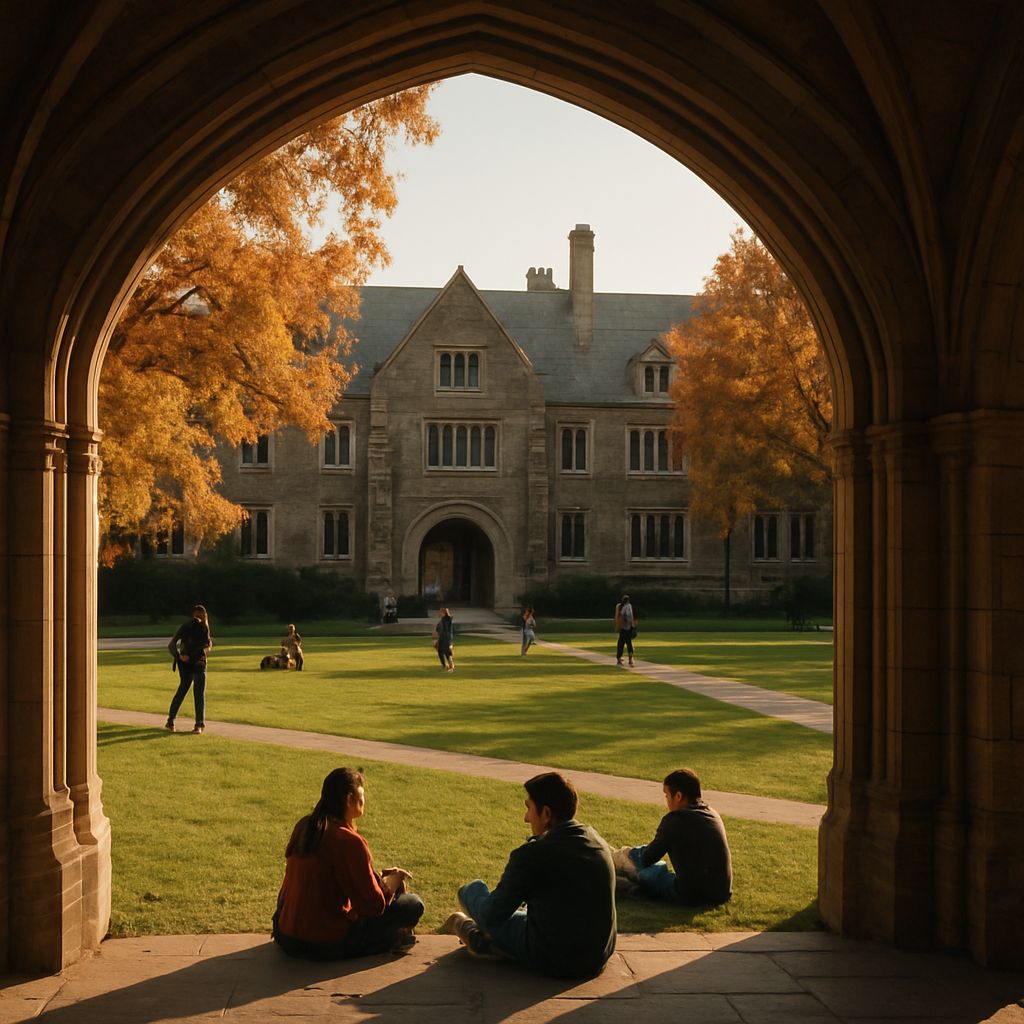
A Deeper College Market Than the Metro's Size Suggests
St. Louis punches above its weight in higher education. The region hosts a top-tier private research university, a major Jesuit university with an academic medical center, a public research campus, a well-regarded community college district spanning multiple campuses, several liberal arts institutions and specialized schools in design, pharmacy, and the health professions. For a metro of roughly two and a half million people, the density and variety are notable.
That density has practical benefits for students. Cross-registration and consortium arrangements exist between several institutions. The concentration of academic medical centers, biotech firms, geospatial employers and financial services companies creates a real internship and research market. And the cost of living remains well below coastal metros, which changes the total price of a degree more than tuition comparisons alone suggest.
How to Compare Colleges Honestly
Sticker price is nearly meaningless. What matters is net price after institutional aid, which for well-endowed private institutions is frequently lower than the published cost of a public university. Every accredited institution is required to publish a net price calculator; use it before eliminating any school on cost.
Beyond price, look at four-year graduation rate rather than six-year, since two extra years of tuition and forgone income is the largest hidden cost in higher education. Look at outcomes by major rather than institution-wide averages. Ask about advising ratios and whether required courses are actually available when students need them, because bottleneck courses are the most common reason degrees take longer than planned.
The Ten Best Colleges and Universities in St. Louis
1. Washington University in St. Louis
A private research university consistently ranked among the strongest in the country, with particular distinction in medicine, biology, architecture, art, business and social work. The endowment supports substantial need-based aid, and the university has committed to meeting demonstrated need for admitted domestic undergraduates. Admission is highly competitive. The Danforth Campus adjacent to Forest Park is among the more attractive urban campuses anywhere.
2. Saint Louis University
A major Jesuit research university with schools of medicine, law, business, nursing, public health and aviation, plus a campus in Madrid that a meaningful share of undergraduates use. SLU combines research capacity with a genuine teaching culture and a service orientation embedded in the curriculum. Merit aid is more accessible than at more selective peers, which makes the net price competitive for strong students.
3. University of Missouri-St. Louis
The region's public research university, UMSL serves a large population of transfer, commuter and working students alongside traditional undergraduates. Strengths include nursing, education, business, criminology and optometry. In-state tuition combined with articulation agreements from the community college district makes UMSL the most cost-effective path to a bachelor's degree in the region for many families.
4. St. Louis Community College
A multi-campus district serving the metro with transfer pathways, career and technical programs and workforce training. The transfer function is the underrated one: completing general education requirements here and transferring to a four-year institution under a formal articulation agreement can reduce the total cost of a bachelor's degree dramatically without affecting the credential. Also the primary regional pipeline for nursing, skilled trades and manufacturing technology.
5. Webster University
Headquartered in Webster Groves with a global network of campuses, Webster is notable for its conservatory-level theatre and music programs, its media and communications offerings, and flexible graduate programs that serve working professionals. The international campus network allows study abroad within a single institution's tuition structure, which simplifies both cost and credit transfer.
6. Fontbonne University
A small Catholic institution offering personalized undergraduate education with particular strength in speech-language pathology, education, deaf studies and dietetics. Small class sizes and accessible faculty suit students who would be lost at scale. Programs and offerings have evolved in recent years, so prospective students should confirm current program availability directly.
7. Maryville University
A private university with substantial growth in health professions, nursing, business and online graduate programs. Maryville has been aggressive about program innovation and digital delivery, making it a practical option for working adults and career changers. Strong outcomes in nursing and physical therapy pathways.
8. Southern Illinois University Edwardsville
Across the river, SIUE is a comprehensive public university with strong engineering, nursing, pharmacy, dental medicine and business programs. Illinois residency provides low tuition, and reciprocity or regional rate programs sometimes benefit Missouri students. The campus is large, wooded and genuinely pleasant, and the price-to-outcome ratio is one of the better ones in the bi-state region.
9. Harris-Stowe State University
A historically Black public university in midtown St. Louis with programs in education, business and health sciences. Small enrollment, low tuition and a distinct mission serving the city's population. The teacher preparation program has a long and consequential history in the region's public schools.
10. Ranken Technical College
A specialized technical college offering programs in automotive technology, construction, electrical, HVAC, manufacturing and information technology. Placement rates for graduates are consistently high, and the programs connect directly to employers with real labor shortages. For students whose aptitudes and interests point toward skilled technical work, Ranken produces better economic outcomes than a marginal four-year degree.
Practical Advice on Paying for It
File the federal aid application as early as it opens, since some aid is awarded on a first-come basis. Apply to a range of institutions including at least one where your academic profile puts you in the top quartile, because that is where merit aid concentrates. Compare actual award letters rather than published prices, and ask financial aid offices directly whether an award can be reconsidered; the answer is sometimes yes.
Consider the community college transfer route seriously and without status anxiety. Two years at St. Louis Community College followed by transfer to UMSL or another four-year institution under an articulation agreement produces the same degree at a fraction of the cost, and the diploma does not record where general education credits were earned.
Closing Thought
The St. Louis higher education market offers a genuine range: an elite private research university, strong regional publics, a functional community college system and specialized technical training with real placement. Compare net prices rather than sticker prices, weight four-year graduation rates heavily, and be honest about which institution matches how you actually learn.