
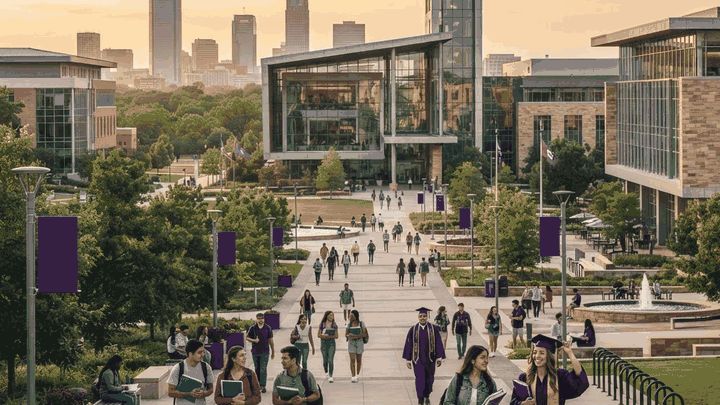
Choosing a College in Oklahoma City
Oklahoma City gives students an unusually broad range of higher-education choices for a metropolitan area of its size. Learners can pursue a traditional residential experience, complete an affordable transfer degree, prepare for a specialized career, or study in a flexible format while working. The strongest choice is not simply the best-known school; it is the institution whose programs, cost, schedule, campus culture, and support systems align with a student’s goals.
The ten colleges below are presented as a practical research list rather than a rigid ranking. Program availability, admissions requirements, and tuition can change, so prospective students should compare current academic catalogs and visit campuses before deciding.
1. Oklahoma City Community College
Oklahoma City Community College is one of the metro’s most versatile starting points. It offers associate degrees, university-transfer pathways, workforce certificates, and continuing education. Its broad catalog serves recent high school graduates, adults returning to education, and students who want to complete general education courses affordably before transferring. Strong advising, tutoring, and career resources add value, while the south Oklahoma City location is convenient for many commuters.
2. Rose State College
Located in nearby Midwest City, Rose State College is closely connected to the Oklahoma City educational and employment market. Students can choose from liberal arts, health sciences, business, engineering-related studies, and technical programs. Small classes and accessible faculty appeal to learners seeking a supportive transition into college. Rose State also has transfer relationships and workforce programs shaped by regional needs, including Oklahoma’s aerospace and public-service sectors.
3. Oklahoma State University–Oklahoma City
OSU–OKC is a career-oriented campus known for applied programs designed around real workplace skills. Areas such as public safety, health services, horticulture, business, and technical education make it especially relevant for students seeking direct career preparation. Flexible course options can benefit working adults. As part of the Oklahoma State University system, the campus combines a recognizable public institution with a practical urban mission.
4. Oklahoma City University
Oklahoma City University offers a private-college setting with prominent programs in performing arts, business, law, nursing, and the liberal arts. Its relatively intimate campus can create strong faculty connections and an active student community. OCU is particularly recognizable for music, dance, and theatre, but students across disciplines benefit from access to internships, arts organizations, nonprofits, and employers in the city center.
5. Mid-America Christian University
Mid-America Christian University provides faith-centered education through campus and online formats. Its degree portfolio includes business, ministry, behavioral science, education, and leadership-related fields. The university is often considered by working adults because of its flexible learning options, while traditional students may value the close community and Christian perspective integrated into campus life. Learners should assess how that mission fits their personal and academic preferences.
6. Southwestern Christian University
Southwestern Christian University in Bethany offers a smaller Christian college experience within the metro. Programs span ministry, business, education, humanities, and related fields, with athletics and community activities contributing to campus life. Students who prefer personal attention and a values-based environment may find the setting attractive. Its scale can make it easier to form relationships with instructors and peers.
7. Randall University
Randall University in Moore is another small faith-based option serving greater Oklahoma City. It emphasizes Christian ministry, general education, business, psychology, and teacher preparation. A compact campus and mission-driven approach can suit students seeking mentorship and spiritual formation alongside academics. As with any specialized institution, applicants should confirm that their intended program offers the depth, accreditation, and career preparation they need.
8. University of Oklahoma Health Sciences
The University of Oklahoma’s health sciences presence in Oklahoma City is a major destination for advanced professional education. It includes disciplines such as medicine, nursing, dentistry, pharmacy, public health, and allied health. Admission is selective and many programs require prior college study, so it differs from a typical undergraduate college. Its defining advantage is immersion in the Oklahoma Health Center, where education, research, and patient care operate in close proximity.
9. Francis Tuttle Technology Center
Francis Tuttle is a public career and technology education provider rather than a conventional degree-granting college, yet it deserves consideration from students comparing postsecondary routes. Its hands-on programs cover areas such as aerospace, automotive technology, health, information technology, culinary arts, and business. Industry-informed instruction and practical labs can lead to credentials and faster entry into skilled employment.
10. Metro Technology Centers
Metro Technology Centers serves Oklahoma City with career-focused training for high school students and adults. Programs range from aviation and health careers to cosmetology, construction, public safety, and digital fields. The emphasis on applied learning, certifications, and employer relevance makes Metro Tech a strong alternative for people whose goals do not require a four-year degree. Financial assistance and program schedules vary, making early planning important.
How to Compare Your Options
Start with the credential required for your intended career. Then calculate total cost, including fees, supplies, transportation, and housing rather than tuition alone. Review graduation and transfer pathways, internship access, class formats, student support, and relevant program accreditation. Oklahoma City commuters should also test the drive at realistic class times. A campus visit can reveal whether advising feels responsive and whether labs, studios, and common spaces match expectations.
Final Thoughts
Oklahoma City’s college landscape supports nearly every stage of learning, from short technical credentials to advanced health professions. Community colleges offer affordability and transfer flexibility, private colleges provide distinctive campus cultures, and technology centers deliver focused workforce preparation. By connecting the credential to a clear career goal and comparing the full student experience, learners can choose an institution that offers lasting value.