
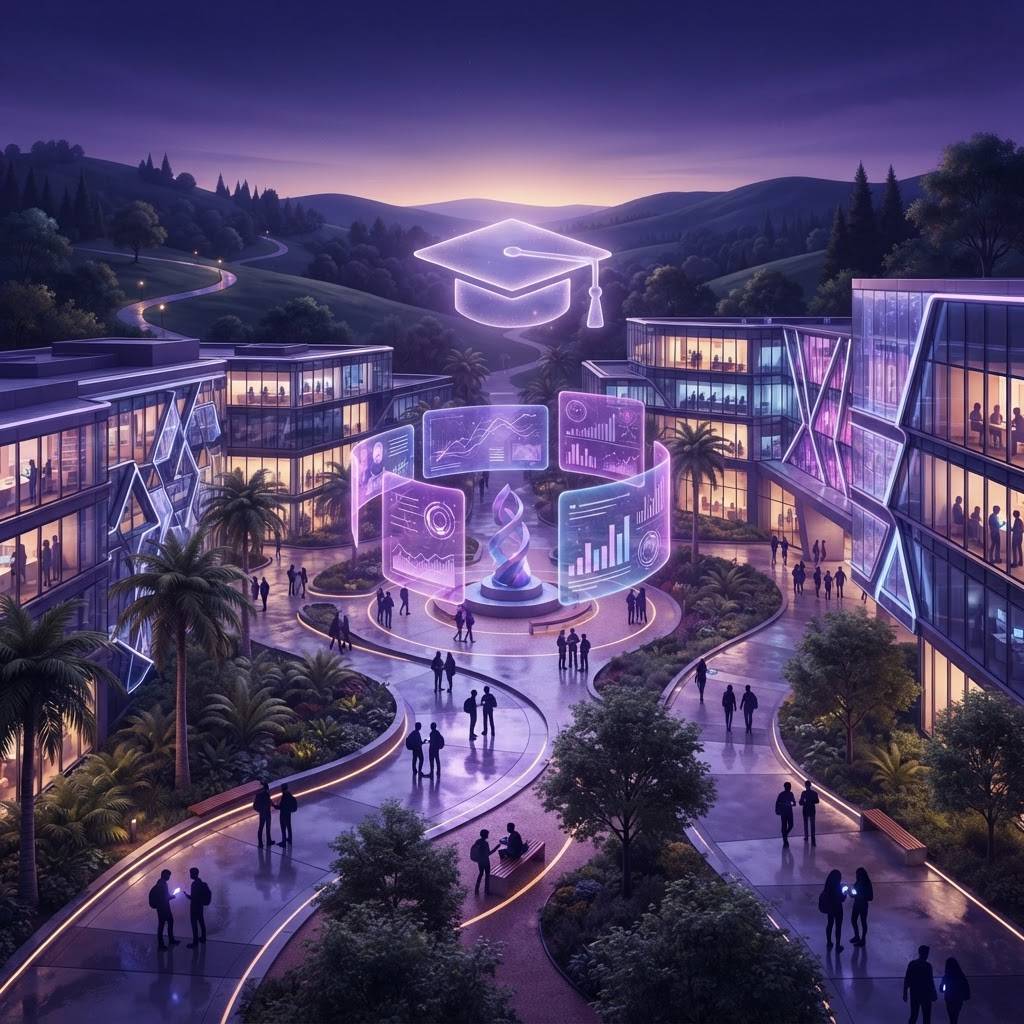
Studying in the Heart of the Entertainment Industry
Few places offer a more direct connection between classroom and career than Hollywood. Students studying film production, music, design, animation or performance here are surrounded by working professionals, functioning studios, post-production facilities and a constant demand for crew. Internships are not abstract opportunities but a normal part of study, and part-time work in the industry is genuinely obtainable while enrolled.
That environment shapes the local college landscape. Alongside conventional two-year and four-year institutions offering the full academic spectrum, the area supports an unusual concentration of specialist schools focused on creative and technical disciplines. Choosing between these two categories is the first decision any prospective student faces.
Community College, Specialist School or University Pathway
Community colleges offer two-year associate degrees and certificate programmes at very low cost, with guaranteed transfer pathways into state universities for students who meet requirements. For many students this is the most financially sensible route to a bachelor's degree, particularly given California's transfer agreements.
Specialist creative schools offer focused, practical training with industry-standard equipment and instructors drawn from working professionals. They typically cost considerably more and provide a narrower education, which is an advantage for students certain of their direction and a risk for those still exploring.
Accreditation matters in both cases. Regionally accredited institutions offer credits that transfer widely; nationally accredited career schools may not transfer as readily. This single detail affects future options significantly and should be verified before enrolling anywhere.
Ten Colleges In and Around Hollywood
1. Los Angeles City College
Located close to Hollywood, this community college offers an extensive range of transfer and career programmes at low cost, with a particularly well-regarded theatre academy and strong offerings in cinema and media. Its transfer record into the state university systems is a major draw.
2. Santa Monica College
One of the most successful community colleges in the country for university transfer, with excellent programmes in film production, design technology and the sciences. Its proximity to the coast and its reputation attract students from across the region and internationally.
3. American Film Institute Conservatory
A highly selective graduate conservatory offering intensive training across directing, cinematography, editing, producing, production design and screenwriting. Its alumni occupy senior positions throughout the industry, and the collaborative fellowship model closely mirrors professional production.
4. Musicians Institute
Located in the heart of Hollywood, this contemporary music college offers programmes in performance, audio engineering, music business and production. Instructors are working musicians and engineers, and the location places students directly within the music industry's operational centre.
5. Los Angeles Film School
A Hollywood-based institution offering degrees in film production, audio production, animation and game design with industry-standard facilities. Its practical, equipment-heavy approach suits students who learn by doing rather than through theory.
6. Columbia College Hollywood
A small, focused institution providing hands-on undergraduate degrees in film and media production. Small class sizes mean significant individual access to equipment and instruction, which is a genuine differentiator in production education.
7. Otis College of Art and Design
A respected independent art and design college offering programmes across illustration, graphic design, fashion, product design and digital media. Strong industry partnerships and a portfolio-focused curriculum support graduate employment across the creative sector.
8. Fashion Institute of Design and Merchandising
Specialising in fashion design, merchandising, interior design and entertainment costume, this institution has particularly strong connections to the costume and wardrobe departments of the entertainment industry, which is a distinctive local advantage.
9. Glendale Community College
A short distance from Hollywood, this well-regarded community college offers strong transfer preparation alongside solid programmes in animation, business and the health professions. Its academic support services are frequently praised.
10. Pasadena City College
Another high-performing community college within reach, known for rigorous academics, extensive course offerings and a long record of successful transfers into competitive universities. Its size allows subject breadth that smaller colleges cannot match.
Cost, Aid and Practical Planning
Community college tuition in California is among the lowest in the country, and fee waivers are widely available for students who qualify. Specialist private institutions cost substantially more, and prospective students should examine graduate outcomes carefully before committing to significant debt. Ask any institution for specific placement data rather than general claims about industry connections.
Housing is the other major expense and frequently exceeds tuition at community colleges. Shared accommodation is the norm, and proximity to transit matters more than proximity to campus, since the subway and bus network makes commuting from cheaper neighbourhoods practical.
Making the Most of the Location
The advantage of studying in Hollywood is access, and access must be actively pursued. Join student production crews, attend industry screenings and panels, volunteer at festivals and take entry-level production assistant work when schedules allow. The relationships formed during these experiences frequently matter more for early career progress than the credential itself.
Building a portfolio or reel throughout study, rather than at the end, is equally important. Employers in creative fields evaluate work first and qualifications second.
Trends in Post-Secondary Education
Several shifts are reshaping the sector. Online and hybrid delivery has become permanent rather than temporary, widening access considerably. Credentialing is diversifying, with certificates and micro-credentials gaining acceptance alongside degrees. Virtual production, game engine technology and artificial intelligence tools are being integrated into media curricula rapidly, changing what technical training looks like. Transfer pathways have also been simplified at state level, making the community college route to a bachelor's degree more predictable than it once was.
Final Thoughts
The right college in Hollywood depends on certainty. Students confident in a creative specialism benefit enormously from the focused, well-equipped specialist institutions clustered here. Those still deciding, or those prioritising cost, are usually better served beginning at a strong community college and transferring. In either case, verify accreditation, examine real graduate outcomes, and treat the surrounding industry as part of the education rather than something waiting after it.