
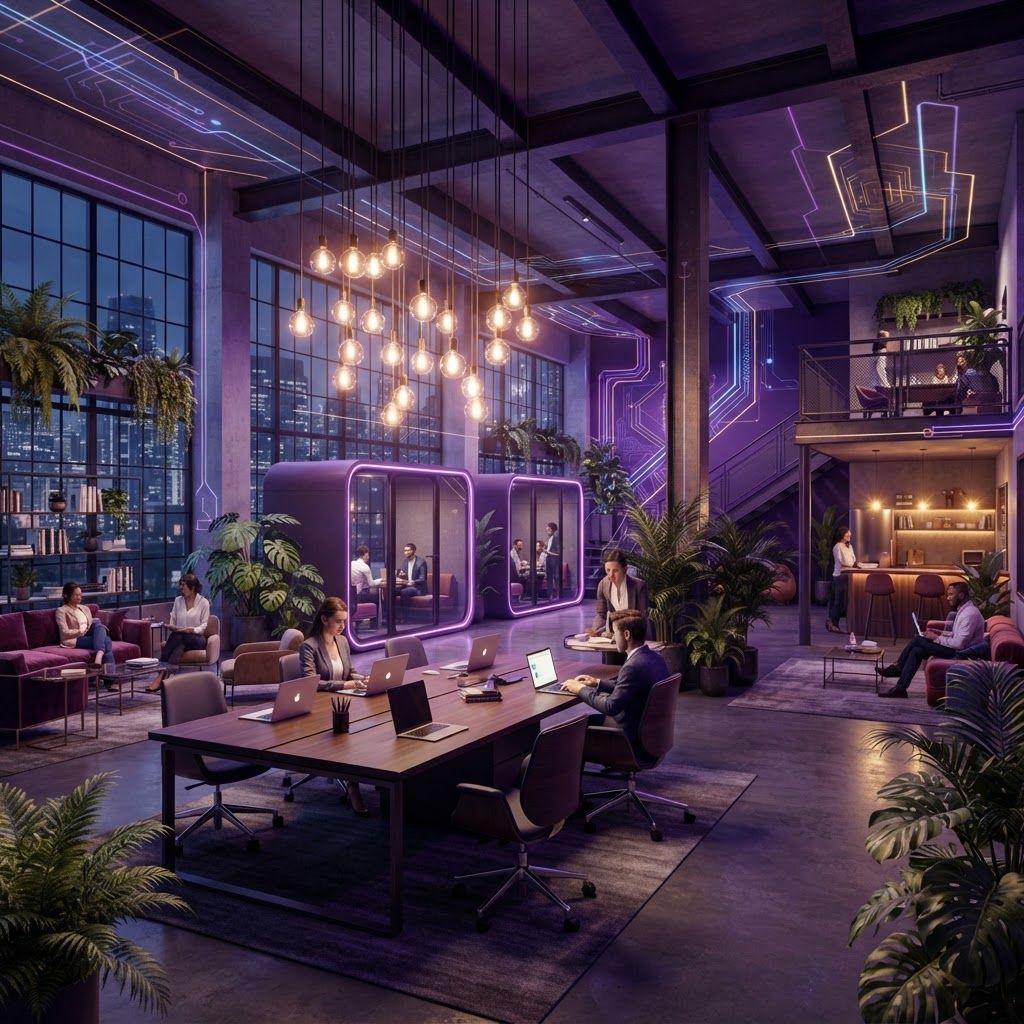
The Rise of Shared Workspace in the Capital
Tallahassee developed a co-working market for reasons specific to its economy. Legislative session brings consultants, association staff and advocacy professionals who need credible office space near the Capitol for a few months at a time, not a five-year lease. Two research universities generate spinout companies that need affordable space with room to expand. State contractors require a local presence without a permanent facility. And the permanent shift toward remote and hybrid employment left a substantial population of professionals working from home who wanted somewhere better to be.
What emerged is more differentiated than the market's size would suggest. Some spaces optimize for proximity to the Capitol and the formality that lobbying work requires. Others cluster near campus and orient toward founders, offering mentorship and investor access alongside desks. Still others serve the neighborhood remote worker who mainly wants reliable internet, decent coffee and a door that closes for video calls. Choosing well means being honest about which of these you actually are.
What Makes a Co-working Space Worth Paying For
Connectivity is non-negotiable. Ask about actual bandwidth, whether the connection is business-grade with a service level agreement, and whether there is redundancy, which matters in a region where summer storms cause outages. Acoustic design comes next: open floors with hard surfaces make sustained video calls miserable regardless of how attractive the space photographs. Meeting room access, including how hours are allocated and whether booking is genuinely available on short notice, determines whether the space works for client-facing professionals. Beyond facilities, evaluate the community, because the actual return on co-working for most members comes from the people at the next desk.
The Top 10 Co-working Spaces in Tallahassee
1. The Capital Workspace
Located within walking distance of the Capitol complex, The Capital Workspace serves the government affairs community with a level of polish that client meetings demand. Private offices, dedicated desks, formal conference rooms with video conferencing, and a staffed reception area create a professional presence that matters when hosting legislators or agency officials. Flexible session-length memberships have made it a fixture for consultants who need Tallahassee space only part of the year.
2. Domi Station
Domi Station is the anchor of Tallahassee's startup community, combining co-working with structured entrepreneurship programming. Members gain access to mentorship, pitch preparation, investor introductions and a cohort of founders working through similar problems. Its relationship with the local university ecosystem has made it the default landing place for research commercialization efforts and early-stage technology companies.
3. Midtown Collective
Midtown Collective takes advantage of its neighborhood, placing members within walking distance of Tallahassee's densest concentration of restaurants and coffee shops. The space favors design-conscious open work areas, phone booths for calls, and a members' lounge that generates genuine informal interaction. Creative professionals, marketers, designers and independent consultants make up much of its membership.
4. Southwood Business Hub
Serving the growing residential population in the southeast quadrant, Southwood Business Hub is built for the remote employee who wants a five-minute commute instead of a twenty-five minute one. Private offices, quiet focus rooms, ample free parking and family-friendly hours address suburban realities directly. Its membership skews toward salaried remote workers at out-of-state employers.
5. Seminole Innovation Center
Positioned adjacent to the university corridor, Seminole Innovation Center caters to student founders, graduate researchers and faculty consulting practices. Beyond desks it offers prototyping equipment, small laboratory-adjacent workspace and access to university partnership programs. Membership pricing accommodates student budgets, which has made it a genuine on-ramp rather than a symbolic one.
6. Magnolia Executive Suites
Magnolia Executive Suites represents the traditional executive suite model updated for current expectations. Members lease private furnished offices with shared reception, conference facilities, mail handling and administrative support. Attorneys, financial advisors, accountants and small professional practices form its core membership, drawn by the combination of privacy and shared overhead.
7. Railroad Square Creative Workspace
Set within Tallahassee's arts district, Railroad Square Creative Workspace serves makers, artists, photographers and small production companies. Its inventory includes studio bays, shared fabrication areas, photography space and conventional desks, and the surrounding gallery community produces collaboration that a conventional office park cannot. First Friday events bring genuine foot traffic to member businesses.
8. Apalachee Coworking Commons
Apalachee Coworking Commons competes on straightforward value, offering open desks, small private offices and meeting rooms without extensive amenity programming or long commitments. Day passes and month-to-month terms make it practical for freelancers, contract workers and visitors who need professional space intermittently. Members consistently describe it as unpretentious and reliable.
9. Governors Park Professional Center
Governors Park Professional Center emphasizes meeting and event infrastructure alongside workspace. Multiple configurable conference rooms, a training room with tiered seating, and audio-visual support make it a frequent choice for associations, state contractors and organizations running workshops. Members with occasional large-group needs value having that capacity available without booking a hotel.
10. Canopy Remote Work Club
Canopy Remote Work Club is designed around a specific member: the established remote professional who wants a permanent, quiet, well-appointed base. It caps membership deliberately to preserve density, provides assigned desks or offices, invests heavily in acoustic treatment and call privacy, and programs a modest schedule of member dinners rather than constant networking events.
Trends in the Local Workspace Market
Hybrid work has permanently altered demand, and the strongest spaces have responded with part-time memberships priced for two or three days a week. Enterprise interest has grown as regional employers use co-working as satellite capacity rather than signing conventional leases. Acoustic and video call infrastructure has become a primary purchase criterion rather than an afterthought. Wellness amenities, from natural light to standing desks to outdoor work areas, increasingly differentiate spaces at similar price points. And seasonal demand tied to legislative session remains a defining feature that no other Florida market shares.
Choosing the Right Space
Take a trial day before committing, and take it at the time you actually work, since a space that is calm at nine can be chaotic at two. Test the internet with a real video call. Count how many meeting rooms exist relative to the number of members and ask how far in advance booking typically fills. Clarify what the membership includes: printing, coffee, meeting hours, after-hours access, guest privileges and parking all vary. Read the agreement's notice period. And talk to two or three current members, who will tell you honestly whether the community lives up to the marketing.
Final Thoughts
Tallahassee's co-working market has matured into something genuinely useful, with distinct options for the lobbyist, the founder, the creative professional, the suburban remote employee and the established solo practitioner. The right choice depends less on which space is best in the abstract and more on which membership base you want to be part of. Visit several, work a full day in each, and let the environment rather than the brochure make the decision.