
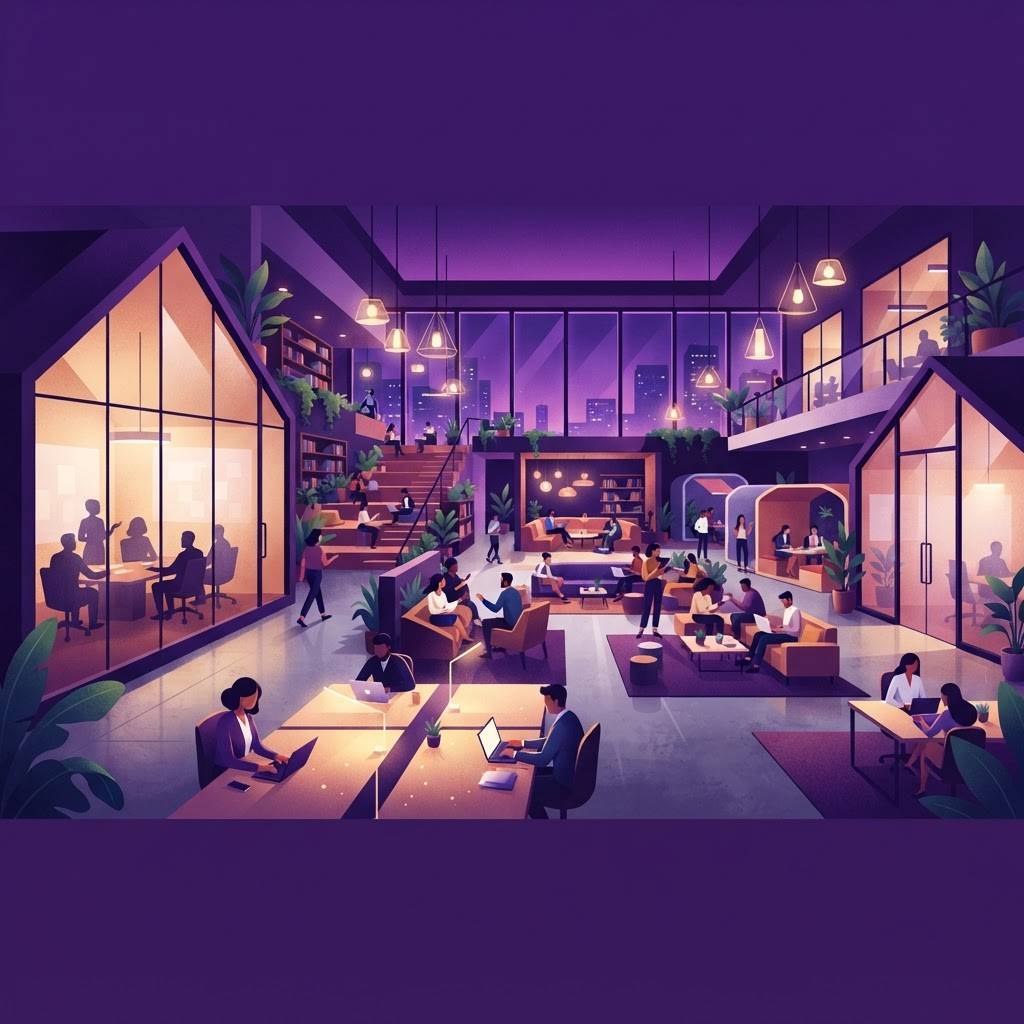
Flexible Workspace Has Become Core Infrastructure
The shift to hybrid work permanently changed how Sunnyvale professionals think about where they work. Home offices solved the commute problem but introduced new ones: distraction, isolation, inadequate ergonomics, and the difficulty of separating work from personal life. Co-working spaces have emerged as the practical middle ground, offering professional environments without long-term lease commitments.
Demand comes from several directions. Startups need space that scales month to month. Remote employees of distant companies want somewhere to work that is not their kitchen table. Freelancers and consultants need meeting space and a professional address. Established companies increasingly use flexible space for satellite teams, project groups, and overflow capacity.
Understanding Co-working Formats
Hot desks provide access to any available seat in an open area, typically at the lowest price point, suitable for people who visit occasionally. Dedicated desks assign a specific workstation that remains yours, allowing you to leave equipment and maintain a consistent setup. Private offices provide enclosed space for individuals or small teams, offering confidentiality and call privacy.
Team suites accommodate larger groups with customizable configurations, often on longer terms. Beyond desk type, spaces differ substantially in atmosphere. Some prioritize quiet focus with library-like norms; others emphasize energy, events, and networking. Neither is better, but the mismatch between expectation and reality is the most common reason members leave.
The Top 10 Co-working Spaces in Sunnyvale
1. Valley Workspace Collective
A well-established space balancing open desks with a substantial number of private offices and meeting rooms. Reliable high-speed connectivity, good acoustic separation, and a professional atmosphere make it a dependable choice for serious work.
2. Peninsula Innovation Hub
Oriented toward startups, this space combines workspace with programming including investor introductions, mentorship sessions, and technical workshops. Its community is genuinely active rather than nominal.
3. Sunnyvale Executive Suites
Offering private offices with reception service, mail handling, and formal conference facilities, this space serves consultants, attorneys, and small professional firms that need a polished client-facing environment.
4. El Camino Flex Offices
A conveniently located space emphasizing flexibility, with month-to-month terms, extensive hours, and straightforward pricing. Practical rather than luxurious, it suits members who prioritize value and access.
5. Silicon Valley Tech Commons
Built for engineering teams, this space provides enhanced power capacity, hardware bench areas, robust network infrastructure, and meeting rooms equipped for technical collaboration and remote pairing.
6. Mathilda Quiet Work Studio
Designed specifically for focused work, this space maintains strict noise norms, provides individual sound-treated pods, and limits events. It appeals strongly to writers, researchers, and deep-work practitioners.
7. Lakeside Creative Studio Space
Serving designers, content creators, and marketing professionals, this space includes photography areas, editing stations, and collaborative zones configured for visual work rather than standard desk tasks.
8. Harmony Wellness Workspace
Integrating workspace with wellbeing amenities including natural light, plants, quiet rooms, movement space, and healthy food options. Its design reflects growing awareness that environment affects sustained cognitive performance.
9. Downtown Sunnyvale Coworking
Positioned in the walkable downtown core near transit and dining, this space suits members who value the ability to handle errands, meet clients, and commute without driving.
10. NextDesk Flexible Offices
A technology-enabled operator with app-based booking, keyless entry, on-demand meeting room reservations, and usage-based pricing options for members who need occasional rather than daily access.
Trends in Flexible Workspace
Enterprise adoption has grown substantially, with larger companies using flexible space as a deliberate portfolio strategy rather than a stopgap. This has pushed operators to improve security, connectivity reliability, and the ability to provide dedicated, branded team areas.
Meeting infrastructure has become a primary differentiator as hybrid meetings became standard. Rooms with quality cameras, microphones, and acoustic treatment are now expected rather than premium features. Space design has also evolved toward more enclosed and semi-enclosed options, as fully open layouts proved poorly suited to the volume of video calls modern work requires.
How to Choose Your Workspace
Visit during the hours you intend to work and stay long enough to gauge noise levels, temperature, and how crowded common areas become. Test the network connection yourself rather than relying on advertised speeds, and take a call to evaluate whether phone booths are available when you need them.
Examine the contract carefully. Understand notice requirements for cancellation, what meeting room credits are included versus billed, whether printing and guest access carry fees, and how the operator handles price increases at renewal. For teams, clarify how quickly you can add or reduce seats.
Consider the community dimension honestly. If networking matters to you, ask about member events and industry mix. If you simply want quiet productivity, verify that the space culture supports it rather than assuming.
Final Thoughts
Sunnyvale flexible workspace market covers startup hubs, executive suites, engineering-focused facilities, quiet studios, creative spaces, and wellness-oriented environments. The right choice depends on your work style, meeting frequency, team size, and commute. A well-matched workspace does more than provide a desk; it establishes the boundaries and conditions that make consistent, focused work possible.