
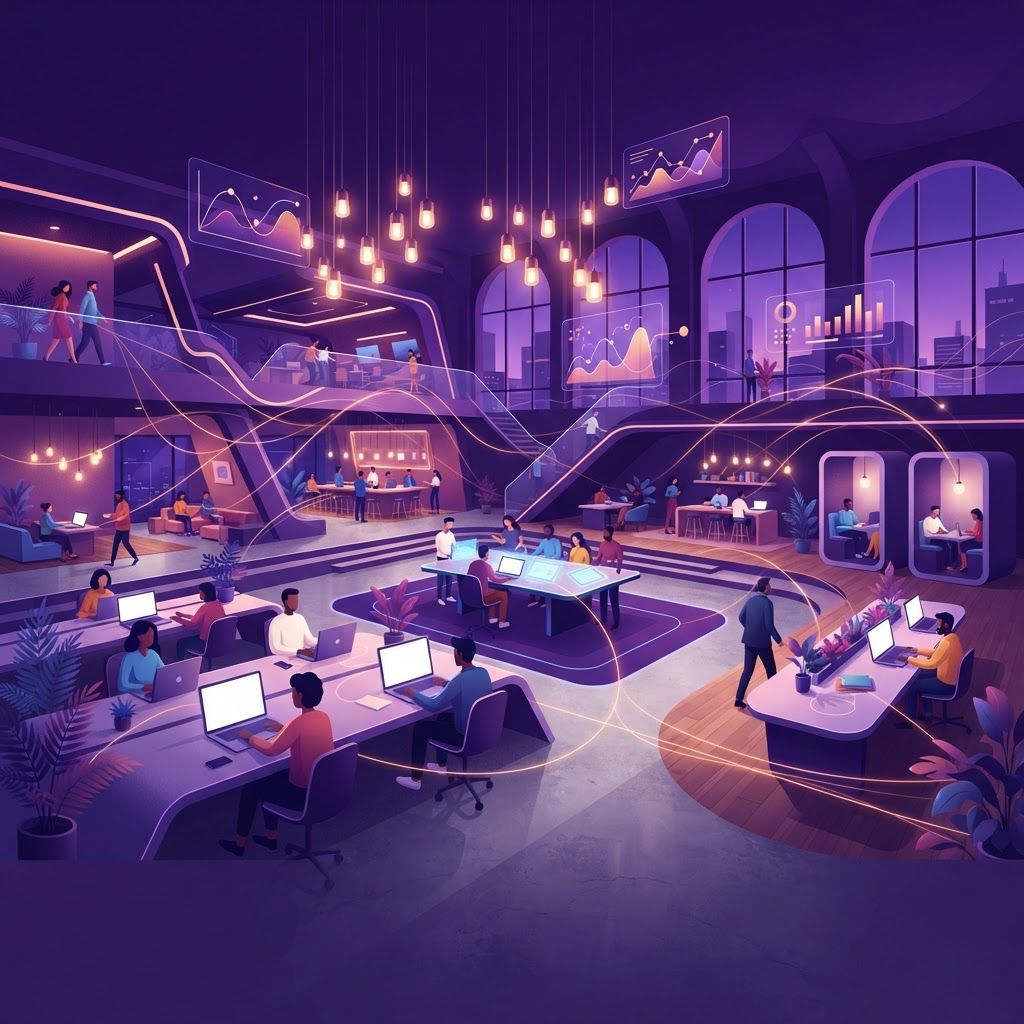
Sioux Falls has quietly become one of the more practical places in the country to run a location-independent business. Low cost of living, no state income tax, a growing airport with expanding direct routes, reliable fiber connectivity, and a short commute from nearly anywhere in the metro combine to make it viable for founders and remote professionals who might once have defaulted to a larger city.
That shift has produced real demand for coworking. What began as a handful of shared desks has developed into a layered market that includes downtown creative spaces, professional executive suites, startup-focused innovation hubs, and specialized studios for makers and content creators.
Why Coworking Works Well in This Market
Three local factors matter. First, the downtown core and the Phillips Avenue corridor have been substantially revitalized, with restaurants, coffee shops, the riverfront greenway, and residential density creating an environment where a workday actually has texture. Second, the region has an unusually collaborative business community, where introductions happen quickly and warm referrals still drive most deal flow, which makes physical proximity valuable. Third, winters make working from an isolated home office genuinely difficult for morale, and a membership provides both structure and human contact from November through March.
The Top 10 Coworking Spaces in Sioux Falls
1. Startup Sioux Falls
Startup Sioux Falls functions as the center of gravity for the local entrepreneurial community, combining coworking space with mentorship, programming, pitch events, and accelerator activity. The value is less about the desk and more about the network. Founders working here gain access to advisors, investors, and peers navigating the same stage, which is difficult to replicate in a purely commercial space.
2. The Bancroft
Housed in a historic downtown building, this type of space blends architectural character with modern amenities including private offices, dedicated desks, conference rooms, and event space. Members typically include consultants, attorneys, financial professionals, and small agencies who want a credible client-facing environment without leasing a full suite.
3. Jones421 Coworking
Located in a converted downtown warehouse, Jones421 exemplifies the adaptive reuse trend that has defined downtown Sioux Falls development. Exposed brick, high ceilings, and natural light create an environment that appeals to creative professionals, designers, marketers, and developers, and the mixed-tenant building generates organic collaboration.
4. Fresh Produce Coworking
Creative-focused spaces in this category cater to designers, photographers, writers, and marketing professionals, often including photo studio access, podcast recording capability, and production equipment. For creators, the shared equipment access alone can justify the membership relative to purchasing gear individually.
5. Regus Sioux Falls
National flexible office providers deliver a different value proposition: professional consistency, private lockable offices, receptionist services, mail handling, and access to a global network of locations. For consultants who travel frequently or businesses that need a formal registered address and client meeting space, this model is straightforward and predictable.
6. Zeal Center for Entrepreneurship
Business incubators combine affordable office space with structured support including business planning assistance, financing guidance, and connections to university resources and economic development programs. Early-stage companies benefit from below-market rent during the fragile first years, along with practical advisory support.
7. The Cornerstone Business Hub
Suburban coworking spaces serve professionals who live in the western and southern growth areas and prefer a five-minute commute over a downtown drive. These spaces typically offer abundant free parking, quieter environments, and family-friendly hours, and they attract established consultants and remote corporate employees rather than early-stage founders.
8. Sioux Falls Makerspace
Makerspaces provide access to fabrication equipment including three-dimensional printers, laser cutters, woodworking tools, and electronics benches, alongside work areas and community. For hardware entrepreneurs, product designers, and skilled hobbyists building physical products, this is a category no conventional coworking space can serve.
9. Coffee Shop and Cafe Work Culture
The city independent coffee scene functions as informal coworking infrastructure. Several downtown and neighborhood cafes offer reliable connectivity, ample seating, and a tolerance for laptop workers, and many professionals build a rotation between a paid membership and cafe days. It is a legitimate low-cost option for solo workers who do not need meeting space.
10. Library and Public Meeting Facilities
The public library system provides free quiet work areas, bookable meeting rooms, and reliable internet, which is genuinely useful for freelancers with irregular income, job seekers, and anyone who occasionally needs a professional meeting room without a monthly commitment. Reservation systems make planning practical.
Understanding Membership Options
Hot desk memberships provide access to open seating on a first-come basis and are the least expensive option, suitable for people in the space a few days weekly. Dedicated desks reserve a specific workstation with storage, which matters if you use dual monitors or leave equipment on site. Private offices provide lockable space for confidential calls and small teams. Day passes and punch cards fit occasional use. Virtual memberships supply a business address and mail handling without physical space, and meeting-room-only plans work for consultants who work from home but need professional client space.
What to Test Before You Commit
Work a full trial day rather than taking a tour. Test the internet speed during peak afternoon hours, not at nine in the morning when the space is empty. Take a video call from the phone booth or meeting room you would actually use and listen for noise bleed. Check the parking situation on a weekday at ten. Note the temperature, because older converted buildings frequently struggle with heating and cooling balance, which matters considerably in a January cold snap or an August heat wave.
Ask about meeting room allocation and overage costs, guest policies, after-hours access, printing costs, and contract length. Ask how many members hold access relative to the number of seats, since oversold hot desk plans lead to hunting for a chair.
Matching a Space to Your Work Style
If your work depends on deep focus, prioritize acoustic separation and a dedicated desk over social programming. If your growth depends on relationships, prioritize a space with a strong member community and active events, even if the desk is less comfortable. If you meet clients regularly, prioritize location, reception, and meeting room quality. If you are building a physical product, a makerspace membership will do more for you than any premium desk.
Final Thoughts
Coworking in Sioux Falls has matured into a real market with genuine variety, from startup ecosystems and historic downtown creative spaces to suburban professional hubs, makerspaces, and traditional executive suites. Choose based on how you actually work rather than on the aesthetics of the lobby, trial before signing, and factor the community into the value calculation. In a city this well connected, the people at the next desk are frequently worth more than the desk itself.