
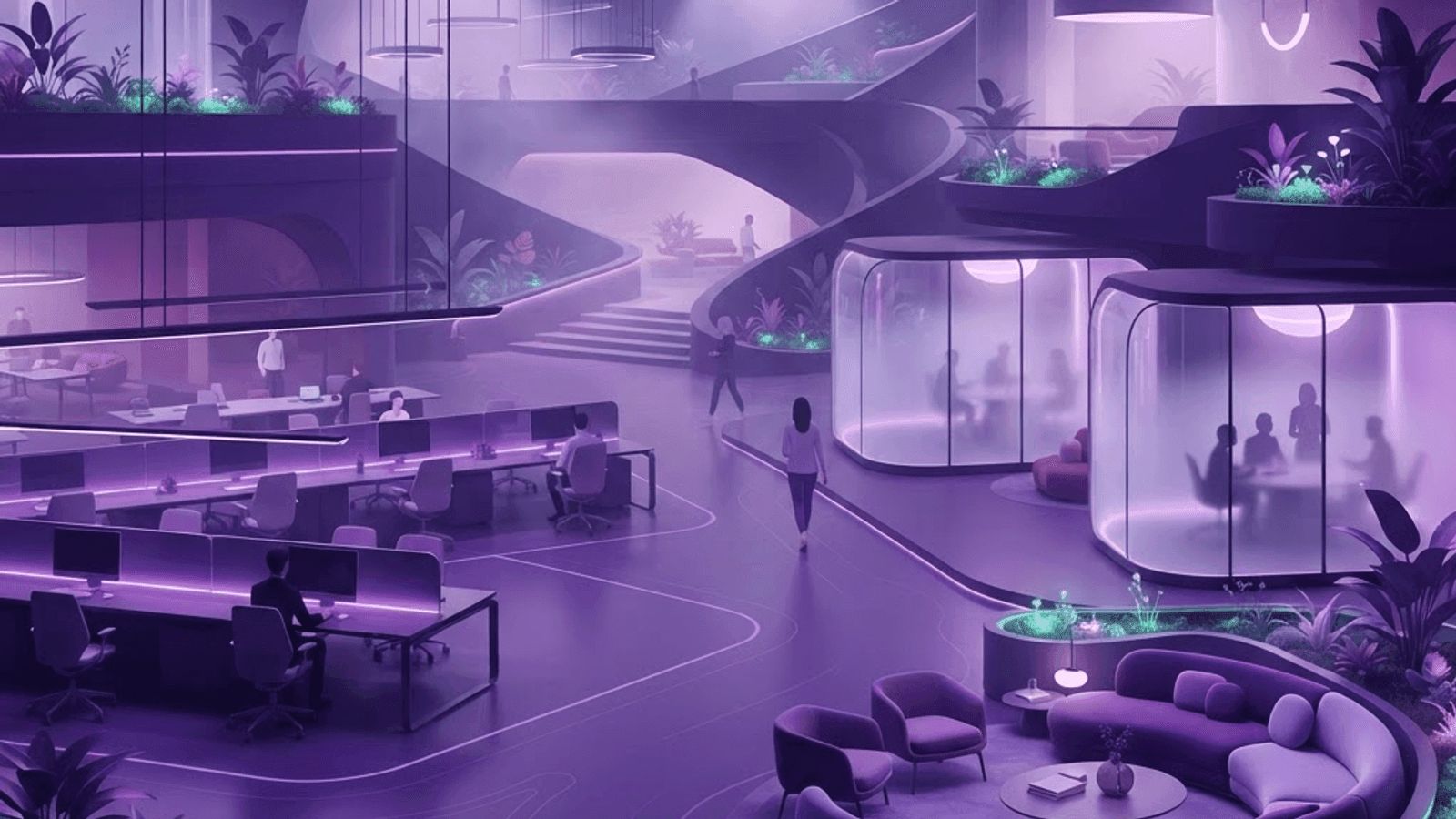
Why Co-working Took Hold in Roseville
For years, Roseville professionals who worked remotely either commuted into Sacramento or worked from a spare bedroom. Hybrid work changed that calculation. A meaningful share of the city's workforce now needs a professional environment a few days a week without a long commute or a five-year lease. Flexible workspace filled that gap.
The local demand profile is distinctive. Rather than venture-funded startups, Roseville co-working memberships skew toward consultants, insurance and financial advisors, healthcare administrators, contractors, remote employees of out-of-area companies, and small professional services firms that have outgrown a home office but cannot justify a conventional suite.
What to Evaluate Before Committing
Noise management is the most common complaint in shared workspace, so evaluate acoustics carefully during a trial day. Check internet performance during peak hours, not just a quick speed test. Count the phone booths and meeting rooms relative to member volume, because a space with plenty of desks but two booths will frustrate anyone who takes frequent calls.
Also consider parking, access hours, printing, mail handling and whether a business address can be registered at the location. For teams, ask about the private office waitlist and whether meeting room credits roll over. Small operational details determine satisfaction far more than lobby design.
1. Roseville Workspace Collective
Roseville Workspace Collective is a mid-sized space built around a quiet-first culture. Dedicated call areas, generous phone booth count and clear zoning between focus and social areas make it a strong fit for consultants and remote employees who spend hours on video calls.
2. The Foundry Roseville
The Foundry Roseville leans into community programming, with member meetups, workshops and networking events. Freelancers and early-stage founders benefit most, since the referral network is often as valuable as the desk itself.
3. Placer Business Commons
Placer Business Commons offers a more traditional executive suite model with private offices, a staffed reception and formal conference rooms. Professional services firms that meet clients on site tend to prefer this environment over an open co-working floor.
4. Sierra Flex Offices
Sierra Flex Offices focuses on small team suites in the two to twelve person range. Flexible month-to-month and short-term agreements let growing companies scale up or down without renegotiating a long lease, which suits businesses with project-based headcount.
5. Oakline Studio Workspace
Oakline Studio Workspace serves creative professionals with photography space, editing stations and a recording room. Designers, content producers and marketing consultants get purpose-built infrastructure that a general co-working space rarely provides.
6. Junction 80 Coworking
Junction 80 Coworking emphasizes convenience and access, with extended hours and straightforward freeway proximity. Members who travel for client work value the ability to drop in early, work a few hours and get back on the road.
7. Granite Bay Work Lounge
Granite Bay Work Lounge offers a premium, low-density environment with fewer members per square foot. The tradeoff is a higher membership rate in exchange for consistently available seating, quieter conditions and a more polished client-facing atmosphere.
8. Bloom Coworking and Childcare
Bloom Coworking and Childcare pairs workspace with on-site childcare, addressing a genuine gap for working parents. The model allows focused work blocks without arranging separate care, and the scheduling flexibility is particularly useful for part-time professionals.
9. Highland Tech Hub
Highland Tech Hub caters to technical teams with high-bandwidth connectivity, redundant internet, secure storage and configurable team rooms. Software consultancies and technology service providers appreciate the infrastructure reliability.
10. Meridian Meeting and Work Center
Meridian Meeting and Work Center operates primarily as an on-demand meeting and training venue with a smaller drop-in work area. Organizations that need a professional room for periodic sessions, rather than daily desks, find the pay-per-use model more economical than a membership.
Understanding Pricing Models
Flexible workspace generally prices across four tiers. Day passes suit occasional users. Hot desk memberships provide unreserved seating during business hours at the lowest recurring cost. Dedicated desks reserve a specific workstation with storage. Private offices provide a lockable room with team seating at the highest price point.
Compare total cost rather than headline rate. Meeting room credits, printing allowances, guest passes, after-hours access, parking and mail service all carry real value. A membership that appears more expensive often costs less once a consultant who books six client meetings a month accounts for included room time.
The Business Case Beyond Cost
The financial argument for co-working in Roseville is straightforward: no capital expenditure on furniture, no utility or janitorial contracts, no multi-year lease obligation and no build-out cost. But the operational argument matters just as much. Separating work from home improves focus for many people, and having a legitimate address and conference room makes small firms credible to clients who would be uncomfortable meeting at a coffee shop.
There is also a hiring dimension. Distributed companies increasingly offer workspace stipends, and a Roseville membership lets an employer support a Placer County employee without opening an office. That trend has quietly become one of the steadier sources of local flexible workspace demand.
Choosing Your Space
Take a trial day at two or three finalists, ideally mid-week when occupancy peaks. Work a normal day, take a real call, test the internet and observe how members treat shared areas. Ask about the current member count relative to capacity and about contract terms, notice periods and what happens if you need to pause a membership.
The best co-working spaces in Roseville are the ones that disappear into the background. When the internet is reliable, a booth is free when you need one and nobody is holding a speakerphone meeting at an open desk, the space is doing its job.