
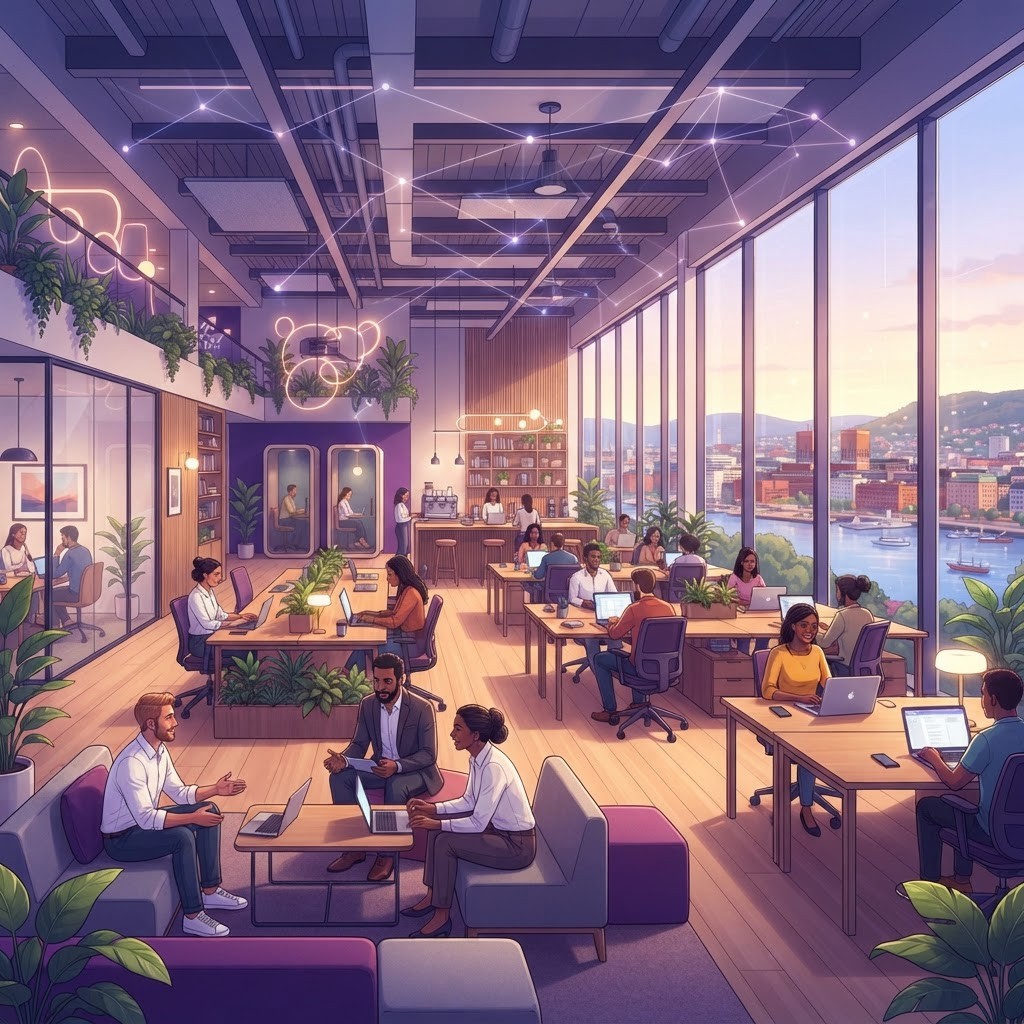
The Growth of Co-working Culture in Norway
The way Norwegians work has changed dramatically over the past decade, and co-working spaces have played a central role in that transformation. As freelancing, entrepreneurship and remote work continue to rise, professionals are seeking flexible environments that offer more than just a desk. Co-working spaces provide community, inspiration and access to resources that help individuals and small teams thrive.
These shared workspaces are especially popular in Oslo, Bergen, Trondheim and Stavanger, where a vibrant startup scene has fuelled demand for collaborative environments. Beyond practical amenities, they foster networking and knowledge sharing, creating ecosystems where ideas can flourish and businesses can grow through spontaneous connections.
Why Professionals Choose Co-working
Flexibility is one of the biggest draws of co-working spaces. Instead of committing to long, expensive office leases, members can choose plans that suit their needs, from a hot desk for a day to a private office for a growing team. This adaptability is invaluable for startups navigating uncertain growth and for freelancers who value freedom.
Beyond cost savings, co-working spaces offer a sense of belonging that home offices cannot match. Regular events, workshops and social gatherings help members build relationships and combat the isolation that can come with independent work. High-speed internet, meeting rooms, quality coffee and thoughtfully designed interiors round out the experience, reflecting Norway's appreciation for good design and comfort.
Leading Co-working Spaces
MESH is one of Norway's most iconic co-working communities, based in Oslo and known for its strong focus on startups and innovation. It hosts frequent events and has built a reputation as a launchpad for ambitious entrepreneurs. SoCentral, also in Oslo, focuses on social innovation and brings together organisations working toward positive societal impact.
657 Oslo is a beloved creative hub popular with designers, developers and independent professionals who value its relaxed yet productive atmosphere. Spaces and Regus operate multiple locations across the country, offering polished, professional environments backed by international networks. Evolve is another well-regarded provider with a design-forward approach.
In Bergen, Nyskapingsparken supports early-stage companies with mentorship and resources alongside workspace. Startuplab in Oslo is closely tied to the tech and innovation ecosystem, offering not just desks but access to investors and expertise. Impact Hub connects members to a global network of purpose-driven professionals, while Cluster and Kreativ Nettverk provide welcoming spaces that emphasise collaboration and community across different Norwegian cities.
Trends Shaping the Industry
Hybrid work has become a lasting feature of the Norwegian professional landscape, and co-working spaces have adapted accordingly. Many now offer flexible membership tiers that accommodate people splitting time between home and shared offices. Enhanced booking systems and app-based access make it easy to reserve desks and meeting rooms on demand.
Sustainability and wellbeing are increasingly important. Modern spaces incorporate natural light, green plants, ergonomic furniture and quiet zones to support focus and health. There is also growing emphasis on curated communities, with some spaces specialising in particular industries such as technology, design or social enterprise to deepen the value of networking.
Finding the Right Space for You
Choosing a co-working space depends on your working style, budget and goals. Freelancers may prioritise a lively community and central location, while startups might look for spaces that offer mentorship and investor connections. Visiting a space before committing helps you gauge the atmosphere and whether it matches your needs.
Ultimately, the best co-working spaces in Norway do more than provide a place to work. They nurture creativity, build relationships and empower professionals to do their best work. As the future of work continues to evolve, these dynamic environments will remain essential to Norway's thriving community of independent workers and innovators.