
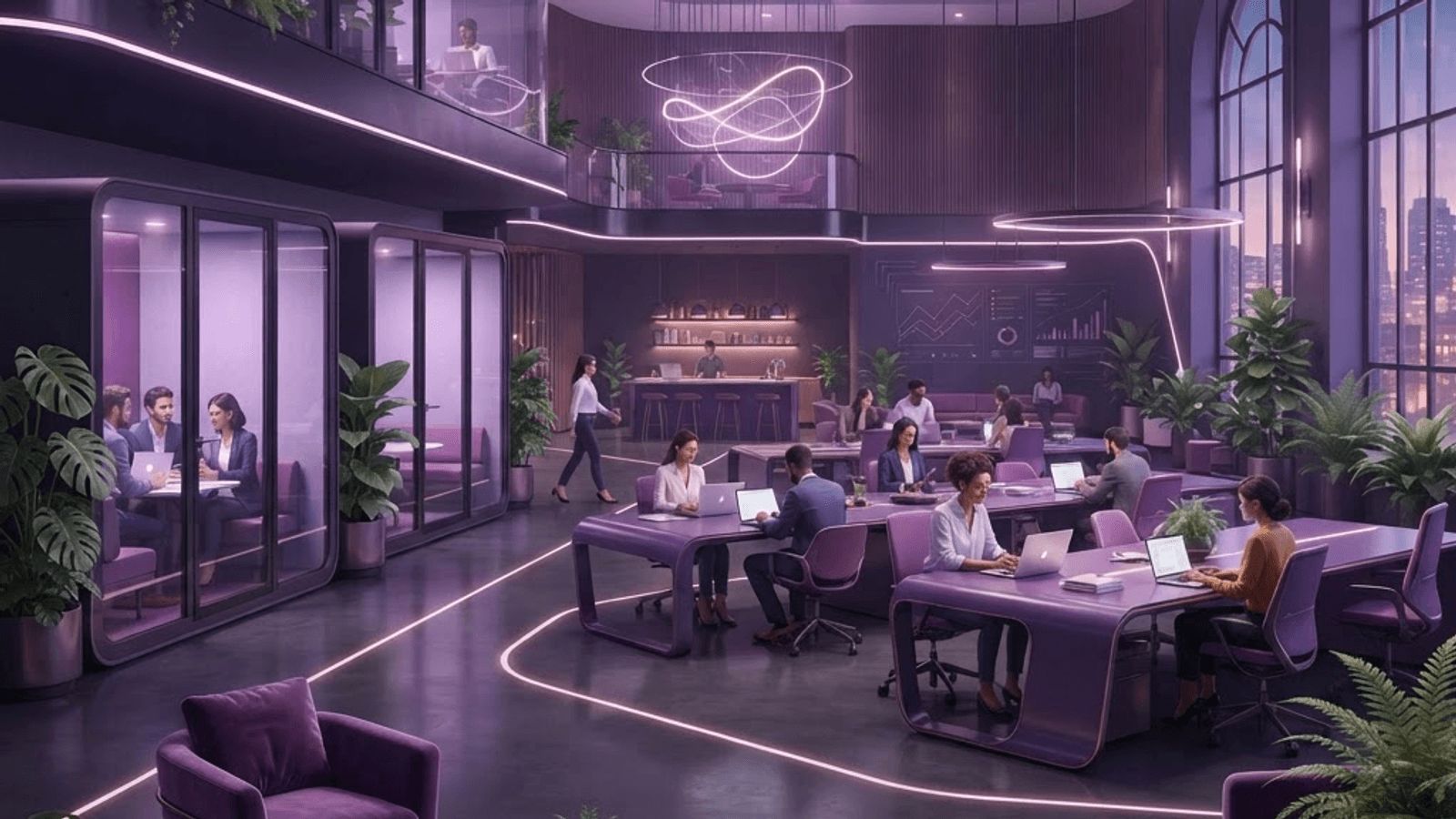
Grand Prairie sits in the geographic middle of the Dallas-Fort Worth Metroplex, roughly equidistant from downtown Dallas, downtown Fort Worth, and DFW International Airport. That location has always made it attractive to logistics operators and manufacturers, but over the past several years it has also made the city a magnet for a very different group: independent professionals, remote employees, and founders who no longer want to commute an hour each way to sit in an office they do not need. Co-working has grown to meet that demand, and the options now range from polished executive suites along State Highway 161 to relaxed community hubs near Main Street.
Why Co-working Makes Sense in Grand Prairie
The core appeal is simple economics. Traditional office leases in the Metroplex typically require multi-year commitments, a build-out allowance, separate internet and utility accounts, and furniture the tenant must buy outright. A co-working membership collapses all of that into one predictable monthly figure with a month-to-month or annual term. For a two-person consultancy or a solo real estate agent, the difference in overhead is dramatic.
The second driver is access. Because Grand Prairie is threaded by Interstate 30, Interstate 20, and Highway 360, a member based here can reach a client in Arlington, Irving, Mansfield, or Cedar Hill in under half an hour. That kind of reach is difficult to match from a single-market office in a denser submarket, and it is one reason regional sales teams and field-service companies increasingly base their administrative work in the city.
What Separates a Good Workspace from an Average One
Before looking at specific operators, it helps to know which details actually affect daily productivity. Bandwidth and network reliability matter more than square footage; anyone running video calls all day will feel a congested connection immediately. Acoustic design is the second overlooked factor, since an open floor with hard surfaces and no sound masking becomes unusable during busy hours. Beyond that, look at meeting room availability during peak windows, whether printing and mail handling are included or metered, parking ratios, and how generous the guest policy is when clients visit.
The Ten Best Co-working Spaces in Grand Prairie
1. Prairie Works Collective is the closest thing the city has to a flagship. Occupying a renovated mid-century building near the Main Street corridor, it pairs exposed structure and natural light with genuinely modern infrastructure: redundant fiber, six bookable conference rooms, and a podcast and video studio that members can reserve by the hour. Its strength is programming, with a weekly member lunch and a monthly founder roundtable that reliably produces referrals.
2. Lone Star Executive Suites serves the professional-services end of the market: attorneys, CPAs, financial advisors, and insurance agencies. Offices are private and lockable, a staffed reception desk answers calls under each member firm name, and the conference rooms are formal enough for a closing or a deposition. Clients who need a traditional office presence without traditional overhead consistently land here.
3. Trinity Hub Workspace is built for teams rather than individuals. Suites accommodate four to twenty people, walls are demountable so a growing company can expand into an adjacent bay without moving, and the operator offers custom badge access and dedicated VLANs for firms with compliance requirements.
4. Epic Commons takes cues from the wellness-oriented end of the industry. Sit-stand desks are standard, there is a quiet room for focused work, and members receive access to on-site fitness facilities. It attracts a younger membership base and is the most popular option among remote employees of larger corporations.
5. Bowles Creative Studio concentrates on designers, photographers, and video producers. In addition to desks, it rents a cyclorama shoot bay, editing stations with color-calibrated monitors, and secure equipment lockers. For creative freelancers, having production space and workspace under one roof removes a major logistical headache.
6. Prairie Loft Offices is a smaller, owner-operated space with fewer than fifty desks and a deliberately low-key culture. There is no hot-desking; every member has an assigned spot. Professionals who found larger spaces too social tend to stay here for years.
7. Gateway Business Center is the strongest option for companies that mix desk work with light warehousing. Its flex suites combine front office space with a small roll-up-door bay, which suits e-commerce sellers, medical device reps, and contractors who need to store inventory and samples near their desks.
8. The Grand Exchange focuses on meetings and events. Its largest room seats around one hundred and twenty with full audiovisual support, and members receive discounted hourly rates. Training companies, nonprofits, and sales organizations that host frequent group sessions use it as a base.
9. Southwest Coworking Alliance offers reciprocal access across several partner locations in the region, so a member paying in Grand Prairie can also drop in at affiliated spaces elsewhere in the Metroplex. That flexibility is valuable for consultants whose client sites move week to week.
10. Cedar Ridge Workspace rounds out the list with the most affordable entry point in the city. Amenities are lean and the aesthetic is functional rather than designed, but the internet is fast, the coffee is free, and the day-pass option makes it a sensible trial for anyone testing co-working for the first time.
Industry Trends Shaping Local Demand
Three patterns are visible across these operators. First, hybrid schedules have shifted demand toward part-time memberships and credit-based plans rather than full-time dedicated desks, and the spaces that priced flexibly have filled fastest. Second, enterprise employers are now buying blocks of memberships for staff who live in the southwest Metroplex, effectively outsourcing satellite offices. Third, meeting space has become the real differentiator, because most members can work anywhere but cannot host a client anywhere.
How to Choose the Right Space
Tour at least three locations, and schedule each tour between ten in the morning and two in the afternoon when the space is at its busiest. Bring a laptop and run a real video call from a seat you would actually use. Ask how many members share each conference room, what happens to your rate at renewal, and whether the agreement lets you downgrade rather than only upgrade. Finally, weigh commute realistically: a workspace ten minutes closer to home gets used far more often than a nicer one twenty-five minutes away.
Final Thoughts
Grand Prairie offers something the denser parts of the Metroplex struggle to match, which is a genuinely central location at a reasonable cost. Whether the priority is a formal office for client meetings, a creative production base, or simply a reliable desk with fast internet and free parking, the ten spaces above cover nearly every working style. The right choice is rarely the most impressive one on a tour; it is the one whose daily rhythm matches yours.