
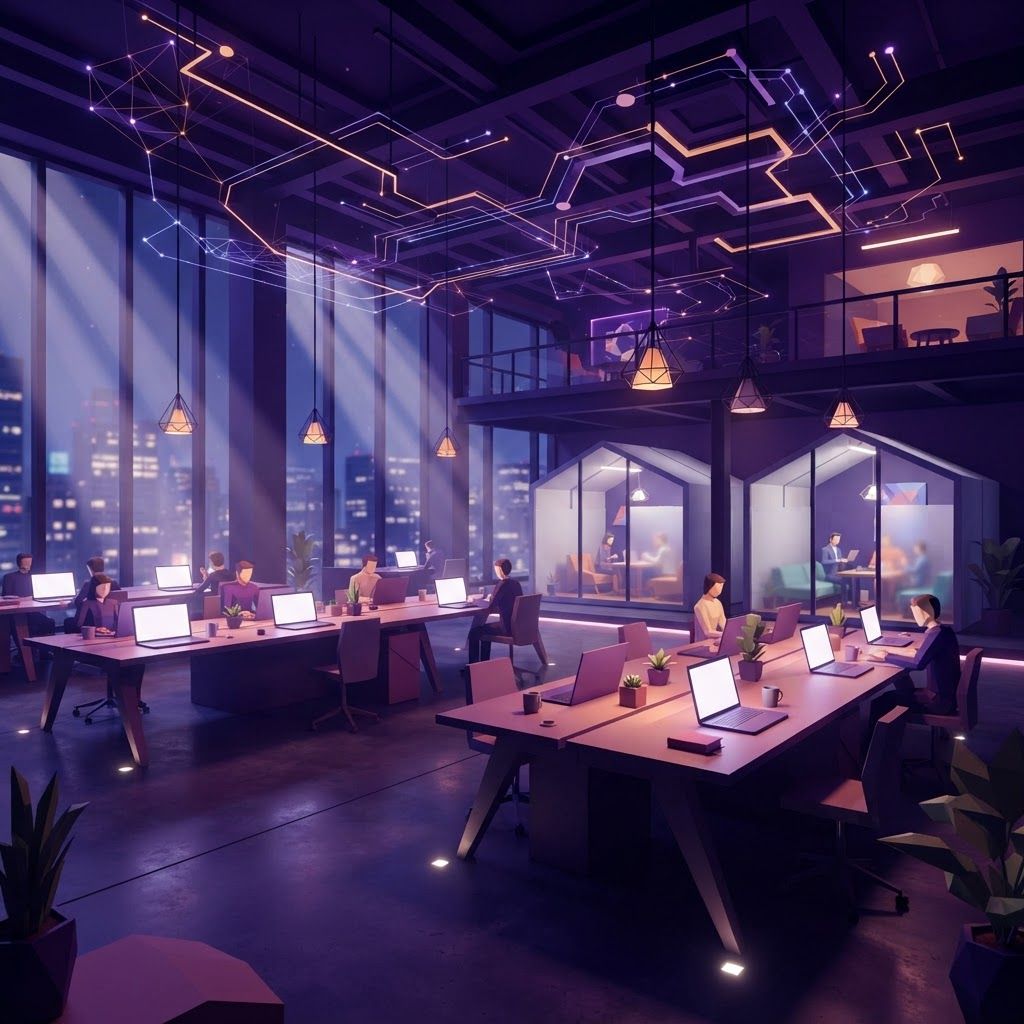
Coworking in a City Built for Independent Work
Eugene has quietly become a strong location for remote and independent work. Housing costs are lower than in the major West Coast metros, outdoor recreation is minutes away, and the presence of a research university sustains a steady flow of technical talent and entrepreneurial activity. The combination has produced a coworking market with real variety, from polished professional suites to creative maker-oriented studios.
What drives demand here is less about escaping isolation and more about structure. Remote employees want a reliable place to focus and a reason to leave the house. Founders want a professional address and room to grow. Freelancers want meeting space they cannot justify leasing alone. Each of those needs points toward a different kind of space.
The Top 10 Coworking Spaces in Eugene
1. Willamette Works
A centrally located space offering open desks, dedicated desks and private offices under one roof. It is known for strong infrastructure, including fast redundant internet, multiple bookable meeting rooms and soundproof call booths, which makes it a practical choice for remote employees on constant video calls.
2. Emerald Collective Workspace
A community-oriented space with an active events programme, including workshops, networking evenings and skill shares. Members describe the culture as genuinely collaborative rather than simply co-located, which suits founders looking to build a local network.
3. Cascade Business Center
A professional-services-oriented facility with private suites, reception services, mail handling and formal conference rooms. It appeals to consultants, attorneys, accountants and small firms who need to host clients in a traditional business setting.
4. Skinner Butte Studios
A creative-focused space serving designers, photographers, writers and small studios. Facilities include a photography area, production space and flexible layouts that accommodate project work rather than just laptop work.
5. Riverfront Innovation Hub
Positioned around technology startups and research spin-outs, with programming support, mentorship connections and scalable private offices. It functions partly as an incubator, which distinguishes it from purely commercial coworking.
6. McKenzie Flex Offices
A straightforward, no-frills operation offering private offices on short, flexible terms at accessible price points. For small teams that need a door that closes and little else, it represents strong value.
7. Alder Street Commons
A smaller boutique space with a quiet, library-like atmosphere. It attracts writers, researchers and anyone whose work depends on deep concentration rather than constant interaction.
8. Valley River Coworking
Convenient for those coming from surrounding communities, with ample parking and easy highway access. Offerings include day passes, part-time memberships and full-time desks, making it flexible for hybrid schedules.
9. Amazon Park Workspace
A neighborhood-scale space combining desks with a small café atmosphere and outdoor working areas. The relaxed environment appeals to freelancers who want somewhere pleasant rather than corporate.
10. Oregon Makers Collective
A hybrid space combining desk work with workshop access, including tools, prototyping equipment and fabrication areas. It serves hardware founders, craftspeople and product designers whose work cannot be done at a laptop.
How to Compare Coworking Memberships
Advertised monthly rates rarely tell the full story. Meeting room access is a common differentiator, with some spaces including a monthly credit allowance and others charging hourly for every booking. If your work involves regular client meetings, that distinction can amount to a significant cost difference.
Access hours matter as well. Some memberships cover standard business hours only, while others provide secure round-the-clock entry. For anyone working with teams in other time zones, that is not a minor detail.
Consider also how the space handles growth. A freelancer today may be a three-person team next year, and spaces that allow easy movement from open desk to dedicated desk to private office without a new lease negotiation offer real value. Conversely, if you expect to travel frequently, a part-time or day-pass structure may make more sense than a full membership.
What Actually Makes a Space Work
- Internet reliability, ideally with a backup connection.
- Genuine acoustic separation for calls, not just open-plan seating.
- Ergonomic seating and adjustable desks for full-day use.
- Natural light, which affects both focus and mood over long sessions.
- Kitchen facilities and nearby food options.
- Secure storage for equipment left overnight.
- A community manager who actively facilitates introductions.
Trends Shaping Coworking Locally
The largest structural change is corporate demand. Companies without a Eugene office increasingly buy memberships for individual remote employees living in the area, effectively outsourcing workplace provision. This has shifted the customer base of several local spaces from individuals to employers.
Hybrid scheduling has driven growth in part-time products, with two or three day per week memberships now common. Spaces have responded by managing capacity more dynamically, using booking systems rather than assuming every member attends daily.
There is also increased emphasis on wellness and environment. Better air handling, plentiful daylight, plants, quiet zones and outdoor working areas appear frequently in newer or renovated spaces, reflecting a broader recognition that physical environment affects productivity more than amenity checklists suggest.
Choosing the Right Fit
Nearly every space offers a day pass or trial period, and there is no substitute for using one. Work a full day, take a call, test the internet under load, and pay attention to noise levels at different times. Ask about the member mix, since a space full of people in your field offers networking value while one full of people in unrelated work may simply offer quiet.
Final Thoughts
Eugene's coworking market is varied enough that the right environment exists for almost any working style, whether that means a soundproofed booth for back-to-back calls, a workshop with a bandsaw, or a quiet corner with good light. Trial before committing, compare total cost including meeting room use, and prioritize the practical fundamentals over amenity lists.