
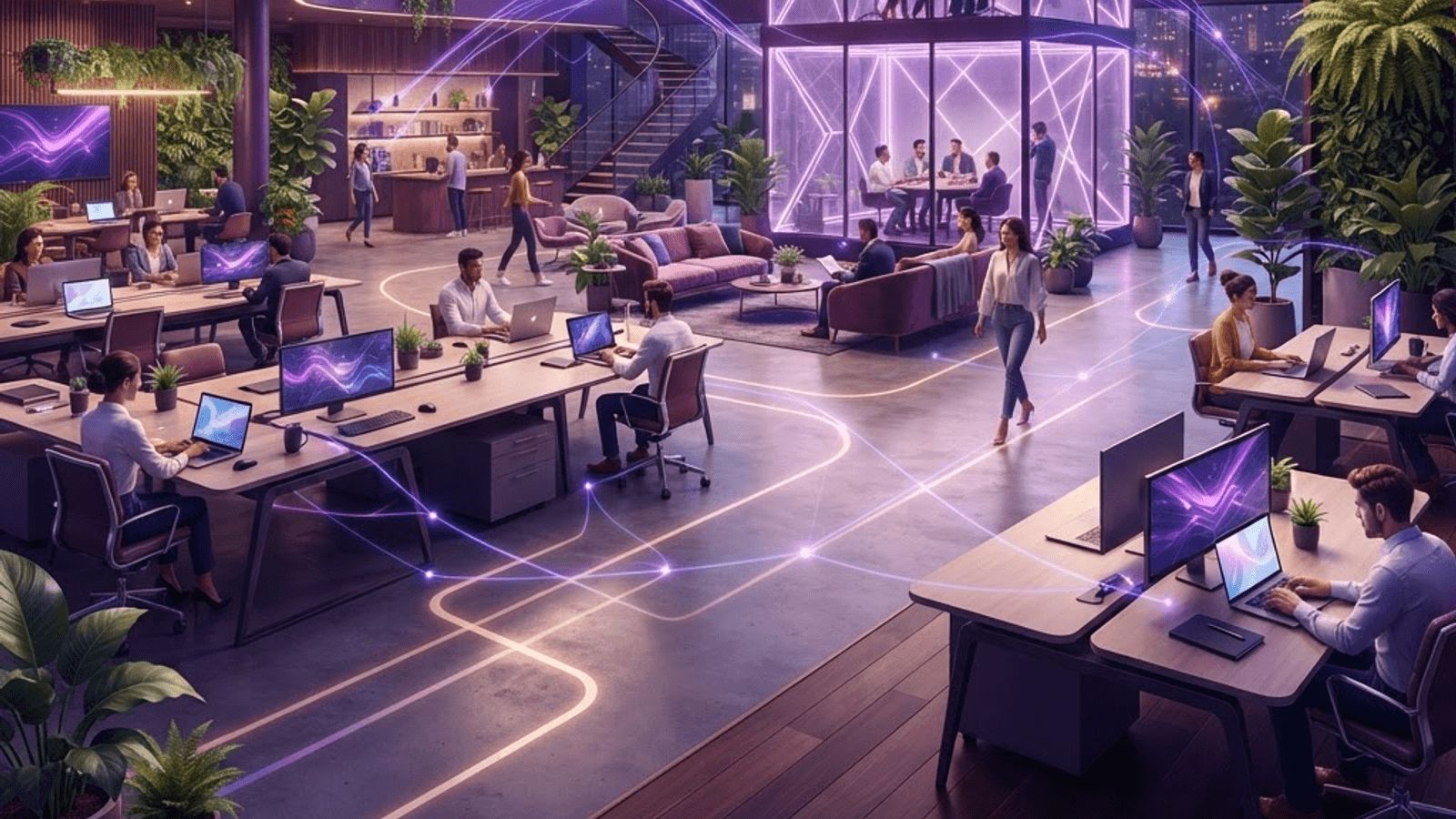
Why Flexible Workspace Took Hold in Corona
Corona has long been a commuter city, with a substantial share of residents traveling toward Orange County and Los Angeles for work. The permanent shift toward remote and hybrid employment changed that equation fundamentally. Thousands of Corona professionals who once drove an hour each way now work primarily from home, and many discovered that a kitchen table is not a sustainable office. Simultaneously, the city's entrepreneurial base of consultants, contractors, e-commerce operators and small service businesses grew, creating demand for professional space without the commitment of a conventional lease.
The result is a flexible workspace market that did not meaningfully exist in Corona a decade ago. It now spans dedicated co-working facilities, executive suite providers, business incubator space, and informal but practical alternatives such as library study rooms and cafe work environments.
Choosing the Right Workspace Arrangement
Begin by identifying what you actually need. Hot desk access, where members use any available seat, suits people who work on site two or three days weekly and value the lowest cost. A dedicated desk provides a consistent personal workstation with storage, which matters for anyone leaving equipment on site. A private office serves small teams, professionals handling confidential client information and anyone taking frequent calls. Virtual office services provide a professional business address and mail handling without physical space, which many Corona home-based businesses use to avoid publishing a residential address.
Evaluate practical factors carefully. Internet reliability and speed are non-negotiable for video-heavy work, and it is worth testing during a trial day. Meeting room availability and how it is allocated matters enormously if you host clients. Consider parking, which is generally easier in Corona than in coastal markets but still varies by location. Assess noise levels and whether phone booths or quiet zones exist. And compare contract flexibility, since the primary advantage of co-working over traditional leasing is the ability to scale or exit quickly.
The Ten Workspace Options Serving Corona
Regus operates the most recognizable flexible workspace network and serves the Corona and greater Inland Empire area with private offices, co-working areas, meeting rooms and virtual office packages, plus network access that lets members work from locations across the region and internationally.
Spaces, operating within the same global group but with a distinctly design-oriented atmosphere, offers a more creative and collaborative environment appealing to startups, agencies and design-driven professionals.
Office Evolution and similar franchise workspace providers serving the region focus on small business and solo professionals, combining private offices with live receptionist services and a community that skews toward established local businesses rather than early-stage startups.
Independent Corona co-working spaces represent the most locally rooted option. Owner-operated facilities tend to cultivate genuine community through member events, referral networks and flexible arrangements that corporate providers cannot accommodate, and their pricing is frequently more competitive.
Executive suite providers in the Corona commercial corridor offer traditional furnished private offices with shared reception, conference facilities and administrative support, which suits attorneys, financial advisors, insurance professionals and consultants who need a formal client-facing environment.
Medical and professional office suite sharing has grown alongside Corona's healthcare sector, allowing therapists, practitioners and specialists to rent consultation space by the day or half day rather than carrying a full-time lease.
Industrial flex and creative workspace conversions in Corona provide a distinct category, combining office space with warehouse or workshop area. For e-commerce sellers, light manufacturers, contractors and makers, this combination is far more useful than pure desk space.
The Corona Public Library and city facilities offer free study rooms, reliable internet and quiet working environments. For freelancers managing costs tightly or anyone needing occasional focused work time, this remains a genuinely practical and underused resource.
Cafe and hospitality work environments across Corona, including coffee houses and hotel lobbies with laptop-friendly seating, serve the informal end of the spectrum. They work well for a few hours of independent work though they lack the privacy and reliability required for client calls.
Corporate satellite and hybrid work hubs complete the list. A growing number of employers now provide or subsidize flexible workspace access near where employees live, and Corona residents working for coastal companies increasingly access memberships through their employer rather than paying personally.
Trends in Flexible Workspace
Suburban and residential-adjacent locations have become the fastest-growing segment of the industry, as workers who no longer commute daily seek professional space within a few minutes of home. Enterprise adoption has reshaped demand, with large companies contracting flexible space as a deliberate portfolio strategy rather than a stopgap. Amenity expectations have risen sharply to include wellness rooms, outdoor working areas, quality coffee programs and genuine community programming. Hybrid scheduling technology for desk and room booking has become standard, and many providers now offer pay-as-you-go day passes alongside monthly memberships, lowering the barrier to trying a space.
Making a Good Decision
Always take a trial day before committing, and schedule it during a busy midweek period rather than a quiet Friday. Calculate the true cost including any meeting room charges, printing fees and parking, and compare it against the value of what you gain, which is often less about the desk and more about separation between work and home life. Consider the community deliberately; for many Corona freelancers and small business owners, the professional relationships formed in a shared workspace ultimately generate more value than the workspace itself. And start with the shortest commitment available, since needs change quickly and flexibility is precisely what this category exists to provide.