
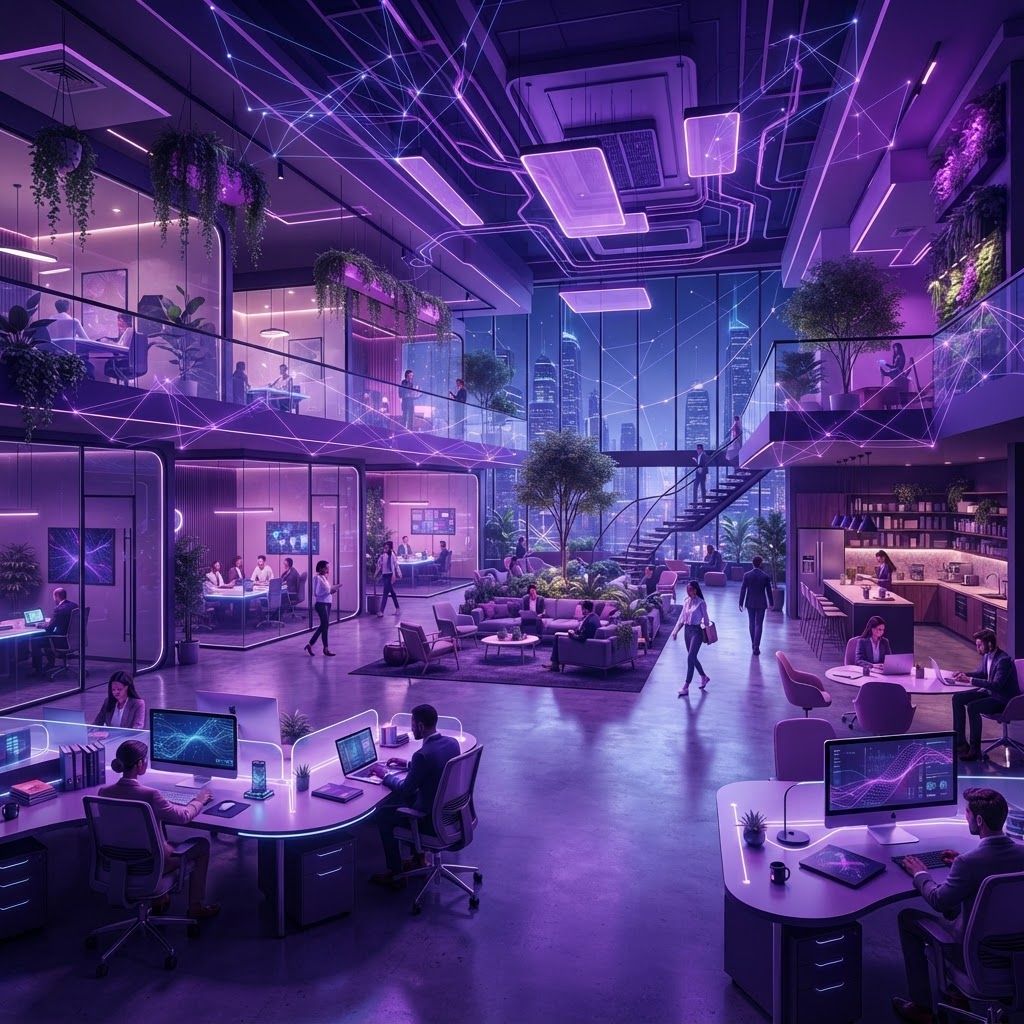
Why Co-working Took Hold in Clarksville
The rise of distributed work changed Clarksville's professional landscape quickly. A significant share of local residents now work for employers headquartered elsewhere, and many others run independent consultancies, creative studios or small service businesses. Working from home suits some of them, but not all. Kitchen tables make poor offices when video calls run back to back, and small businesses eventually need a professional environment to meet clients.
Co-working addressed that gap efficiently. Rather than signing a multi-year commercial lease with build-out costs and utility obligations, a growing business can occupy a dedicated desk or private office on a monthly basis and scale up or down as circumstances change. For a market with a highly mobile population, that flexibility is not a luxury; it is a structural fit.
What Actually Matters in a Co-working Space
Aesthetics attract attention, but daily productivity depends on less photogenic factors. Internet reliability is the single most important variable. Ask about bandwidth, whether there is a redundant connection, and how the space handles an outage. Acoustic design comes second. Open floors look collaborative but become unusable if there is nowhere to take a private call, so the ratio of phone booths and small meeting rooms to open desks deserves real scrutiny.
Beyond infrastructure, evaluate access hours, parking availability, printing and mail handling, kitchen facilities, and whether meeting room time is included or billed separately. Finally, consider the member mix. A space filled with professionals in adjacent industries produces referral opportunities that can exceed the value of the membership itself.
Ten Co-working Spaces to Explore
1. Riverfront Workspace. A downtown flagship offering open desks, dedicated desks and private suites across a renovated historic building. Known for strong natural light, a well-equipped conference room and a professionally mixed membership spanning consultants, attorneys and creative agencies.
2. Cumberland Collective. Community-focused, with a programming calendar of workshops, networking breakfasts and skill sessions. Best suited to members who want the social and referral dimension of co-working rather than simply a quiet desk.
3. The Foundry Clarksville. Oriented toward startups and small product teams, with team rooms, whiteboard-heavy collaboration areas and flexible short-term agreements. Frequently used by companies during growth phases when headcount is unpredictable.
4. Two Rivers Executive Suites. A more traditional executive suite model providing private offices with reception support, mail handling and shared conference facilities. Attractive to attorneys, accountants and financial advisors who need privacy and a formal client-facing environment.
5. Northside Work Hub. A practical, affordable space serving freelancers and remote employees who primarily need reliable connectivity, quiet and free parking. Straightforward pricing with minimal frills.
6. Sango Business Commons. Serving the southeastern corridor, this location saves members a cross-town commute. Offers day passes alongside monthly memberships, which suits hybrid workers who come in only two or three days per week.
7. Heritage Creative Studio. Designed for designers, photographers, videographers and content producers, with studio space, editing bays and equipment storage available to members. A specialized alternative to general-purpose co-working.
8. Montgomery Flex Offices. Combines office suites with adjacent light industrial and warehouse bays, an unusual pairing that works well for e-commerce operators, tradespeople and product businesses needing both administrative and storage space.
9. Clarksville Remote Works. Built explicitly around remote employees of distant companies, with an emphasis on soundproofed call booths, quality lighting for video conferencing and extended access hours to accommodate multiple time zones.
10. Trailhead Coworking. A smaller, quieter environment favored by writers, researchers and independent professionals who prioritize focus over networking. Deliberately limited membership keeps noise and density low.
Cost Compared to Traditional Office Space
The financial case for co-working is straightforward for small teams. A conventional small office lease carries base rent plus utilities, internet, furniture, cleaning, insurance and often a multi-year commitment with a personal guarantee. Co-working bundles those into a single monthly figure with no build-out capital required. For a one-to-five-person operation, the total occupancy cost is usually lower and vastly more predictable.
The calculation shifts once a team exceeds roughly eight to ten people, at which point dedicated space often becomes more economical. Many Clarksville businesses use co-working precisely as a bridge, occupying flexible space until headcount justifies a lease.
Community as a Business Asset
The underrated benefit of co-working is proximity to other professionals. A graphic designer sitting near a small marketing agency will eventually receive overflow work. A bookkeeper surrounded by contractors will find clients without advertising. These relationships form gradually and only in spaces that cultivate them intentionally through events, introductions and shared areas that encourage conversation.
When touring, ask how long the average member stays and whether members actively refer business to one another. Long tenure is the clearest indicator of a healthy community.
Choosing Well
Tour at least three spaces during the hours you would actually work, not during a quiet morning walkthrough. Test the internet speed yourself. Take a call in a phone booth to judge the acoustics. Ask about contract length, notice requirements and whether pricing escalates after an introductory period.
The best co-working spaces in Clarksville share a common characteristic: they remove friction. Good connectivity, easy parking, available meeting rooms and a professional atmosphere let members focus entirely on their work, which is ultimately the only thing a workspace needs to accomplish.