
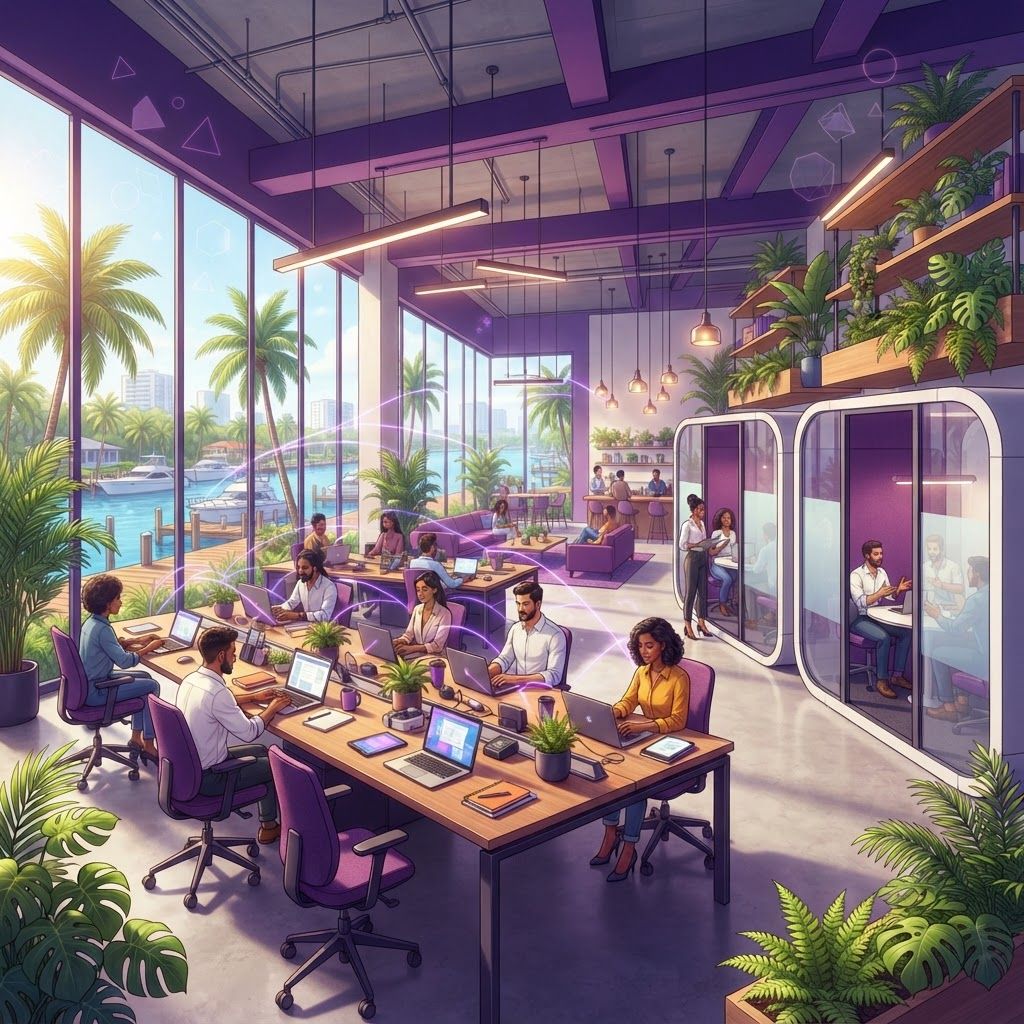
Why Co-working Has Taken Hold in Cape Coral
Cape Coral has quietly become one of Southwest Florida's most interesting places to work independently. The combination of steady population growth, an influx of remote employees relocating from the Northeast and Midwest, and a large base of self-employed contractors, realtors, and consultants has created real demand for professional space that does not require a five-year lease. Working from a canal-front lanai sounds idyllic until a client call collides with a lawn crew, a delivery, and a spotty residential connection. Co-working solves that problem without the overhead of a traditional office.
The city's geography also plays a role. Cape Coral is spread across more than 100 square miles, and commuting across the bridges into Fort Myers during season can consume an hour in each direction. A membership at a well-located shared office on Del Prado Boulevard, Cape Coral Parkway, or Pine Island Road can reclaim that time entirely. For many members, the math is straightforward: a desk close to home costs less than the fuel and hours spent driving to a downtown Fort Myers office.
What Distinguishes a Strong Co-working Space
Not all shared offices are equal, and the differences matter most on the days when work gets serious. Internet reliability is the first filter. The better spaces in Cape Coral run business-grade fiber with a secondary connection for failover, segmented guest and member networks, and enough wireless access points that a full house does not degrade performance. Ask about redundancy and generator or battery backup, particularly given the region's summer storm season.
Acoustics are the second filter. Open floors look impressive in photographs but become unusable when six people take simultaneous video calls. Look for dedicated phone booths, small huddle rooms, sound-absorbing ceilings and wall panels, and a culture that keeps conversation levels reasonable. The third filter is meeting infrastructure: conference rooms with proper displays, whiteboards, and reliable video hardware, ideally bookable through an app with a fair monthly credit allowance.
Beyond the physical plant, community and services separate the leaders. Mail handling and a commercial business address, notary access, printing and scanning, mother's rooms, secure storage, ergonomic seating, and adjustable-height desks all signal an operator that understands professional needs. Programming matters too. The best operators host lunch-and-learn sessions, referral groups, and informal socials that turn a room of strangers into a working network.
The Ten Standout Co-working Spaces
1. Cape Coral Collective Workspace is widely regarded as the anchor of the local scene. Its layout balances an open lounge, quiet focus zones, and a bank of private suites, and its fiber backbone with failover has earned trust among consultants who cannot afford a dropped call. Members frequently cite the staffed front desk and the professionalism of the conference facilities.
2. Bimini Workspaces takes a design-forward approach near the south Cape's dining and retail corridor. Natural light, biophilic touches, and generous ceiling height create an environment that feels closer to a boutique hotel lobby than a business park. The space suits creative professionals, marketers, and small agencies who host clients on site.
3. Del Prado Executive Suites serves the segment that wants privacy first. Its model centers on lockable single and team offices with shared reception, mail, and meeting resources, making it a natural fit for insurance agents, attorneys, title professionals, and financial advisors handling confidential material.
4. Pine Island Road Business Hub is built around accessibility and parking, two underrated features in Cape Coral. Its flexible day-pass structure appeals to sales teams, traveling professionals, and residents who need a desk two or three days a week rather than every day.
5. Coral Commons Cowork emphasizes community above all. Regular member breakfasts, skill-share sessions, and a curated referral network make it a strong choice for founders and freelancers who want their workspace to double as a business development channel.
6. Harbor Point Workspace caters to remote employees of larger companies. Its enterprise-grade security posture, segmented networks, and abundance of enclosed call rooms address the compliance and privacy requirements that corporate IT departments increasingly impose on distributed staff.
7. Cape Studio Works is the practical option for content-focused professionals. Alongside standard desks it offers bookable studio time with lighting, backdrops, and acoustic treatment, letting podcasters, coaches, and video marketers produce polished material without building a home studio.
8. Veterans Parkway Offices positions itself for growing small teams. Members can start with two desks and scale into a private suite as headcount rises, avoiding the disruption of relocating mid-growth. Month-to-month terms are a recurring point of praise.
9. Sandbar Coworking leans into the lifestyle side of Southwest Florida. Outdoor covered workstations, a shaded courtyard, and a relaxed dress culture appeal to independent professionals who value flexibility, with air-conditioned interior zones available when humidity makes outdoor work impractical.
10. Cape Coral Innovation Loft focuses on technology and early-stage ventures. Whiteboard-heavy collaboration rooms, mentor office hours, and connections into the wider Southwest Florida startup ecosystem make it useful for teams building products rather than serving a local client base.
Choosing the Right Membership Structure
Most Cape Coral operators offer a tiered ladder: day passes, part-time punch cards, unlimited hot desks, dedicated desks, and private offices. Hot desks reward flexibility and cost the least, but they require packing up each evening. A dedicated desk buys a permanent monitor setup and a sense of ownership. Private offices make sense once calls dominate the day or when confidentiality is non-negotiable.
Read the fine print on meeting room credits, guest access, after-hours entry, and printing allowances, since these are where monthly costs quietly expand. Ask whether the address can be used for business registration and mail, a meaningful benefit for anyone who would rather not publish a home address. Finally, take a trial day at the top two or three candidates. The intangible factors, including how the room sounds at two in the afternoon and how members treat one another, only reveal themselves in person.
Trends Shaping the Local Market
Three trends are visible across Cape Coral. First, hybrid corporate policies are pushing companies to buy small blocks of memberships rather than lease satellite offices, which is expanding the professional mix inside these spaces. Second, operators are investing more heavily in resilience, including backup power and storm-hardened connectivity, in direct response to seasonal weather risk. Third, demand for enclosed, acoustically sound call space continues to outpace demand for open benches, and the operators adding booths fastest are the ones with the strongest retention.
For residents weighing the move out of a spare bedroom, the local market now offers genuine choice. Match the space to the actual shape of your workday, verify the infrastructure that your work depends on, and treat the community as part of the value rather than a bonus. Cape Coral's co-working operators have raised their standards considerably, and the professionals who choose deliberately get far more than a desk.