
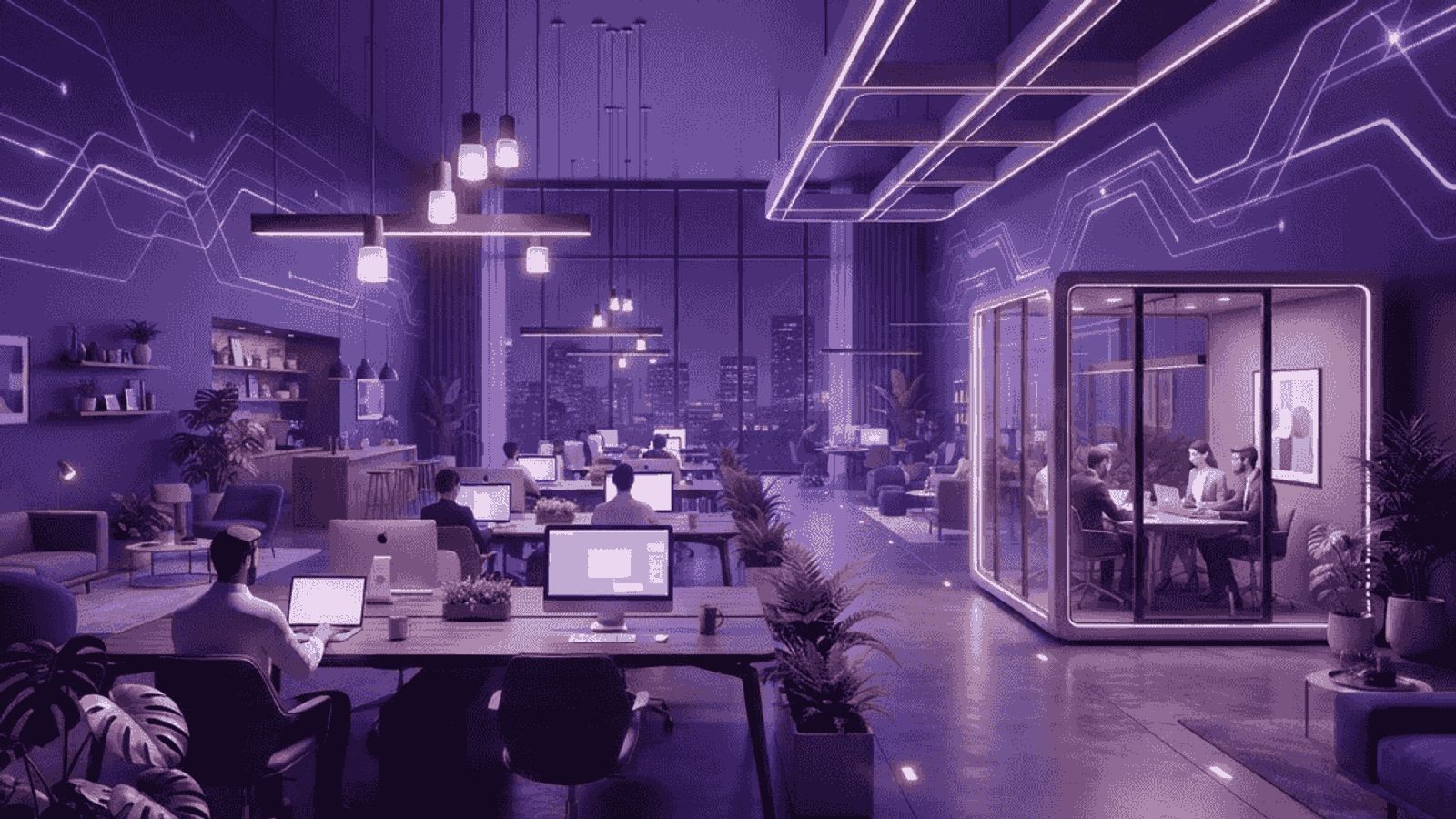
How Co-working Became Essential Infrastructure in Aurora
The shift toward distributed and hybrid work fundamentally changed the economics of workspace in cities like Aurora. Professionals who once commuted to a central business district discovered they no longer needed to, but also that working from a kitchen table indefinitely carries real costs in focus, professional credibility, and separation between work and home life. Co-working filled that gap, and Aurora benefited more than most because it has both the residential base to supply members and the affordable commercial inventory to house them.
What emerged is more varied than the early stereotype suggested. Aurora now hosts general-purpose business lounges, industry-specific spaces for creative and technical work, women-focused professional communities, and hybrid facilities that combine desk space with workshop or warehouse capacity. Members range from remote corporate employees and independent consultants to small startup teams, contractors needing a professional meeting location, and established firms maintaining satellite presence without a long lease.
What Distinguishes an Excellent Co-working Space
The obvious factors are table stakes. Reliable high-speed internet with business-grade redundancy, comfortable seating, adequate power access, and clean facilities are expected rather than notable. The real differentiators sit elsewhere.
Acoustic design is one of the most underrated. A space where every video call is audible across the floor fails at its core purpose regardless of how attractive it looks. The best facilities provide genuine sound-isolated phone booths in sufficient numbers, absorptive materials, and a clear separation between collaborative and quiet zones.
Community programming is another. A space that hosts skill-sharing sessions, industry meetups, and structured member introductions generates business value that a private office cannot replicate. Conversely, some professionals want quiet productivity and nothing more, and the right space matches that preference honestly.
Practical flexibility rounds out the list. Month-to-month terms, the ability to scale between a hot desk and a private office as headcount changes, reasonable meeting room allocations, mail and package handling, and after-hours access all determine whether a membership works in practice.
The Ten Best Co-working Spaces in Aurora
Fox Valley Workspace operates as the city's most established general-purpose facility, offering open desks, dedicated desks, and private offices in a single downtown building. Its strength is balance, with strong acoustic separation, ample meeting rooms, and a professional atmosphere that suits client-facing work.
The Riverfront Collective occupies a converted historic building near the water and leans into design-forward aesthetics with exposed brick, large windows, and abundant natural light. It attracts designers, architects, marketers, and creative freelancers, and its community programming is among the most active in the city.
Meridian Executive Suites targets professionals who need privacy and polish rather than open collaboration. Private lockable offices, staffed reception, formal conference rooms, and a quiet corridor layout make it well suited to attorneys, financial advisors, and consultants meeting clients regularly.
Prairie Launch Hub functions as a startup-oriented space with mentorship connections, pitch practice sessions, and flexible team rooms that scale as companies grow. Early-stage founders benefit from proximity to peers navigating similar problems.
Aurora Maker Works combines office space with light industrial and workshop capacity, including fabrication areas, tool access, and loading dock availability. Hardware entrepreneurs, product designers, and small manufacturers use it for work that a conventional office cannot accommodate.
Northgate Quiet Work deliberately positions itself as a low-stimulation environment. There is no open social lounge and minimal ambient noise, with individual focus rooms and library-style seating. Writers, developers, analysts, and researchers gravitate toward it.
The Studio at Stonegate serves content creators with soundproofed podcast rooms, video production space with controllable lighting, and editing suites. Creators who previously improvised in home closets and spare bedrooms find the production quality improvement immediate.
Heritage Business Commons caters to established small businesses needing a permanent professional address alongside flexible space. Its offering emphasizes mail handling, phone answering, storage, and predictable long-term terms rather than trend-driven amenities.
Summit Coworking and Wellness integrates workspace with wellness infrastructure, including a fitness area, showers for bike commuters, and quiet rooms for breaks. It appeals to members who consolidate their daily routine into one location.
Greenline Collaborative completes the list with a sustainability-oriented approach, occupying a retrofitted building with high-efficiency systems, natural ventilation strategies, and extensive daylighting. Mission-driven organizations and environmental consultants are heavily represented in its membership.
Trends in Flexible Workspace
Hybrid schedules have driven demand toward part-time memberships rather than full-time desks, and operators have responded with day passes, punch-card style packages, and multi-location access agreements. Enterprise demand has also grown, with larger employers purchasing blocks of memberships so distributed staff have professional space closer to home.
Meeting-room-only memberships are expanding as well, serving professionals who work from home most days but need a credible location for client meetings. Meanwhile, video call infrastructure has become a competitive battleground, with the best spaces investing in properly equipped call booths rather than treating them as an afterthought.
How to Choose and What to Negotiate
Visit during peak hours rather than a quiet morning, because that is when acoustic and capacity problems reveal themselves. Test the internet speed yourself, take a call from a booth, and observe whether meeting rooms are actually available or perpetually booked.
On terms, clarify how meeting room credits work and whether they roll over, what after-hours access costs, whether printing and mail handling are included, and how much notice is required to cancel. Ask whether pricing is locked for a defined period. Most Aurora operators have flexibility on trial periods and short initial commitments, so request a two-week trial before signing anything longer than month-to-month.