
Apparel Wholesale in a Port City
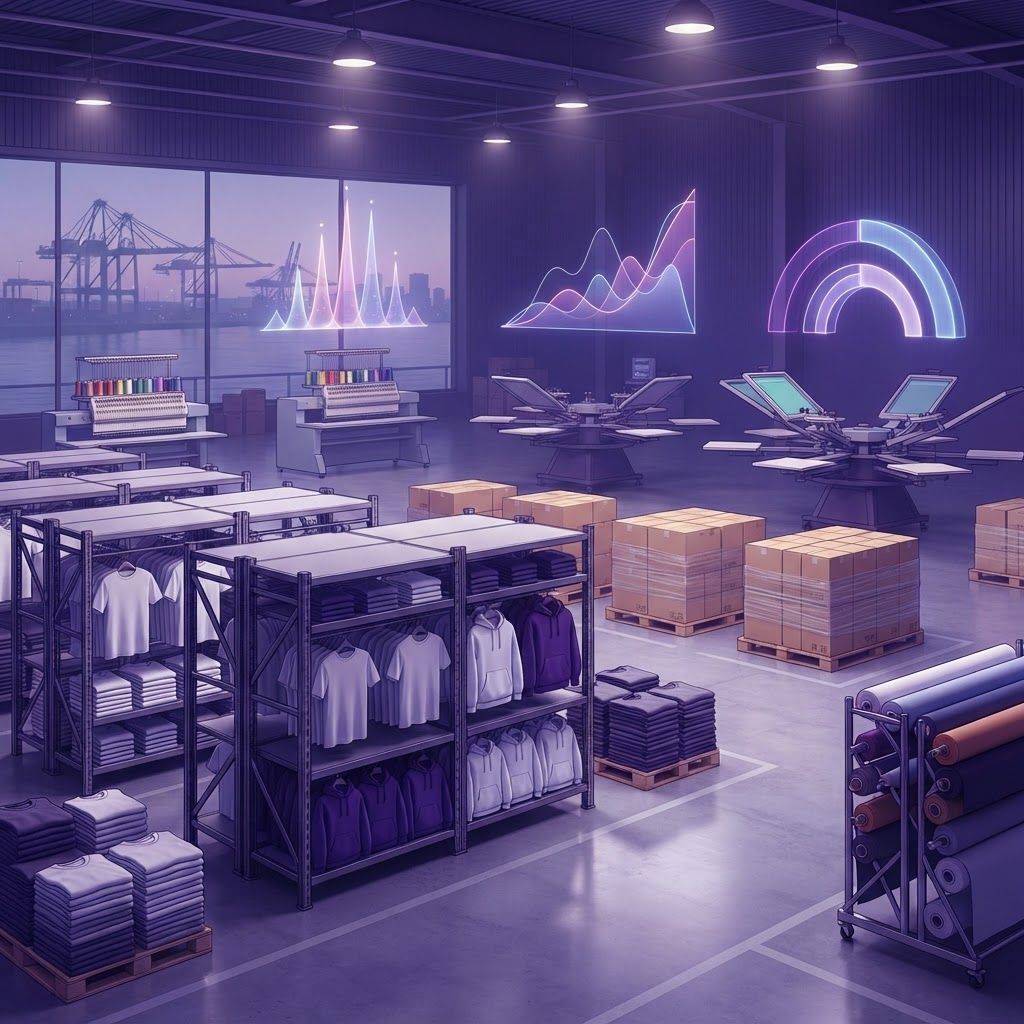
Clothing wholesale is a quieter business than retail but a substantial one, and Tacoma's position makes it viable at scale. Imported apparel arrives through the port, warehouse space near the tideflats and along the freight corridors accommodates the inventory that wholesale requires, and the I-5 corridor puts distributors within a day's drive of most of Washington and Oregon. Around that infrastructure sits a broad customer base: independent boutiques, screen printers and embroiderers, promotional products companies, school districts and athletic programs, healthcare systems buying scrubs, construction and industrial employers buying high-visibility workwear, hotels and restaurants buying uniforms, and outdoor retailers serving a region that takes its gear seriously.
That last point deserves emphasis. The Pacific Northwest consumer expects apparel that performs in rain and cold, and regional wholesalers stock accordingly. Waterproof shells, fleece layers, insulated jackets, and technical base layers move here in volumes that would be unusual in warmer markets.
Understanding the Segments
Blank apparel distributors supply undecorated t-shirts, hoodies, polos, caps, and bags to decorators. This is a high-volume, price-competitive segment where fill rates and shipping speed determine loyalty. Workwear and safety apparel wholesalers carry flame-resistant garments, high-visibility clothing meeting ANSI classes, work pants, and protective outerwear for industrial and construction customers. Uniform suppliers serve healthcare, hospitality, food service, and corporate clients, often bundling decoration, sizing programs, and reorder portals. Fashion and boutique wholesalers sell seasonal collections to independent retailers, typically through showrooms, trade shows, and sales representatives. Outdoor and technical apparel distributors supply performance gear to specialty retailers. Off-price and closeout wholesalers move overstock and past-season inventory at steep discounts to discount retailers and exporters.
These segments operate on genuinely different rhythms. A blanks distributor ships same-day from stock, while a fashion wholesaler takes orders six months ahead of delivery. Buyers should be clear which model they are entering.
What Distinguishes a Strong Wholesaler
Fill rate is the single most telling metric in apparel wholesale. A catalog means nothing if the medium and large sizes are perpetually out of stock, since those are the sizes that sell. Ask prospective suppliers about historical fill rates and how they handle partial shipments, backorders, and substitutions.
Size and color depth matters just as much as breadth. Decorators fulfilling a corporate order need a full size run in a single color and dye lot. A wholesaler who ships mismatched dye lots across an order creates a visible problem that the decorator must absorb.
Local inventory and shipping speed are decisive. Print shops frequently work on compressed timelines, and a distributor with regional stock that can deliver next-day, or offer will-call pickup, prevents missed deadlines. Suppliers who ship from distant warehouses may quote lower prices but cost more in expedited freight and lost jobs.
Value-added services increasingly define the leaders. Decoration, private labeling, relabeling, individual name personalization, poly-bagging, hangtag application, and direct-to-consumer drop shipping allow a wholesaler to function as a fulfillment partner rather than a parts supplier. For uniform programs, online ordering portals with employee allowances and approval workflows have become standard expectations.
Compliance, Sourcing, and Ethics
Apparel sourcing carries reputational risk, and buyers are increasingly asked to answer for their supply chains. Reputable wholesalers can describe where garments are manufactured and what factory auditing applies. Certifications such as WRAP, SA8000, Fair Trade, OEKO-TEX for chemical safety, and Global Recycled Standard for recycled content provide independent verification rather than marketing claims.
Safety apparel adds regulatory requirements. High-visibility garments must meet specific ANSI performance classes, and flame-resistant clothing must satisfy applicable standards for the hazard involved. A wholesaler serving industrial employers should provide certification documentation without hesitation, because employers relying on undocumented garments assume real liability.
Sustainability has moved from niche to mainstream in this region. Organic cotton, recycled polyester from post-consumer bottles, water-reduced dyeing, and take-back or recycling programs all appear in regional wholesale catalogs. Buyers should ask for specifics, since terms like eco-friendly carry no defined meaning while certifications do.
How to Evaluate and Negotiate
Begin with minimums. Wholesale minimum order quantities range from a single case to substantial dollar thresholds, and some fashion wholesalers require opening orders that a small boutique cannot absorb. Clarify this before investing time.
Request samples and inspect them properly. Check fabric weight, stitch density, seam construction, shrinkage after washing, colorfastness, and label accuracy. Garments that look acceptable on arrival and fail after three washes damage a retailer's reputation more than the supplier's.
Understand terms fully: pricing tiers, freight thresholds for free shipping, payment terms, return policy for defects versus buyer's remorse, and restocking fees. Ask specifically how the supplier handles a defective lot discovered mid-production by a decorator, because that scenario is common and expensive.
Assess digital infrastructure. Real-time inventory visibility by size and color, API or data feed access, and reliable order tracking reduce friction enormously. Distributors still requiring phone calls to check stock create hidden labor costs for their customers.
Check exclusivity and territory rules if reselling branded product. Some brands restrict how and where their goods may be sold, including online marketplace limitations that can disrupt an e-commerce plan.
The Path Forward
Several trends will shape apparel wholesale in Tacoma. On-demand and short-run decoration continues to grow as direct-to-garment and direct-to-film printing lower the economics of small orders, shifting demand toward wholesalers who can ship single units quickly. Nearshoring has moved some production closer to North America, improving lead times at modest cost premiums. Uniform and workwear programs keep expanding as regional healthcare, logistics, and construction employment grows. And sustainability documentation is becoming a procurement requirement rather than a preference, particularly for institutional buyers.
For retailers, decorators, and employers in Pierce County, the practical strategy is to concentrate volume with a limited number of wholesalers who hold regional inventory, publish accurate stock data, document their sourcing, and support the value-added services the business actually needs. Reliability compounds in this industry, and the supplier who never misses a size run is worth more than the one with the lowest catalog price.