
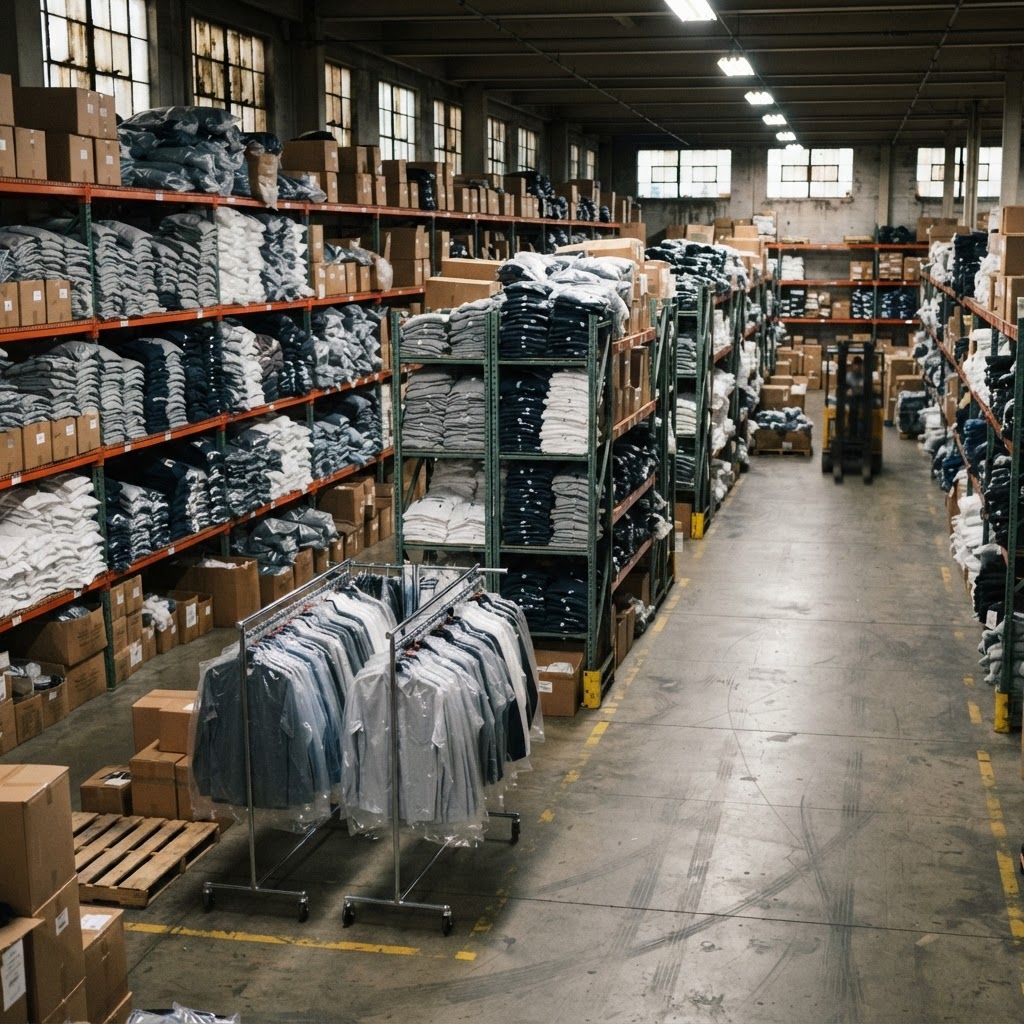
Why St. Louis Is a Smart Place to Buy Wholesale Clothing
St. Louis sits at the crossroads of America. Two major rivers, six interstate highways, five Class I railroads and a busy air cargo hub converge here, which is exactly why apparel distributors have clustered in the region for more than a century. For a boutique owner in Columbia, a uniform buyer in Springfield or an online reseller shipping nationwide, that geography translates into something very concrete: shorter transit times, lower freight costs and the ability to reorder fast when a style unexpectedly sells out.
The local wholesale scene is also unusually broad. Within a short drive of the Gateway Arch you can find blank apparel warehouses built for screen printers, off-price closeout brokers moving branded overstock by the pallet, family-run fashion importers serving independent boutiques, and specialist suppliers focused on workwear, western wear or team athletics. Understanding which category a supplier belongs to matters more than chasing the lowest unit price, because the wrong category will cost you in minimums, returns and dead stock.
How We Evaluated the Wholesalers on This List
The suppliers below were assessed on product range and consistency, realistic minimum order quantities, pricing transparency, inventory depth and reorder reliability, quality control, and how well they serve small and mid-sized buyers rather than only national accounts. Reputation among local retailers, decorators and event organizers also carried significant weight.
1. Miller's Textiles
Miller's Textiles is a long-standing name among Missouri decorators and one of the most recognizable blank apparel distributors serving the St. Louis corridor. Its strength is breadth: T-shirts, fleece, performance polos, headwear, bags and outerwear across a wide spread of price tiers, from budget promotional blanks to retail-quality ring-spun cotton. Because the company is oriented toward screen printers and embroiderers, its catalog is organized around decoration-friendly fabrics, consistent dye lots and reliable size curves. Buyers repeatedly cite fast fulfillment and the ability to mix styles across a single order as the main reasons they keep coming back.
2. Gateway Apparel Wholesale
Gateway Apparel Wholesale focuses on the independent retail market, supplying boutiques and small chains with contemporary women's and men's fashion in packs rather than pallets. Small case minimums make it a practical entry point for new store owners who cannot commit thousands of units to a single style. The buying team refreshes assortments frequently, which helps retailers keep floors looking current without carrying deep inventory risk. Seasonal transition pieces and everyday basics are the strongest categories.
3. Midwest Textile Distributors
Midwest Textile Distributors serves the volume end of the market, supplying institutional buyers, uniform programs, hospitality groups and large event organizers. Its differentiator is contract dependability: committed pricing over a defined term, stock reserved against forecasted demand, and consistent fabric specifications across repeat runs. Organizations that need the same garment to look identical eighteen months from now tend to gravitate here.
4. Riverfront Fashion Supply
Riverfront Fashion Supply is an importer-wholesaler with a trend-driven assortment aimed at younger demographics. Dresses, denim, knitwear and layering pieces arrive in tight quantities and rotate quickly, which suits boutiques that build their identity on newness. Buyers appreciate the showroom-style browsing experience, where fabric hand and fit can be judged in person before committing.
5. Arch City Uniform Company
Arch City Uniform Company specializes in workwear and professional dress for healthcare, food service, industrial and school markets. Scrubs, chef coats, high-visibility gear, aprons and durable work pants make up the core catalog. Its value lies in program management: size sets, replenishment cycles, decoration coordination and garment durability testing. For facilities managing hundreds of employees, that operational support is worth more than a marginal discount.
6. Heartland Knitwear Distributors
Heartland Knitwear Distributors concentrates on sweaters, hoodies, thermals and heavyweight fleece, a natural fit for the Midwest's long cold season. Its buyers stock deep into autumn and winter categories while most general wholesalers thin out, so retailers can restock mid-season instead of watching sales stall. Consistent gauge and fiber quality across reorders is a frequently mentioned strength.
7. Delmar Kids Apparel Wholesale
Delmar Kids Apparel Wholesale covers infant, toddler and youth clothing, a segment with unusually complex sizing and safety expectations. The company organizes assortments into ready-to-sell packs by size curve, which spares small retailers the guesswork of forecasting demand across eight or nine sizes. Attention to fabric softness, secure trims and durable laundering performance has earned it loyal accounts among children's boutiques and resale shops.
8. Soulard Vintage Wholesale
Soulard Vintage Wholesale operates in the fast-growing secondhand and reclaimed apparel channel, supplying graded vintage denim, band tees, jackets and workwear by the bale or curated bundle. Sustainability-minded retailers and online sellers value the grading discipline here, since consistent quality tiers are what make reselling vintage profitable rather than a gamble. The company also handles sorting and light restoration.
9. Lindbergh Sportswear Supply
Lindbergh Sportswear Supply serves team athletics, fitness studios and school programs with performance apparel: moisture-wicking jerseys, training shorts, warmups and compression layers. Technical fabric knowledge is the differentiator, as coaches and athletic directors need garments that survive repeated washing and hard use. Team-based ordering and numbered kit coordination round out the offer.
10. Cherokee Street Trading Company
Cherokee Street Trading Company is a closeout and overstock specialist, moving branded surplus, cancelled orders and end-of-season inventory at steep discounts. Assortments are opportunistic rather than predictable, which is precisely the appeal for off-price retailers, flea market sellers and discount chains built around treasure-hunt merchandising. Buyers who can move quickly on limited lots do best here.
Industry Trends Shaping Wholesale Apparel in St. Louis
Three shifts are reshaping the local market. First, minimums are falling as distributors adopt warehouse automation and piece-picking, letting small retailers test styles without deep commitments. Second, on-demand decoration is expanding, with wholesalers offering blank-to-branded fulfillment so online sellers never touch inventory. Third, sustainability documentation has moved from a nice-to-have to a purchasing requirement, with buyers asking for fiber content verification, recycled-content claims and factory auditing.
How to Choose the Right Clothing Wholesaler
Start with your business model rather than the catalog. Decorators need consistent blanks and dye-lot control. Boutiques need newness and small packs. Institutional buyers need contract pricing and long-term availability. Off-price sellers need volume and flexibility. Once the category is clear, request samples before committing, confirm restocking and defect policies in writing, verify realistic lead times during peak season, and calculate landed cost including freight rather than comparing unit prices alone.
Final Thoughts
St. Louis rewards buyers who match supplier type to business model. The ten wholesalers above cover nearly every apparel need in the region, from technical performance wear to graded vintage. Build relationships with two or three complementary suppliers rather than relying on one, and the region's logistics advantages will do the rest.