
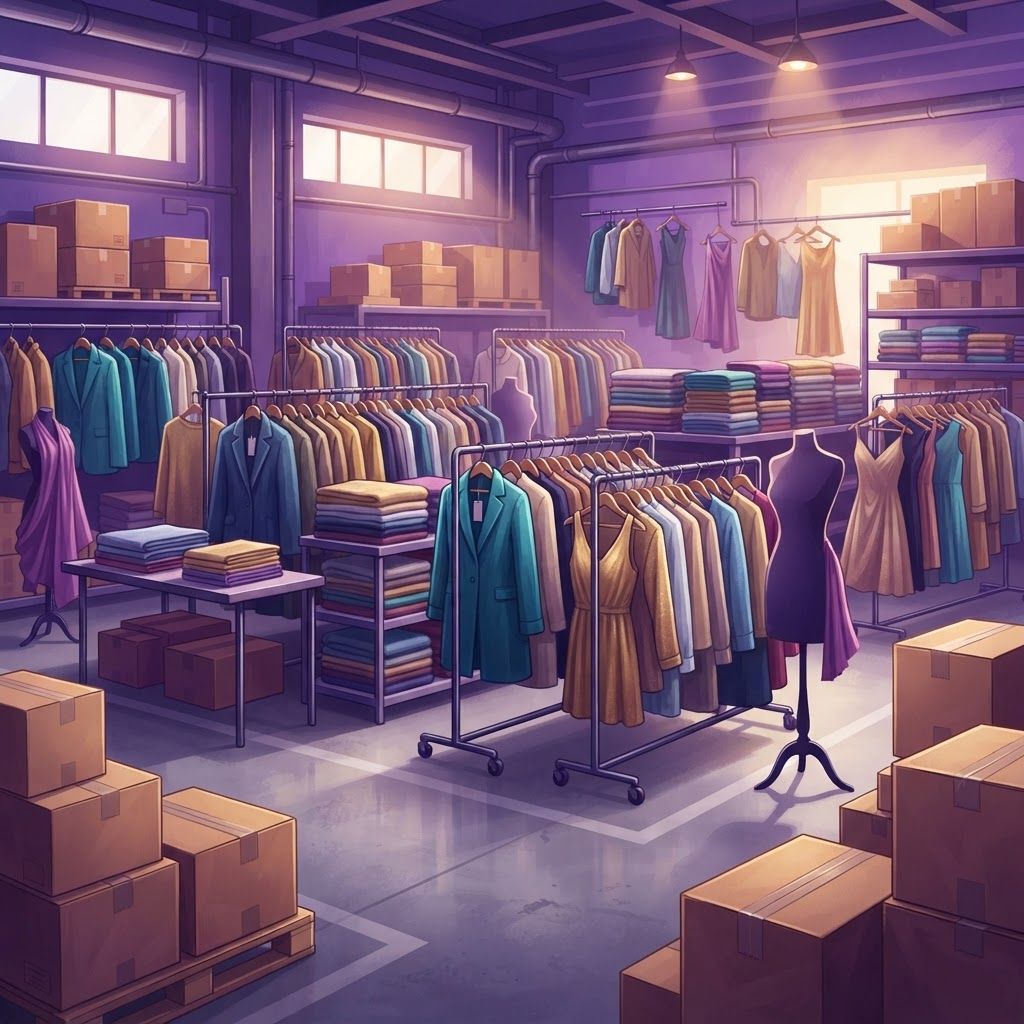
An Apparel Wholesale Market Built on Speed
Apparel wholesale in Hialeah operates at a different tempo than most of the industry. The surrounding market includes independent boutiques, swimwear and resort retailers, uniform buyers, event vendors and a substantial base of export customers purchasing for shops across the Caribbean and Latin America. All of them need current styles in small-to-moderate quantities with the ability to reorder quickly when something sells.
That demand pattern favors distributors who buy in shallow depth across many styles, refresh assortments constantly and allow mixed-size packs rather than requiring full-case commitments. The result is a wholesale district where a boutique owner can walk showrooms, touch fabric, choose ten styles across four vendors and leave with inventory the same day. For retailers competing with online sellers, that speed is a genuine advantage.
Climate and Culture Shape the Assortment
South Florida's year-round warm weather narrows and deepens the category mix. Lightweight woven dresses, linen blends, swimwear, cover-ups, breathable knits and sandals dominate, while heavy outerwear is largely absent except for export buyers serving cooler markets. Color palettes tend brighter and prints bolder than national averages, reflecting both climate and the region's cultural influences.
Export buyers add nuance. A distributor serving international customers must understand differing size conventions, modesty preferences in certain markets, and label and content requirements for the destination country. Wholesalers with real export experience prepare documentation and fiber-content labeling accordingly rather than treating overseas orders as domestic shipments.
Ten Clothing Wholesalers Serving Hialeah
Biscayne Apparel Wholesale Group carries a broad women's assortment across dresses, tops and separates, refreshing styles weekly and offering mixed-size prepacks that suit small boutiques testing new looks.
Flagler Swim and Resort Wear Distributors specializes in swimwear, cover-ups and beach accessories, a category with strong local demand and consistent export volume. Its buyers focus on fit consistency across repeat orders.
Everglade Uniform and Workwear Supply distributes medical scrubs, hospitality uniforms, culinary apparel and industrial workwear, with embroidery and screen-printing services for logo programs.
Tropic Kids Apparel Wholesale focuses exclusively on children's and infant clothing, managing the size-curve complexity that makes this category difficult, and stocking school-appropriate basics alongside fashion items.
Miami Denim and Basics Distribution supplies jeans, tees, leggings and foundational pieces in depth, serving retailers who need dependable core inventory that does not change seasonally.
Palm Coast Activewear Wholesale carries leggings, sports bras, performance tops and athleisure sets, a category that has grown substantially as casual dressing became standard.
Hialeah Menswear Trading Company distributes men's shirts, guayaberas, trousers and casual wear, including traditional styles with steady cultural demand across the region.
Okeechobee Fashion Accessories Wholesale supplies handbags, jewelry, belts, hats and scarves that let retailers raise average transaction value alongside apparel purchases.
Sunstate Blank Apparel Supply stocks blank tees, hoodies, caps and totes for decorators, print shops and promotional-product companies, with consistent color availability across reorders.
Coral Way Export Apparel Consolidators concentrates on international buyers, assembling mixed-category orders, handling export documentation and coordinating freight consolidation for container shipments.
How Retail Buyers Should Evaluate a Wholesaler
Inspect garments physically before committing. Check stitching density at stress points, whether seams are finished or raw, elastic quality in waistbands, colorfastness on dark dyes and whether the fabric weight matches the photographs. Photograph-only buying is the most common source of disappointment in apparel wholesale, and Hialeah's showroom culture exists precisely so buyers can avoid it.
Then clarify commercial terms explicitly. Ask about minimum order value, whether packs can be broken, reorder availability on a given style, how long a style remains in stock, return policy on defective goods, and whether the distributor sells to multiple retailers in the same neighborhood. Territory exclusivity is rarely offered but is worth asking about for signature styles.
Labeling compliance deserves attention. Garments sold at retail require fiber content, country of origin and care instructions. Confirm that the wholesaler's goods carry compliant labels, since the retailer typically bears responsibility at point of sale.
Managing Assortment and Inventory Risk
The discipline that separates profitable boutiques from struggling ones is buying shallow and reordering fast. Rather than committing deeply to an unproven style, buy small, watch the first two weeks of sell-through and reinvest in winners. This requires a wholesaler who actually holds reorder inventory, so ask specifically how long styles remain available and whether the distributor commits to a minimum in-stock period.
Open-to-buy planning matters as well. Reserving a portion of the monthly budget for in-season opportunities lets a retailer chase trends that emerge after initial buys. Wholesalers in Hialeah refresh frequently enough to make that strategy workable, provided the retailer has not spent the entire budget on preseason commitments.
Trends Shaping Apparel Wholesale
Several shifts are visible. Demand for smaller, more frequent buys continues to grow as retailers reduce inventory risk. Interest in natural fibers and lightweight linen blends has increased, driven by both comfort and sustainability messaging. Size-inclusive ranges have moved from a niche request to a baseline expectation, and distributors that carry extended sizes across core styles gain share. Meanwhile, many wholesalers have added online catalogs with live inventory counts, letting buyers reorder without visiting the showroom while still offering in-person selection for new styles.
Sustainability and Sourcing Transparency
Retail customers increasingly ask where garments are made and under what conditions. Wholesalers vary widely in how much they know about their upstream supply chain. Buyers who care about this should ask which factories or regions supply a given line, whether any social-compliance auditing exists, and whether recycled or organic fiber options are available. Distributors that can answer clearly are usually working with a stable factory base, which also correlates with better quality consistency.
Final Thoughts
Hialeah's clothing wholesalers give retailers something increasingly rare: the ability to see product in person, buy in realistic quantities and restock within days. Choose distributors whose specialty aligns with your customer, inspect construction quality before ordering, confirm reorder availability and labeling compliance, and protect part of your budget for in-season opportunities. Those habits keep assortments fresh while limiting the markdown exposure that erodes apparel margins.