
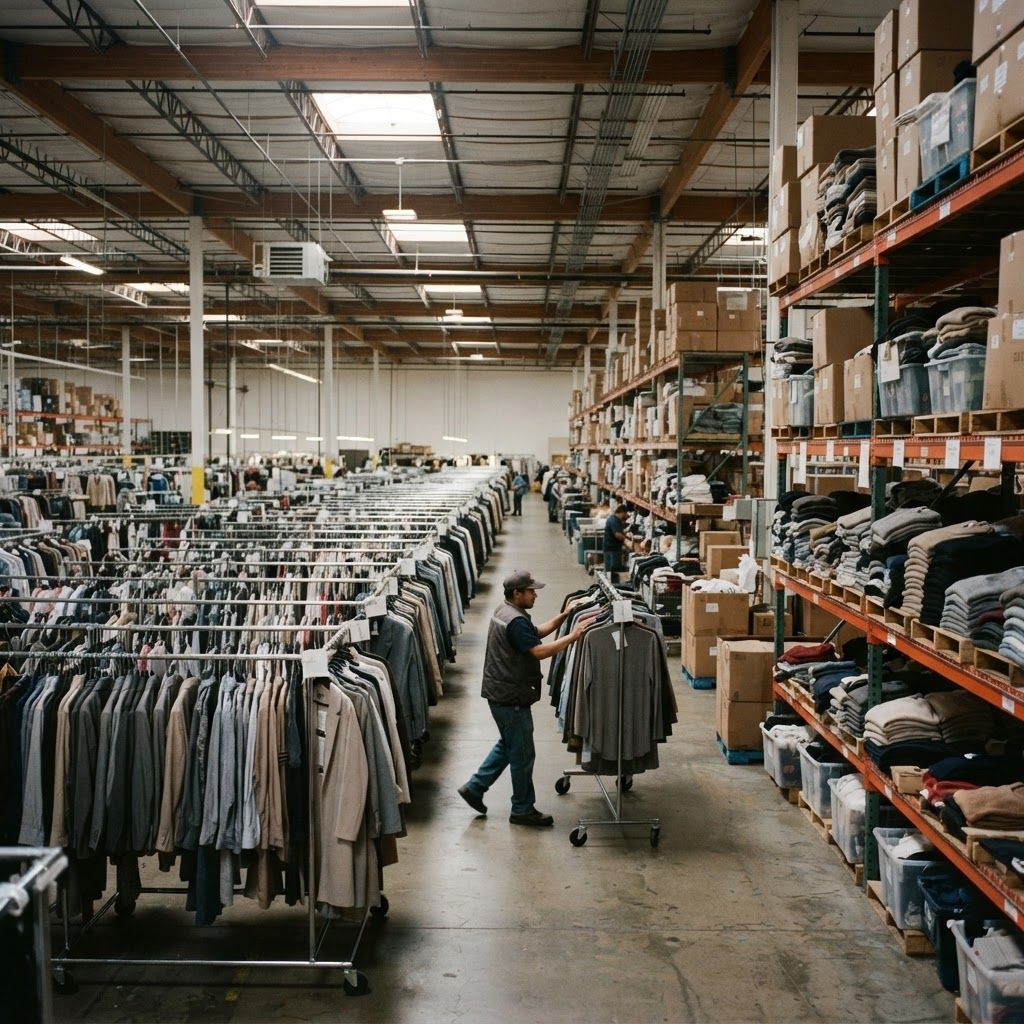
Boise City's Apparel Wholesale Landscape
Boise City supports a clothing market shaped by three overlapping forces: an active outdoor culture, a growing professional population, and a decorated apparel industry serving schools, companies, and events across Idaho. Each creates distinct wholesale demand. Boutique owners need fashion-forward lines in small quantities with frequent turnover. Screen printers and embroiderers need consistent blanks in deep size and color ranges. Corporate buyers need uniform programs that stay available year after year.
Wholesale apparel distribution in the region blends locally based operations with regional distribution centers serving the Pacific Northwest and Intermountain West. Because Boise City sits within reasonable freight distance of major West Coast hubs, many buyers receive next-day or two-day delivery, which allows lean inventory holding without sacrificing responsiveness. That logistical advantage has helped a substantial community of small apparel businesses operate profitably in the metro.
What Distinguishes a Reliable Apparel Wholesaler
Inventory consistency is the single most important factor for most buyers. A decorator who builds a program around a particular garment cannot afford for that style to disappear mid-season. Wholesalers that maintain steady stock across the full size and color matrix, including extended sizes, earn loyalty quickly.
Minimum order quantities determine which wholesalers are realistic partners for small businesses. Some require case packs or large opening orders, while others allow single-piece purchasing at wholesale tiers. Fulfillment speed and accuracy come next, since apparel businesses frequently work against event deadlines. Quality consistency matters as well, particularly in fabric weight, dye lot matching, and sizing accuracy across production runs. Finally, terms and support round out the evaluation. Net payment terms, straightforward return processes, sample programs, and access to product photography help small retailers operate without excessive risk or overhead.
Ten Clothing Wholesalers Serving Boise City
1. Treasure Valley Apparel Blanks supplies undecorated garments to screen printers, embroiderers, and direct-to-film decorators. T-shirts, fleece, performance wear, headwear, and bags are stocked across multiple brands and price tiers. Same-day counter pickup and no minimum order make it a practical resource for shops handling rush jobs.
2. Gem State Outdoor Wholesale distributes technical and lifestyle outdoor apparel suited to Idaho's climate and recreation culture. Insulated jackets, base layers, softshells, hiking apparel, and packable rainwear serve independent outdoor retailers, resort shops, and guide services. Seasonal pre-booking helps retailers secure allocation on high-demand items.
3. Foothills Boutique Supply targets independent women's boutiques with contemporary fashion lines. Dresses, knitwear, denim, and layering pieces arrive in small pack assortments that let owners test styles without deep commitment. Frequent new arrivals support the rapid merchandising turnover boutique customers expect.
4. Boise Workwear Distributors concentrates on durable work apparel and uniform programs. Flame-resistant clothing, high-visibility garments, work pants, insulated outerwear, and safety footwear serve construction firms, agricultural operations, utilities, and industrial employers. Compliance documentation and consistent restocking of program items are central to the service model.
5. Cascade Uniform and Hospitality Wear supplies restaurants, hotels, healthcare facilities, and salons. Chef coats, aprons, server shirts, scrubs, and housekeeping uniforms are held in stock, and the company coordinates decoration so employers receive logoed garments ready to distribute. Reorder programs keep sizing available as staff turns over.
6. Snake River Activewear Wholesale focuses on athletic and athleisure categories. Leggings, sports bras, moisture-wicking tops, team apparel, and youth sizing serve gyms, studios, school programs, and specialty retailers. Sublimation-ready and custom team packages support organizations needing coordinated uniforms.
7. Idaho Denim and Basics Co. specializes in denim and foundational wardrobe pieces. Jeans across multiple fits and washes, chinos, essential tees, and cotton knits form a catalog built for steady year-round replenishment rather than seasonal trend cycles. Consistent fit standards across production runs are a stated priority.
8. Meridian Kids and Baby Apparel serves the children's market with infant, toddler, and youth clothing. Bodysuits, sleepwear, playwear, and seasonal outerwear are offered in size-graded packs. Compliance with children's product safety requirements, including labeling and flammability standards for sleepwear, is documented for retail buyers.
9. Silver Sage Accessories and Headwear complements apparel programs with hats, beanies, scarves, socks, belts, and bags. Blank headwear suited to embroidery is a core category, and the company stocks multiple crown profiles and closure styles so decorators can match customer expectations precisely.
10. Capital City Apparel Liquidation deals in closeouts, overruns, and end-of-season inventory. Buyers seeking aggressive margins on discount racks, event giveaways, or charitable distribution find truckload and pallet quantities here. Lot descriptions include size breakdowns and condition notes so purchasers understand exactly what a lot contains.
Trends Influencing Apparel Wholesale
Print-on-demand and short-run decoration have changed inventory economics substantially. Direct-to-film and direct-to-garment printing let decorators produce single pieces profitably, which shifts wholesale demand toward frequent small replenishment orders rather than large seasonal buys. Wholesalers have responded with lower minimums, faster shipping, and systems that let decorators check live stock levels before quoting.
Sustainability continues to gain commercial weight. Organic cotton, recycled polyester, and responsibly sourced wool now appear in mainstream catalogs rather than only in premium lines, and buyers increasingly request supply chain documentation. Size inclusivity has expanded as well, with extended ranges becoming standard expectation rather than a specialty offering. Finally, nearshoring has shortened some supply chains, improving lead-time predictability for wholesalers sourcing from the Americas.
Practical Advice for Buyers
Order samples before committing to a program garment. Fabric hand, fit, and print surface quality are difficult to judge from photographs, and a single sample order prevents costly mistakes. Confirm how a wholesaler handles dye lot variation, since color shifts between orders can undermine uniform programs.
Understand the full landed cost. Freight, decoration, and return handling can erase an apparent price advantage. For seasonal businesses, negotiate terms that align payment with sell-through, and discuss pre-booking for items where availability tightens predictably. In Boise City's tight-knit apparel community, wholesalers reward buyers who forecast honestly and communicate early about volume changes, often with better allocation when inventory becomes scarce.