
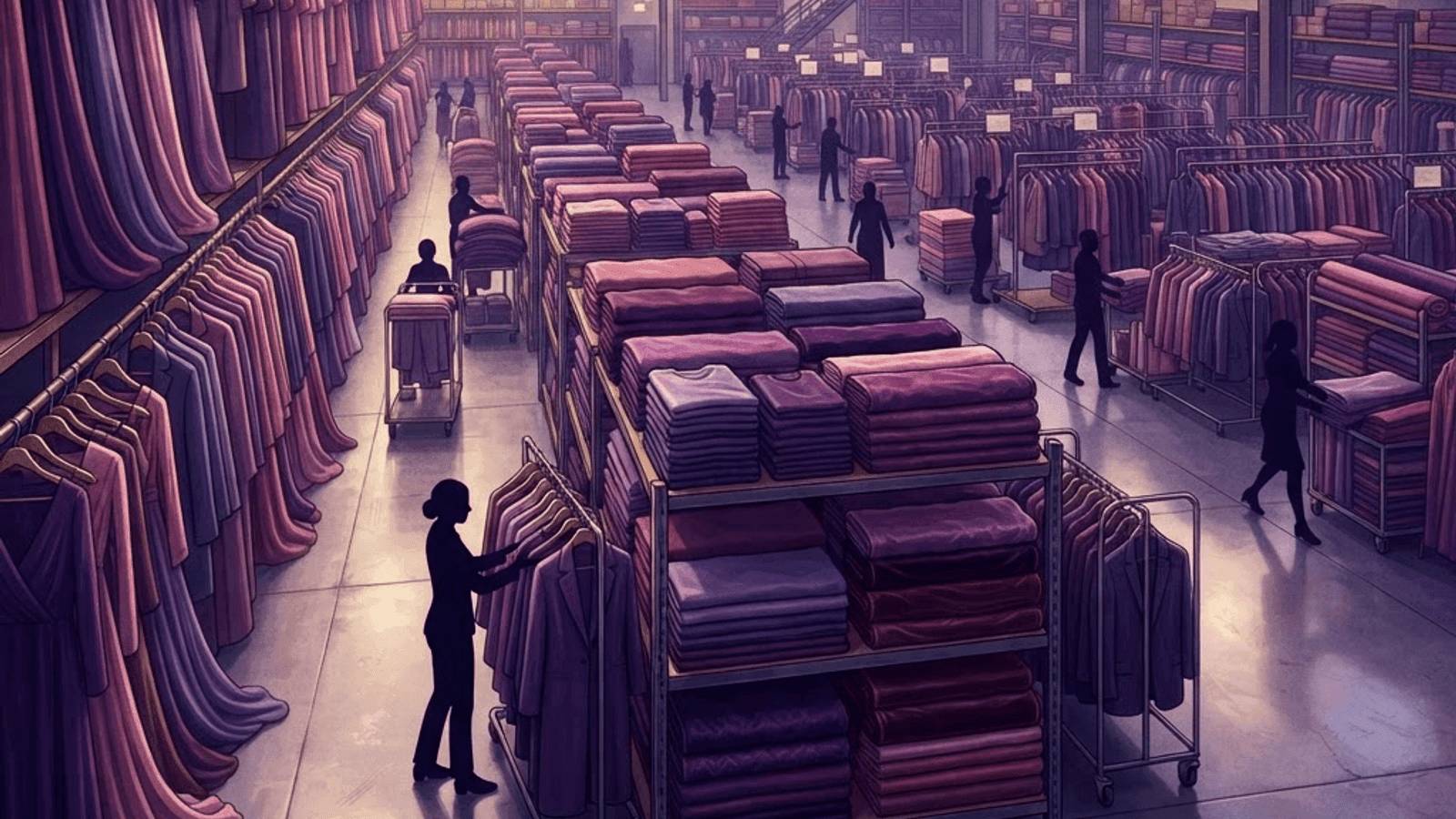
Alexandria's Clothing Wholesale Trade
Clothing wholesale in Alexandria operates at the intersection of the city's textile manufacturing heritage and its role as a major import and distribution gateway. Wholesalers here source from local garment factories, from domestic producers elsewhere in Egypt, and from overseas suppliers arriving through the port. That mix gives buyers unusual breadth, from Egyptian cotton basics produced within the governorate to imported fashion lines.
The customer base is equally varied. Independent boutiques, market stall traders, online sellers, uniform suppliers and retailers from across Egypt all buy here, each with different requirements around quantity, price point and seasonality.
How the Wholesale Clothing Market Works
Understanding the structures involved helps buyers negotiate effectively. Some wholesalers are essentially agents for factories, offering production runs with minimum order quantities and lead times measured in weeks. Others are stockholders who buy inventory and sell from the shelf, allowing immediate purchase in smaller quantities at higher unit prices. A third group specialises in closeouts and surplus stock, offering sharp prices on whatever happens to be available.
Each model suits different buyers. A boutique needing twelve pieces in assorted sizes needs a stockholder. A uniform supplier producing five hundred matching garments should work with a factory-linked wholesaler. An opportunistic market trader may find surplus dealers most profitable.
Ten Leading Clothing Wholesalers in Alexandria
1. Delta Garment Wholesale supplies cotton basics including t-shirts, polo shirts and underwear produced in local factories. Consistent sizing and fabric quality, plus the ability to supply the same specification repeatedly, make it a dependable base supplier for retailers.
2. Mediterranean Fashion Traders concentrates on women's fashion, refreshing its range frequently to follow seasonal trends. Its buying team travels regularly, and boutiques rely on it for newness rather than continuity.
3. Alexandria Children's Wear specialises in childrenswear from infant sizes upward, an area with specific safety and fabric requirements that generalist wholesalers often handle poorly.
4. Pharos Menswear Distribution supplies formal and casual menswear including shirts, trousers and suiting, with size curve advice that helps smaller retailers avoid overstocking extreme sizes.
5. Nile Uniform Supply serves institutional buyers with school uniforms, workwear, medical scrubs and hospitality uniforms, offering embroidery and printing for organisational branding.
6. Horus Denim Wholesale focuses specifically on jeans and denim products across fits and washes, a category where depth of range matters because fit preferences vary widely among end customers.
7. Amun Knitwear Traders supplies sweaters, cardigans and knitted tops, with stock timed to the coastal region's cooler months when demand concentrates sharply.
8. Coastal Sportswear Distribution wholesales activewear, tracksuits and performance clothing, a category growing quickly as interest in fitness expands across Egyptian cities.
9. Ramses Modest Fashion supplies abayas, hijabs and modest clothing lines, combining traditional forms with contemporary fabrics and finishes that appeal to younger customers.
10. Sidi Gaber Stock Lots completes the list, dealing in surplus, cancelled orders and end-of-season stock at prices that allow market traders and discount retailers to operate on thin margins.
Trends in Clothing Wholesale
Online retail has changed the customer base significantly. Sellers operating through social platforms and marketplaces buy in smaller quantities, reorder more frequently and expect photography and product information to be supplied. Wholesalers who provide clean product images and accurate descriptions win this business.
Faster cycles are the second trend. Buyers commit to smaller initial quantities and reorder what sells, rather than buying deep and hoping. Wholesalers who can reliably repeat a line, rather than offering a one-time assortment, are increasingly valued.
Quality expectations have risen too. End customers compare fabric and construction more critically than they once did, and wholesalers who maintain standards rather than chasing the lowest possible cost are building more durable retailer relationships.
How to Buy Well
Inspect physical samples before committing to quantity, checking fabric weight, stitching, seam finishing and label accuracy. Photographs conceal a great deal.
Understand the size specification rather than relying on size labels, since grading varies substantially between producers and mismatched sizing generates returns and complaints.
Clarify terms explicitly: minimum quantities, assortment rules, payment terms, and what happens with faulty goods. Ambiguity here causes most wholesale disputes.
Finally, build relationships with a small number of suppliers rather than chasing the lowest price across many. In Alexandria's clothing wholesale market, regular buyers receive earlier access to new stock, better terms and more flexibility when problems arise, and those advantages compound over time.
Seasonality and Buying Rhythm
Clothing is an intensely seasonal trade, and Alexandria's coastal climate shapes that rhythm distinctly. Summer demand is long and dominated by lightweight fabrics, while the cooler months concentrate knitwear and outerwear sales into a shorter, sharper window. Buying too late in either season leaves shelves empty at the peak; buying too much leaves capital locked in stock that must be discounted.
Experienced buyers plan a calendar, committing early to core lines with predictable demand and holding budget in reserve for reactive purchases once the season's trends become clear. Wholesalers who can supply quickly in-season are essential to that second phase.
The city's mix of local production and imported supply makes this approach workable. Locally produced basics can often be reordered within weeks, while imported fashion requires longer commitment. Combining both, rather than relying on either alone, gives retailers the balance of reliability and newness that sustains a healthy business through the full year.