
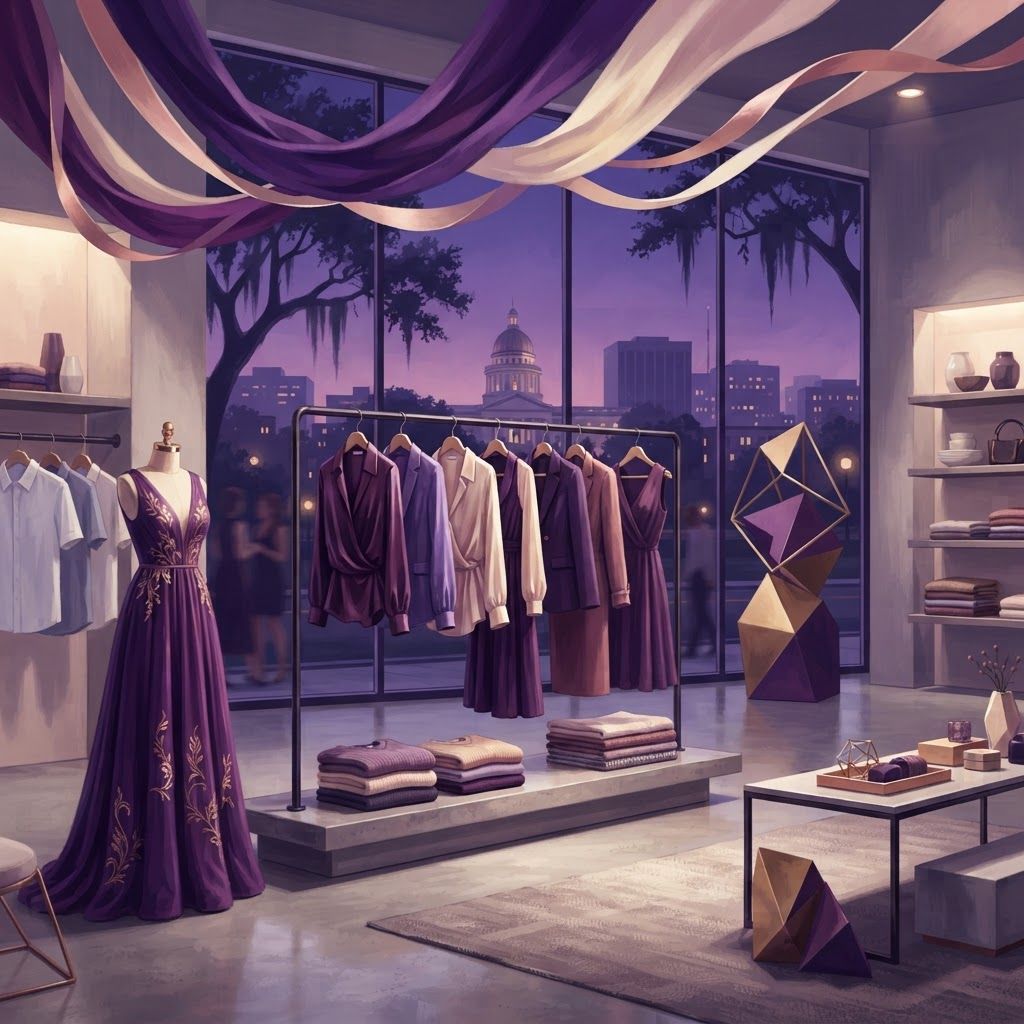
How Tallahassee Dresses
Tallahassee's clothing market reflects an unusual combination of influences. It is a major college town, so collegiate apparel and game day dressing shape a substantial share of retail activity. It is also the state capital, which sustains demand for professional attire among legislators, lobbyists, attorneys and agency staff. Its climate is subtropical, with long humid summers and brief mild winters, which makes fabric performance a genuine practical concern. And its proximity to the Gulf Coast, the Apalachicola National Forest and extensive trail systems supports strong demand for outdoor and technical apparel.
The result is a market where the most successful brands solve for breathability, moisture management and versatility rather than heavy layering. Understanding that constraint explains why certain brands thrive in North Florida while others never gain traction.
Ten Clothing Brands and Categories That Work in Tallahassee
1. Vineyard Vines — Vineyard Vines has become closely associated with Southern collegiate style through its performance polos, patterned button-downs and lightweight quarter-zips. Its appeal lies in fabrics engineered for heat and humidity while maintaining a polished appearance suitable for both campus and business casual settings.
2. Southern Tide — Built around a similar coastal Southern aesthetic, Southern Tide emphasizes technical performance in classic silhouettes. Its stretch woven shirts, moisture-wicking polos and lightweight chinos address exactly the comfort problem that traditional cotton oxfords create in Florida summers.
3. Columbia Sportswear — Columbia's fishing and outdoor lines are ubiquitous in North Florida for good reason. Vented shirts with sun protection ratings, quick-drying shorts and lightweight technical fabrics make it a default choice for anglers, boaters, hikers and anyone spending long days outdoors in intense sun.
4. Patagonia — Patagonia combines technical performance with a strong environmental commitment, including recycled materials, fair labor certification and an extensive repair program. Its lightweight sun hoodies, travel-friendly layers and durable construction appeal to outdoor users who value longevity over seasonal turnover.
5. Nike — Athletic and lifestyle apparel remains central to a market with a large student and active population. Nike's moisture-management fabrics, training apparel and collegiate collections serve both performance use and everyday wear, supported by consistent sizing and broad availability.
6. Lululemon — Lululemon's technical fabrics have expanded well beyond studio use into commuting, travel and casual professional wear. Its four-way stretch materials and refined construction address the practical demand for clothing that performs in heat without appearing athletic.
7. Free People and Contemporary Boutique Labels — Independent boutiques in Tallahassee stock contemporary women's labels emphasizing natural fibers, relaxed silhouettes and layerable pieces. Linen, cotton gauze and tencel blends have become staples precisely because they breathe in extreme humidity.
8. Peter Millar — For the professional and golf-oriented market, Peter Millar produces refined performance apparel that reads as traditional tailoring while incorporating stretch, wrinkle resistance and moisture management. It bridges the gap between capitol-appropriate polish and Florida practicality.
9. Independent Florida and Collegiate Apparel Labels — Locally rooted brands producing regional graphics, screen-printed tees, hats and game day apparel capture a market national brands cannot serve. Their designs reference local landmarks, traditions and community identity, and many operate through small-batch production with direct community engagement.
10. Vintage and Secondhand Retailers — Consignment shops, thrift stores and curated vintage sellers have become genuinely significant in a college market. Beyond affordability, they offer distinctive pieces and appeal to students prioritizing sustainability over new production.
Trends in Apparel Retail
Performance fabrics have thoroughly infiltrated classic clothing. Stretch, moisture wicking, odor control, wrinkle resistance and ultraviolet protection now appear in garments that look entirely traditional, which is transformative in a climate like North Florida's.
Sustainability has moved from marketing claim toward verifiable practice, with recycled content, organic and regenerative fiber sourcing, water-reduction dyeing and repair programs increasingly documented rather than merely asserted.
Secondhand and resale markets have grown rapidly, supported by online platforms and shifting attitudes toward garment ownership. Many shoppers now buy with resale value in mind, favoring durable, recognizable pieces.
Size inclusivity and fit technology have improved, with extended ranges and better online fit guidance reducing return rates and expanding access.
How to Choose Clothing for the Florida Panhandle
Prioritize fabric over brand. Linen, cotton poplin, seersucker, lightweight merino and modern technical synthetics all manage heat and humidity far better than heavy cotton twill or dense knits. Look for open weaves and low fabric weight.
Evaluate construction quality directly. Check stitch density, seam finishing, button attachment and fabric recovery after stretching. These details predict how a garment will look after fifty washes far better than price does.
Consider sun protection for outdoor activity, where rated fabrics, long sleeves and collar coverage protect more effectively and comfortably than repeated sunscreen application.
Build around versatility. In a climate with minimal cold weather, a wardrobe of lightweight layers that work across campus, office and evening settings serves better than seasonally segregated clothing.
Finally, assess care requirements honestly. Garments requiring dry cleaning accumulate substantial lifetime cost, and in humid conditions machine-washable fabrics also stay fresher between wears.
Building a Wardrobe That Works Locally
The most practical Tallahassee wardrobes combine breathable natural fibers for daily wear, a few technical pieces for outdoor and active use, professional items in lightweight performance fabrics, and locally sourced pieces that reflect community identity. The brands profiled here each solve a specific piece of that puzzle, whether through fabric engineering, environmental commitment, regional character or value. Choosing deliberately based on fabric behavior and construction quality produces a wardrobe that remains comfortable and presentable through the long North Florida summer.