
How Oyster Bay Dresses
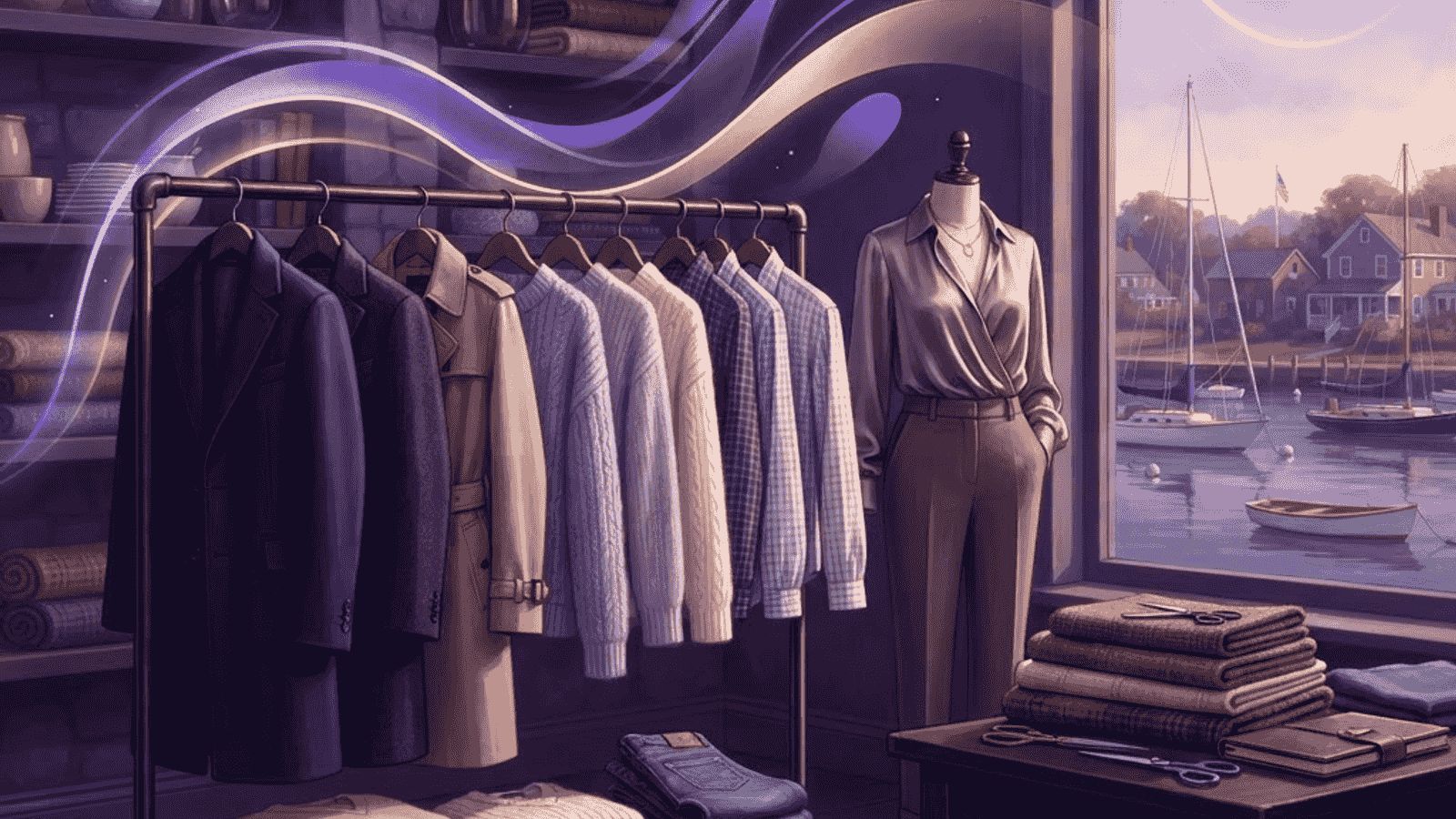
Style in Oyster Bay is shaped by geography and habit. This is a harbor town on Long Island's North Shore where sailing, waterfront dining and village walking are ordinary parts of life, and where the wardrobe has to work across a genuine four-season climate. Summers are humid, autumn is long and pleasant, winter brings coastal wind that cuts through inadequate outerwear, and spring is unpredictable. The prevailing aesthetic is understated and classic rather than trend-driven: natural fibers, navy and neutral palettes, structured but comfortable tailoring, and outerwear chosen for function as much as appearance.
There is also a distinct preference here for longevity. Buyers in this market tend to replace items less often and spend more per piece, which rewards brands that can demonstrate construction quality, offer repair or alteration support, and produce garments that hold shape after dozens of washes. That preference has strengthened as consumers across the region push back against disposable fashion.
How to Judge a Garment Before Buying
Read the composition label first. Long-staple cotton, merino wool, linen and quality leather behave differently from synthetic blends in humid coastal air, breathing better and aging more gracefully. Some synthetics are genuinely useful, particularly in technical outerwear and performance knits, but a wool-look fabric that is largely polyester will pill and trap heat.
Then inspect construction. Check that seams lie flat with tight, even stitching and that side seams align rather than twist. Look for finished interior seams, generous seam allowances that permit alteration, pattern matching across plackets and pockets, and buttons secured with cross-stitching rather than a loose shank. On tailored jackets, a half or full canvas construction drapes and molds to the body over time, while fully fused garments eventually bubble. On knitwear, fully fashioned panels indicate a higher standard than cut-and-sew pieces.
Finally, consider fit and alterability. A jacket that fits correctly in the shoulders can be adjusted almost everywhere else; one that does not cannot be saved. Trousers with an inlay at the waist and unfinished hems are designed to be tailored, and that flexibility is worth paying for.
The Top 10 Clothing Brands in Oyster Bay
1. Ralph Lauren
Few brands align more naturally with North Shore dressing. Ralph Lauren's core offering of Oxford shirts, cable knits, chinos, blazers and outerwear defines the classic American coastal wardrobe, and the range spans accessible Polo pieces through Purple Label tailoring. Consistency across seasons means replacements match existing pieces, which suits buyers who build a wardrobe rather than refresh it wholesale.
2. Brooks Brothers
A long-standing source for business and occasion clothing, Brooks Brothers remains relevant for well-cut suiting, dress shirts with proper collar construction and traditional outerwear. Multiple fit blocks make it easier to find a starting point that requires minimal alteration, and the brand's non-iron shirting is genuinely practical for commuters heading into Manhattan.
3. J.Crew
J.Crew occupies the middle ground effectively, offering seasonal colour and pattern within familiar silhouettes at mid-market prices. Its linen shirting, cotton sweaters, versatile dresses and lightweight jackets suit the local climate, and the brand's willingness to update fits keeps the range from feeling static while remaining wearable rather than fashion-forward.
4. Vineyard Vines
Purpose-built for coastal life, Vineyard Vines produces performance polos, quick-drying shorts, whimsically printed shirts and lightweight layers designed for boat decks and waterfront patios. The palette and prints skew cheerful, and technical fabrics with UV protection and moisture management address real summer conditions on the water.
5. Patagonia
Patagonia's relevance here comes from outerwear engineered for wind and wet weather, along with a repair and resale programme that materially extends garment life. Fleece, insulated shells and waterproof layers handle North Shore winters, and the company's transparency on materials and supply chain appeals to buyers who factor environmental impact into purchasing.
6. Barbour
Waxed cotton jackets remain among the most practical outerwear choices for a damp coastal climate, and Barbour's classic silhouettes wear in rather than out. The rewaxing and repair service means a jacket can reasonably last decades, and the quilted and lighter-weight lines extend the range across shoulder seasons and less rugged use.
7. Faherty
Faherty has grown quickly by pairing soft, comfortable fabrics with coastal-inspired design, and its knit-blend sport shirts, stretch chinos, flannels and lightweight sweaters read as relaxed without looking careless. The brand's emphasis on organic cotton and recycled content, along with a genuinely comfortable fit, has made it a favourite for weekend dressing.
8. Eileen Fisher
For women seeking simple, well-made pieces in natural fibers with clean lines, Eileen Fisher provides a coherent system of layerable garments that work across seasons and settings. The brand's take-back and renewal programme, which resells and repurposes returned clothing, aligns with the local preference for longevity over volume.
9. Todd Snyder
A more contemporary option for buyers who want classic references executed with sharper proportions, Todd Snyder offers tailored knitwear, refined casual outerwear and suiting that bridges traditional and modern. Collaborative collections and attention to fabric quality make it a strong choice for those building a wardrobe that reads current without chasing trends.
10. Local Boutiques and Independent Labels
The village retail environment along the North Shore supports independent boutiques that curate small-label collections, natural-fiber basics and occasion pieces you will not see repeated across a room. These shops typically offer personal styling, honest fit advice and in-house or partnered alteration services, which for many buyers produces a better outcome than any single national brand.
Building a Practical Local Wardrobe
Start with outerwear, because it does the most work in this climate. A genuinely waterproof shell, a warm insulated coat and a lighter waxed or quilted jacket cover most of the year. Add knitwear in merino and cotton rather than acrylic, since it regulates temperature far better in variable conditions. Choose linen and lightweight cotton for July and August humidity. For anything requiring formality, invest in one well-tailored jacket and trousers rather than several mediocre suits.
Then use alterations deliberately. A local tailor can shorten sleeves, taper trousers, adjust waistbands and reshape shoulders, and the difference between an altered mid-range garment and an unaltered expensive one usually favours the former. Budget for it as part of the purchase.
Trends Shaping the Market
Several changes are reshaping how clothing is bought locally. Resale and consignment have moved firmly into the mainstream, and quality garments now hold measurable secondary value, which strengthens the case for buying better. Brand repair programmes have expanded from a novelty to an expectation among durability-focused buyers. Material transparency, including disclosure of fiber sourcing and finishing processes, increasingly influences decisions. And the collapse of strict formality has not eliminated tailoring but changed it, with unstructured jackets and knit blazers replacing rigid suiting for most occasions.
Final Thoughts
Dressing well in Oyster Bay is less about labels than about matching construction and fiber to a coastal four-season climate, then having pieces fitted properly. Ralph Lauren, Brooks Brothers and Todd Snyder cover tailored classics, Patagonia and Barbour handle weather, Faherty and Vineyard Vines suit relaxed waterfront living, and local boutiques provide the individuality and personal service that no chain can replicate. Buy fewer pieces, choose better fabric, and use a tailor.