
Why Civil Engineering Sets the Ceiling on a Chula Vista Project
Almost every construction problem that surfaces late in a Chula Vista project traces back to a civil engineering decision made early. Grading quantities determine how much earth has to be moved on the sloping terrain east of Interstate 805. Hydrology calculations determine whether a site drains cleanly during a February storm or floods a neighbor's driveway. Utility layout determines whether a sewer connection is a routine tie-in or an expensive deep excavation in a busy public street. None of these are visible in a finished building, yet all of them govern schedule and budget.
Chula Vista adds specific local complexity. The city sits within the San Diego Bay watershed, which means development triggers regional stormwater requirements that are stricter than what many out-of-area engineers expect. Sites near the Otay River valley involve floodplain considerations. Eastern neighborhoods built on engineered fill require careful coordination with geotechnical findings. Coastal parcels near the bayfront may involve additional jurisdictional review. A firm that has produced approvable plans in this jurisdiction repeatedly will move faster than a technically competent firm learning the local rules on your project.
How to Evaluate Civil Engineering Firms Properly
Look at approval history, not just portfolio images
Civil engineering is judged by whether plans get approved and whether the built work performs. Ask directly how many plan check cycles a firm's recent submittals required in Chula Vista and neighboring jurisdictions. A firm that routinely clears review in two cycles is saving you months compared to one that averages four or five. Request the actual project names so you can verify permit records rather than relying on general claims.
Confirm the depth of in-house disciplines
Site development frequently requires grading design, hydrology and hydraulics, stormwater quality design, sewer and water design, dry utility coordination, street improvement plans, land surveying and construction staking. Firms that hold most of these in house coordinate faster and produce more internally consistent drawing sets. Firms that subcontract heavily can still deliver well, but you should understand who actually performs each piece and who carries responsibility when disciplines conflict.
Check licensure, insurance and stamping authority
Verify that the engineer of record holds an active California professional engineer license in the relevant branch, and that the individual stamping your plans is genuinely involved rather than reviewing at a distance. Confirm professional liability insurance limits that are proportional to project value, and ask whether those limits are project specific or shared across the entire firm's annual work.
Understand the construction phase commitment
Design is only half the service. During construction you will need responses to contractor requests for information, review of submittals, resolution of unforeseen field conditions and as-built documentation. Ask what the firm's standard response time is, whether construction phase support is included in the base fee or billed hourly, and which staff member will actually visit the site.
The Ten Categories of Civil Engineering Firm Serving Chula Vista
1. Full-service land development engineers
These firms handle entitlement through construction closeout on subdivisions and large commercial sites. They are the right choice when a project involves raw land, multiple parcels, new public infrastructure or phased delivery. Their strength is process management across many agencies simultaneously.
2. Site development specialists for infill parcels
Infill work in western Chula Vista involves tight parcels, existing utilities of uncertain location and neighbors immediately adjacent. Specialists in this space are skilled at minimizing earthwork, designing retaining solutions that respect property lines and sequencing utility connections in constrained streets.
3. Stormwater and water quality consultants
Regional permit requirements make stormwater quality design a discipline of its own. Firms with deep expertise here design bioretention, permeable surfaces and detention systems that satisfy regulators while consuming the least developable land, which directly protects project value.
4. Geotechnical engineering firms
Soil behavior drives foundation cost. Geotechnical firms perform borings, evaluate expansive clays and fill conditions common in the eastern hills, assess seismic parameters and issue the report that structural design depends on. Engaging them before design rather than after is one of the highest return decisions an owner can make.
5. Structural engineering firms
While technically a separate discipline, structural engineering is inseparable from civil work on most projects. Strong structural firms optimize framing and foundation systems for cost rather than simply satisfying code, and they coordinate early with geotechnical recommendations.
6. Land surveying and mapping firms
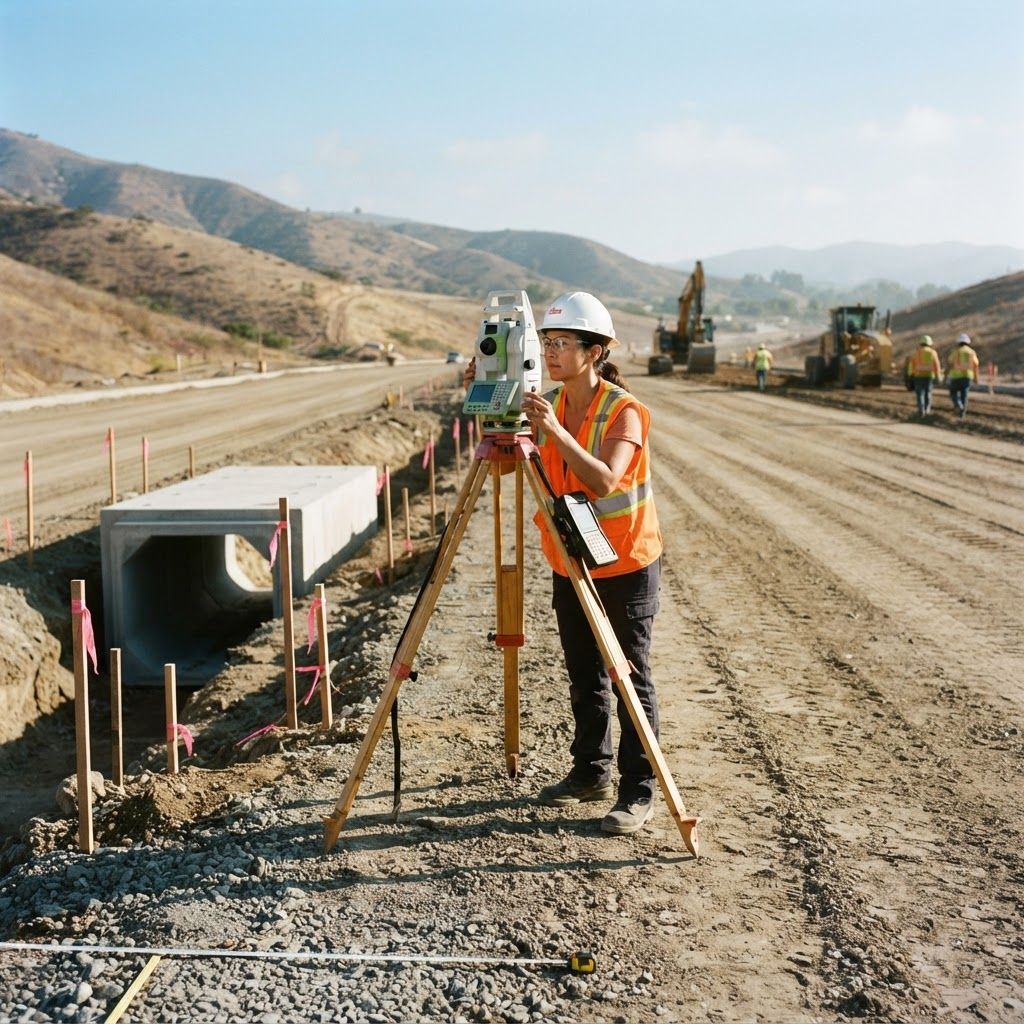
Accurate boundary determination, topographic survey, legal descriptions, parcel maps and construction staking all come from surveyors. Errors here propagate through every subsequent drawing, so precision and responsiveness matter enormously.
7. Traffic and transportation engineers
Projects that change trip generation require traffic analysis, and many Chula Vista approvals hinge on it. Transportation specialists prepare the studies and design access improvements, signal modifications and circulation plans that agencies will accept.
8. Environmental and permitting consultants
Sites near the Otay River valley, wetlands or sensitive habitat require environmental documentation and resource agency coordination. Consultants in this niche manage biological surveys, mitigation planning and the sequencing of state and federal permits.
9. Municipal and public works engineers
Firms experienced in public contracting understand agency standards, prevailing wage documentation and public bidding formats. They are the appropriate choice for street, sewer, water and drainage improvements delivered under public contracts.
10. Boutique consulting engineers for focused problems
Small specialized practices solve narrow problems exceptionally well, whether that is retaining wall design, drainage remediation on an existing property, forensic investigation of a failure or peer review of another engineer's work. Their value is depth rather than breadth.
Practical Advice Before You Sign
Engage civil engineering before you finalize a purchase or a building design. A one week feasibility review of grading, drainage and utility conditions costs a fraction of what it costs to redesign after discovering that a site cannot drain without an easement. Ask for a fee proposal broken down by phase, with a clear list of exclusions, and ask specifically what triggers additional fees. Vague scopes generate disputes.
Insist on a single accountable point of contact and a defined schedule for each submittal milestone. Request that the firm identify the three largest risks on your site in writing before design begins. A firm that can articulate those risks clearly is demonstrating the judgment you are actually paying for.
Conclusion
The strongest civil engineering firms serving Chula Vista combine current local approval experience, genuine in-house discipline depth, verified licensure and insurance, and a real commitment to construction phase support. Match the firm type to your project rather than defaulting to the largest name, engage them earlier than feels necessary, and demand written clarity on scope and risk. That approach converts civil engineering from a permitting obstacle into the foundation of a predictable project.