
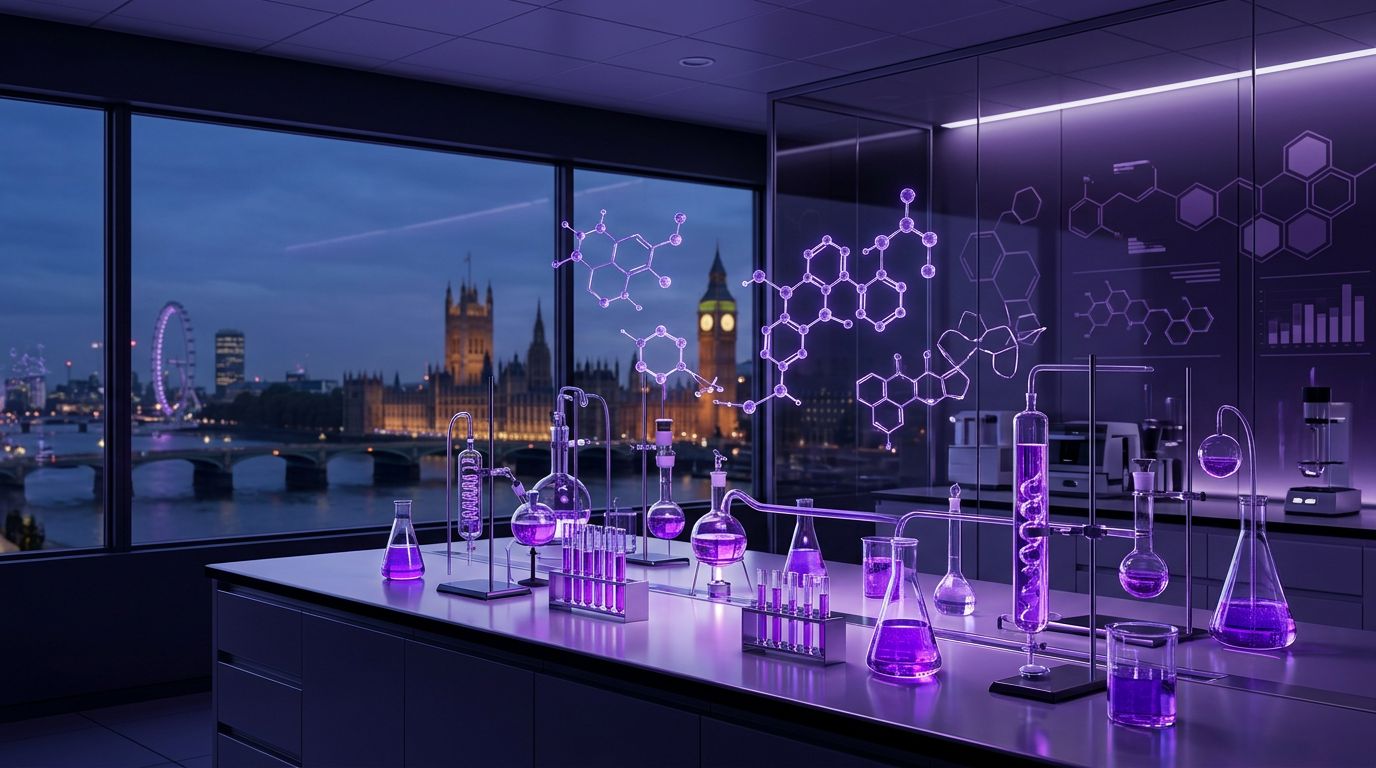
The Chemical Industry and Westminster
The chemical industry underpins almost every sector of the economy, supplying ingredients for medicines, cosmetics, food, paints, plastics, batteries and clean energy technologies. Although production sites are located across the UK and overseas, many chemical companies maintain headquarters or key offices in central London, where they can engage with investors, customers and government.
Westminster is particularly important because regulation of chemicals, environmental standards and industrial policy are all shaped by government departments and agencies nearby. Trade associations and scientific institutions in the area bring the industry together to address challenges such as decarbonisation, chemical safety and supply chain resilience.
Our Selection Criteria
We considered scientific innovation, sustainability performance, global reach, reputation and each company's connection to London and Westminster. The list includes speciality chemical companies, materials innovators and global consumer goods manufacturers with strong chemistry capabilities. We also looked at how each company is investing in safer chemistry, renewable feedstocks and circular processes, because these priorities increasingly determine which suppliers are chosen by brands and manufacturers.
The Top 10 Chemical Companies Connected to Westminster
1. Croda International
Croda is a British speciality chemicals company that creates ingredients for beauty, pharmaceutical, agricultural and industrial applications. It is known for its focus on sustainable, bio-based ingredients and has played a role in supplying lipid technology used in modern vaccines and medicines.
2. Johnson Matthey
Johnson Matthey is a global leader in sustainable technologies, including catalysts, platinum group metal services and hydrogen technologies. Its expertise supports cleaner air, low-carbon fuels and chemical processes that are central to the energy transition.
3. INEOS
INEOS, with its headquarters in London, is one of the world's largest chemical producers. It manufactures petrochemicals, speciality chemicals and oil products across numerous sites and has expanded into sectors such as automotive and sport.
4. Elementis
Elementis is a speciality chemicals company producing rheology modifiers and additives used in coatings, personal care and industrial products. Its ingredients help improve the texture, stability and performance of many everyday items.
5. Synthomer
Synthomer is a speciality polymers company supplying materials for coatings, construction, adhesives and health products. It focuses on innovative, high-performance polymers that help customers meet sustainability and regulatory goals.
6. Victrex
Victrex manufactures high-performance PEEK polymers used in aerospace, automotive, electronics and medical devices. Its materials are valued for strength, heat resistance and light weight, helping reduce emissions in transport applications.
7. Unilever
Unilever, with its global headquarters in London, is one of the world's largest consumer goods companies. Its extensive research in chemistry and materials science drives innovation in home care, beauty and personal care products sold worldwide.
8. Reckitt
Reckitt produces health, hygiene and nutrition brands relied upon by millions of households. Its scientific expertise in formulation and microbiology supports products that help protect public health.
9. BASF
BASF is the world's largest chemical producer and has a significant UK presence supplying agriculture, construction, automotive and consumer sectors. Its innovation in battery materials and sustainable chemistry is shaping future industries.
10. AkzoNobel
AkzoNobel is a leading paints and coatings company whose UK brands are found in homes and commercial buildings throughout Westminster. Its decorative paints and protective coatings are widely used in the restoration and upkeep of the borough's historic properties.
Trends in the Chemical Industry
Sustainability is transforming chemical manufacturing. Companies are replacing fossil-based feedstocks with renewable and recycled materials, reducing energy use and developing products that help customers decarbonise. Green hydrogen, carbon capture and battery materials are key growth areas. Regulatory scrutiny of chemical safety continues to increase, and digital technologies such as artificial intelligence are speeding up the discovery of new molecules and formulations.
The Industry's Impact on Westminster
Chemical innovation touches daily life in Westminster in countless ways, from the paints and materials used in heritage restoration to the cosmetics sold in Bond Street boutiques, the cleaning products used in offices and hotels, and the catalysts that help reduce vehicle emissions on busy roads. The industry also supports high-skilled jobs in research, regulatory affairs, finance and law, many of which are based in central London.
Working with Chemical Suppliers
Businesses sourcing chemicals or chemical-based ingredients should look beyond price. Regulatory compliance, safety data, traceability and the supplier's environmental performance all matter, particularly for brands that make sustainability claims to customers. Strong technical support can also help reformulate products to remove substances of concern or improve performance. The most valuable suppliers act as long-term innovation partners rather than simple vendors.
Looking Ahead
Collaboration between industry, universities and government will be essential to scaling up new technologies, from bio-based ingredients to low-carbon hydrogen. Many of those partnerships are negotiated and funded through institutions based in and around Westminster, which keeps the borough at the centre of the conversation. The chemical companies listed here are leading the shift towards safer, cleaner and more sustainable products. Their connection to Westminster ensures that the industry remains closely engaged with policy, investment and the needs of a changing society.