
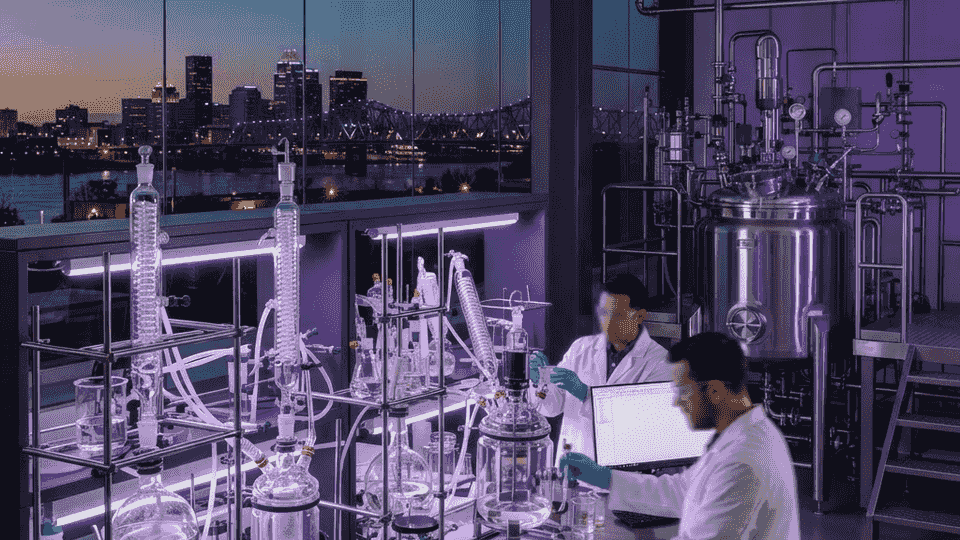
Louisville's Legacy in the Chemical Industry
Louisville has a long and influential history in chemical manufacturing, anchored by a concentration of facilities along the Ohio River that gave rise to a district known regionally for its chemical production. Access to water, transportation, and energy made the area attractive to producers of specialty chemicals, polymers, and industrial compounds. Over decades, this cluster has matured into a sophisticated ecosystem of manufacturers, suppliers, and technical talent.
Today the city's chemical companies serve markets ranging from coatings and adhesives to plastics, agriculture, and advanced materials. Their products often become essential ingredients in goods manufactured across the country, giving Louisville an outsized role in national supply chains despite its mid-sized profile.
Diverse Product Portfolios and Applications
The leading chemical companies in Louisville are notable for the breadth of their offerings. Some specialize in high-performance polymers used in automotive and electronics applications, while others focus on specialty additives, solvents, or intermediates that feed downstream manufacturing. This diversity strengthens the local economy and insulates the region from downturns in any single sector.
Application expertise is a common thread among top firms. Rather than simply supplying raw compounds, they work closely with customers to tailor formulations, improve product performance, and solve technical problems. This consultative approach transforms chemical suppliers into genuine innovation partners.
Safety and Environmental Responsibility
In the chemical sector, safety is paramount, and Louisville's best companies treat it as a foundational value rather than a compliance checkbox. Robust process safety management, continuous monitoring, emergency preparedness, and employee training are hallmarks of well-run operations. These practices protect workers, surrounding communities, and the environment.
Environmental stewardship has also become a defining priority. Forward-looking chemical producers invest in emissions reduction, water treatment, waste minimization, and greener production methods. Companies that embrace sustainability not only reduce their footprint but also position themselves favorably with customers who increasingly demand responsible sourcing.
Innovation and Research Capabilities
Innovation keeps Louisville's chemical companies competitive on a global stage. Many maintain dedicated research and development laboratories where chemists and engineers develop new formulations, refine production processes, and test materials for demanding applications. This commitment to R&D allows regional firms to move beyond commodity products into higher-value specialty markets.
Collaboration with universities and technical institutions further strengthens the local innovation pipeline. By partnering on research and workforce development, chemical companies help ensure a steady flow of skilled talent and fresh ideas that sustain long-term growth.
Reliability and Supply Chain Strength
Reliability is a decisive factor for buyers of chemical products, and Louisville manufacturers have built reputations for dependable supply. Strong logistics infrastructure, disciplined inventory management, and consistent product quality allow them to meet demanding delivery schedules. During periods of supply chain disruption, this reliability becomes an especially valuable differentiator.
Quality assurance underpins this dependability. Rigorous testing, batch traceability, and adherence to specifications give customers confidence that each shipment will perform as expected, reducing the risk of costly production issues downstream.
Selecting a Chemical Partner in Louisville
Choosing a chemical company requires evaluating technical capability, safety record, environmental practices, and supply reliability together. Buyers should seek partners with transparent quality systems, responsive technical support, and a demonstrated commitment to responsible operations.
The top chemical companies in Louisville have earned their standing through decades of expertise, disciplined safety culture, and continuous innovation. For businesses that depend on high-quality chemical inputs delivered reliably and responsibly, the region offers exceptional manufacturing partners.
How to Evaluate Louisville Providers
A thoughtful evaluation should begin with a clear definition of requirements. Buyers benefit from documenting expected volumes, technical specifications, delivery schedules, quality expectations, and any regulatory obligations before requesting proposals. Sharing complete information allows prospective providers to recommend appropriate solutions and produce more accurate pricing. It also makes competing offers easier to compare on equal terms rather than relying on headline costs that may exclude important services.
Local experience can be a meaningful advantage in Louisville. Providers familiar with the city's industrial corridors, seasonal weather, transportation patterns, and regional workforce often anticipate practical challenges before they interrupt a project. A nearby partner may also offer faster site visits, easier collaboration, and more responsive problem solving. Still, location should complement rather than replace evidence of technical competence, financial stability, and consistent performance.
Prospective customers should ask how each business measures quality, handles exceptions, and communicates when circumstances change. Useful indicators include documented procedures, employee training, preventive maintenance, traceability, and clearly assigned account responsibility. References from customers with similar needs can provide valuable context about accuracy, responsiveness, and performance over time. An onsite visit, when practical, reveals even more about organization, safety culture, equipment condition, and staff expertise.
Industry Trends Shaping Future Decisions
Digital tools are changing how Louisville businesses plan production, manage inventory, and communicate with customers. Real-time tracking, automated inspection, predictive maintenance, and data-informed forecasting are becoming more accessible even to midsized companies. Providers that invest thoughtfully in these capabilities can improve accuracy and visibility without losing the personal service that distinguishes strong regional businesses.
Workforce development is equally important. Skilled employees remain the foundation of dependable operations, so leading companies support apprenticeships, cross-training, safety education, and career advancement. Sustainability is also influencing purchasing decisions through waste reduction, efficient transportation, responsible sourcing, and lower-energy processes. The strongest providers approach technology, people, and environmental performance as connected priorities rather than isolated initiatives.
Before making a final selection, buyers should compare total value across the expected life of the relationship. Dependable delivery, responsive support, lower defect rates, and practical expertise can outweigh a modest difference in initial price. A well-chosen Louisville provider becomes more than a vendor: it becomes a stable partner that helps manage risk, improve planning, and support long-term growth.