
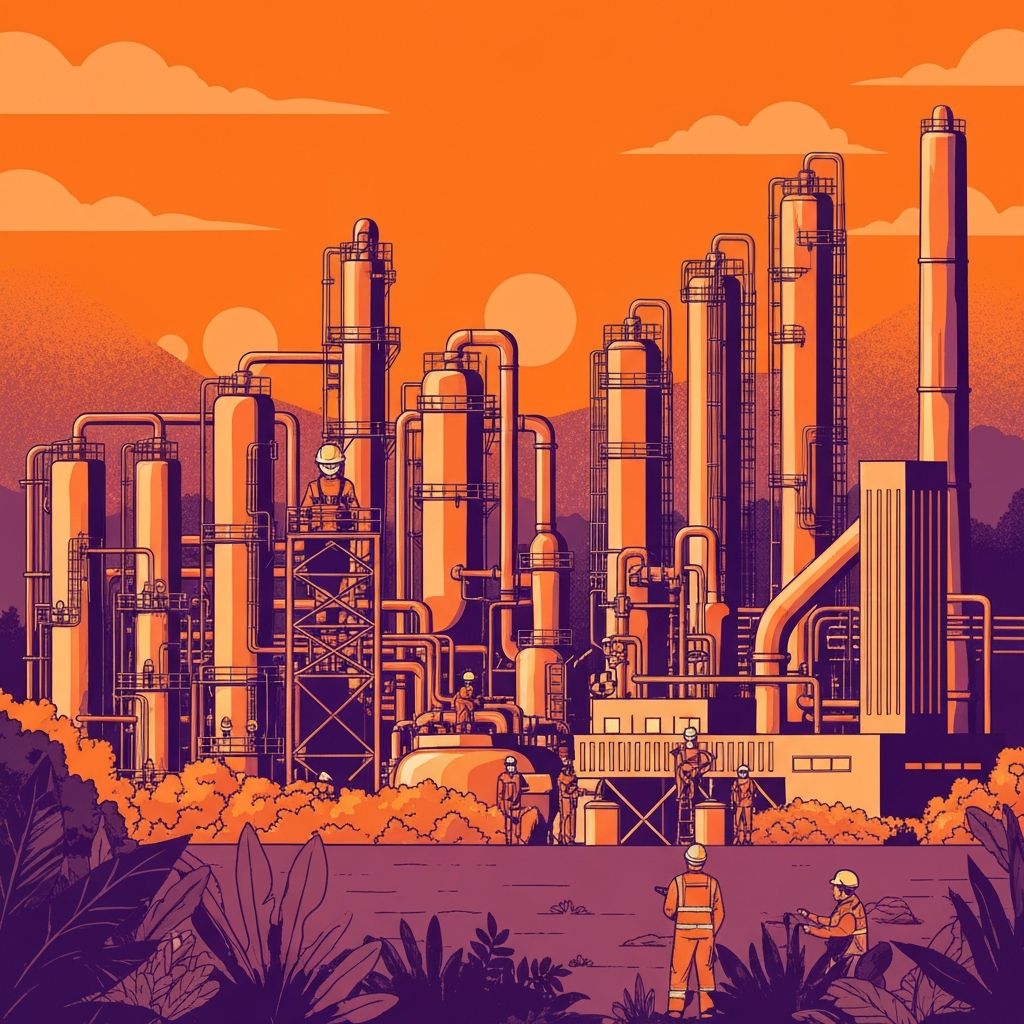
Brazil's Chemical Industry at a Glance
The chemical industry is one of the largest manufacturing sectors in Brazil, supplying inputs to virtually every other industry, from agriculture and automotive to construction, packaging, pharmaceuticals, and personal care. The sector is concentrated in industrial hubs such as Camaçari in Bahia, the ABC region in São Paulo, and the Triunfo complex in Rio Grande do Sul, where integrated petrochemical operations support a wide network of downstream producers.
The ten companies below stand out for their scale, technological capability, and strategic role in Brazilian and global value chains, ranging from petrochemicals and fertilizers to specialty chemicals and personal care ingredients.
1. Braskem
Braskem is the largest petrochemical company in Latin America and a global leader in biopolymers. Its production of resins such as polyethylene, polypropylene, and PVC supplies industries around the world, while its sugarcane-based bio-PE has positioned Brazil as a pioneer in renewable plastics.
2. Unigel
Unigel is a major producer of styrenics, acrylics, and nitrogen-based fertilizers in Brazil. Its operations integrate petrochemicals with agribusiness inputs, contributing to the country's food production capacity while serving global markets for engineering plastics.
3. Oxiteno (Indorama Ventures)
Oxiteno, now part of Indorama Ventures, specializes in surfactants and specialty chemicals used in personal care, agrochemicals, coatings, and cleaning products. Its R&D centers in Brazil are recognized for innovation in sustainable formulations.
4. BASF Brasil
BASF operates a wide range of chemical and specialty businesses in Brazil, including agrochemicals, coatings, performance materials, and nutrition ingredients. Its Camaçari complex is one of the company's most significant production sites in the Americas.
5. Solvay Brasil
Solvay produces specialty polymers, silica, soda ash, and other advanced materials in Brazil. Its products support industries such as automotive, electronics, mining, and consumer goods, and the company emphasizes sustainability across its operations.
6. Yara Brasil
Yara is a leading producer and distributor of fertilizers and crop nutrition solutions in Brazil. Through its plants and extensive logistics network, it plays a strategic role in supporting the productivity of one of the world's most important agricultural economies.
7. Mosaic Fertilizantes
Mosaic Fertilizantes is another major player in the Brazilian fertilizer market, with mining and industrial operations that produce phosphate and potassium-based products. Its scale and integration give it a critical role in Brazilian agribusiness.
8. Elekeiroz
Elekeiroz is a Brazilian producer of organic and inorganic chemicals, including plasticizers, anhydrides, and sulfuric acid. Its products serve industries such as paints, adhesives, plastics, and detergents, and the company has a long industrial tradition in São Paulo.
9. Dow Brasil
Dow operates significant manufacturing and innovation centers in Brazil, producing materials for packaging, construction, infrastructure, and consumer goods. Its work on sustainable packaging and circular economy initiatives is shaping industry standards.
10. Natura &Co Manufacturing
Natura, while primarily known as a cosmetics brand, operates one of the most advanced chemical and personal care manufacturing complexes in the country, located in Cajamar. Its commitment to sustainability, biodiversity, and innovation has influenced chemical formulations across the industry.
Sustainability and the Future of Chemicals in Brazil
The Brazilian chemical industry is undergoing a deep transformation driven by sustainability, circular economy principles, and digitalization. Companies are investing in bio-based feedstocks, recycling technologies, energy efficiency, and lower-emission processes. At the same time, the country's vast agricultural and natural resource base offers unique opportunities for renewable chemicals and bioeconomy products. The ten companies above are central to this evolution, combining industrial scale with the innovation needed to meet the demands of a more sustainable, technology-driven future.