
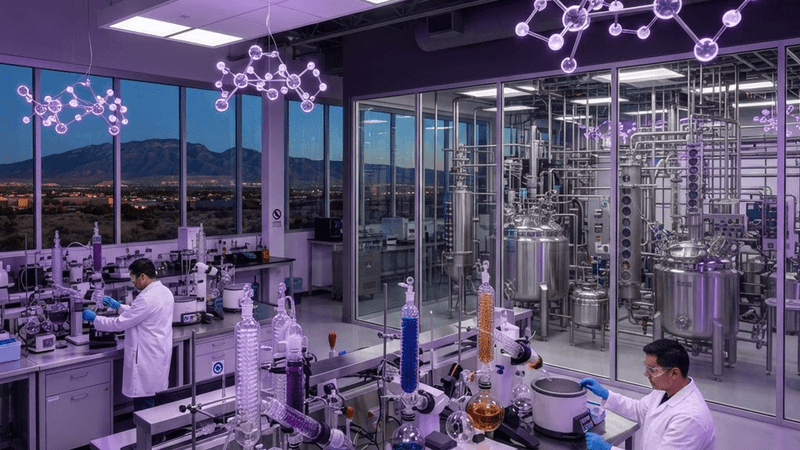
Chemistry at the Heart of Albuquerque Industry
The chemical industry rarely makes headlines, yet it underpins nearly every product we use. In Albuquerque, a cluster of chemical and materials companies quietly supports sectors ranging from clean energy and aerospace to healthcare and manufacturing. These firms produce specialty chemicals, advanced materials, catalysts, and formulations that enable innovation across the economy.
Albuquerque's strong scientific community, bolstered by national laboratories and research universities, has fostered a chemical sector rooted in advanced technology. Rather than competing on commodity chemicals, local firms often specialize in high-value, technically demanding products that require deep expertise and rigorous quality control.
Specialty Focus and Scientific Depth
The chemical companies in Albuquerque tend to occupy specialized niches. Some develop advanced catalysts and materials for fuel cells and hydrogen energy, contributing to the clean energy transition. Others formulate coatings, adhesives, and specialty compounds for industrial and aerospace applications. A number of firms focus on materials science, producing powders, composites, and nanomaterials for cutting-edge uses.
This emphasis on specialty chemistry reflects the region's research-driven culture. Many companies were founded to commercialize technologies developed in local laboratories, and they continue to collaborate with scientific institutions to push the boundaries of what is possible. The result is a chemical sector known for innovation rather than sheer volume.
Ten Companies Making an Impact
Pajarito Powder is a notable example, developing advanced catalyst materials that support hydrogen fuel cells and clean energy technologies. Companies like this illustrate how Albuquerque's chemical sector aligns with emerging global priorities such as decarbonization.
Other respected firms produce specialty coatings, industrial chemicals, and formulated products for demanding applications. Some focus on environmental and water treatment solutions, while others serve the healthcare and life sciences markets with high-purity materials. Together, these companies demonstrate the breadth and sophistication of Albuquerque's chemical industry.
The leading chemical companies share a commitment to safety, quality, and environmental responsibility. Handling chemicals requires meticulous processes and regulatory compliance, and top firms invest heavily in safe operations, proper handling, and sustainable practices to protect workers, communities, and the environment.
Trends in the Chemical Sector
Sustainability is a defining trend in the chemical industry, and Albuquerque firms are embracing greener chemistry, cleaner production methods, and materials that support renewable energy. The push toward hydrogen and clean fuels in particular has created significant opportunities for local specialty chemical producers.
Advanced materials and nanotechnology continue to open new markets, from energy storage to medical devices. As industries demand higher performance from the materials they use, Albuquerque's science-focused chemical companies are well positioned to deliver innovative solutions that meet these evolving needs.
Partnering with Chemical Specialists
Selecting a chemical company partner requires careful attention to technical capabilities, quality systems, regulatory compliance, and safety records. For specialty applications, the depth of a firm's scientific expertise and its ability to customize formulations can be especially important.
Albuquerque's chemical companies offer a rare blend of scientific sophistication and practical manufacturing capability. For businesses seeking specialty materials, advanced formulations, or partners in clean energy innovation, the city's chemical sector provides valuable and forward-looking options.
A Practical Evaluation Checklist
Before committing to any Albuquerque supplier, create a short list of measurable requirements rather than relying on reputation alone. Ask how the company controls incoming materials, documents production steps, inspects finished work, and handles a nonconforming order. Request representative lead times for prototypes, routine orders, and urgent replacements. Buyers should also clarify minimum order quantities, tooling responsibilities, change-order policies, freight arrangements, and warranty terms. A capable partner will answer these questions clearly and explain where its process is strongest. References from customers with comparable specifications can provide useful context, while a facility visit can reveal organization, equipment condition, safety practices, and the level of attention given to quality.
Location is another practical advantage. Working with a company in the Albuquerque metro can simplify design reviews, sample approvals, and problem solving. Local sourcing may shorten transportation routes, reduce schedule uncertainty, and make smaller replenishment orders more realistic. It also keeps more purchasing activity within New Mexico's economy, supporting skilled jobs and strengthening the network of service providers around manufacturing. Price still matters, but the lowest initial quote may not represent the lowest total cost when delays, rework, inventory, and communication are considered.
Why Albuquerque Remains Competitive
Albuquerque combines research talent, industrial experience, interstate access, and comparatively manageable operating costs. Its position along major regional transportation routes helps companies serve customers across the Mountain West and Southwest. The area's engineering culture encourages practical innovation, while its mix of established businesses and specialist shops gives buyers options for both repeat production and unusual assignments. Workforce development, automation, and closer collaboration between industry and education will be important to future growth. Companies that invest in training, efficient equipment, and transparent quality systems are likely to remain the most dependable choices.
Readers should treat any top-ten guide as a starting point rather than a substitute for due diligence. Capabilities, staffing, certifications, and production schedules can change, and the best company for one project may not be ideal for another. Compare several qualified businesses, provide the same specification to each, and assess the complete proposal. That disciplined approach makes it easier to select an Albuquerque partner that offers the right balance of quality, service, capacity, and long-term value.