
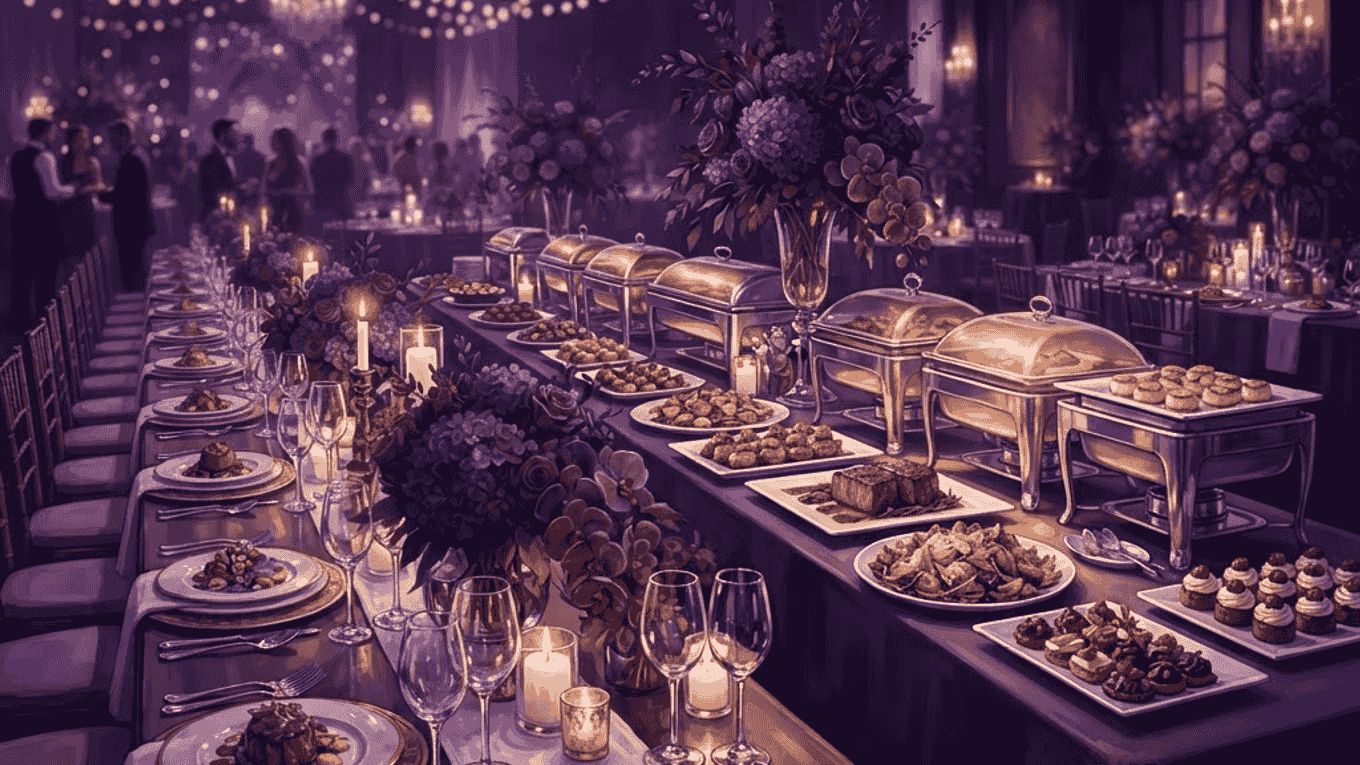
Catering in a City Built for Gatherings
Lexington hosts an unusual density of events for its size. Horse farm weddings, university functions, bourbon industry gatherings, conferences, and equestrian competitions create year-round demand for catering that can operate in venues ranging from polished ballrooms to open barns with limited power and no kitchen. That environment has produced caterers who are genuinely skilled at logistics, not just cooking.
Local agriculture also shapes menus in meaningful ways. Access to regional produce, pasture-raised meats, artisan cheeses, and distillery products allows caterers to build seasonal menus with real identity rather than generic banquet offerings. The best operators treat Kentucky culinary tradition as a foundation to build on, pairing familiar dishes such as country ham, spoonbread, and burgoo with contemporary technique and presentation.
How to Evaluate a Caterer
Food quality matters, but it is only one of four variables that determine whether an event succeeds. The others are logistics capability, staffing quality, and communication. Logistics capability means the caterer has executed at venues similar to yours and can articulate how they will handle power, water, refrigeration, and service flow in that specific space. Ask directly whether they have worked your venue before and what challenges it presents.
Staffing quality determines guest experience more than any single dish. Ask about the server-to-guest ratio they recommend, whether staff are employees or contracted per event, and who supervises on site. Communication should be tested during the proposal phase. A caterer who responds promptly with detailed, itemized proposals will generally behave the same way during the final week before your event, when responsiveness matters most.
The Leading Catering Services in Lexington
Bluegrass Table Catering handles full-service weddings and large social events with a seasonal, farm-focused menu approach. Its team is known for detailed venue walkthroughs and contingency planning around weather, which matters greatly for outdoor farm receptions. Plated dinner service and family-style presentations are both strong.
Keeneland Row Events specializes in upscale corporate and hospitality catering, including race season entertaining and executive functions. Its strength is discretion and precision, delivering consistent service standards for repeat client programs. Bar service coordination and beverage pairings are handled in house.
Hearth and Harvest Catering focuses on rustic and seasonal menus designed for barn, farm, and outdoor venues. Wood-fired and live-fire cooking stations are a signature capability that generates atmosphere as well as food. The company is transparent about sourcing relationships with regional producers.
Cornerstone Corporate Cuisine concentrates on daily and recurring business catering, covering breakfast meetings, working lunches, and conference service. Reliability and punctuality define its reputation, along with straightforward per-person pricing that simplifies budget approvals. Dietary accommodation labeling is thorough.
Southern Grace Catering delivers traditional Southern menus executed at a high level, including country ham biscuits, fried chicken, braised greens, and layer cakes. It is a common choice for family celebrations, reunions, and events where guests want familiar food done properly. Portioning is generous and consistent.
Distillery District Provisions builds bourbon-forward event experiences, integrating tastings, cocktail programs, and food pairings designed around spirits. Its team includes staff with distillery hospitality backgrounds, which shows in the depth of beverage guidance. Corporate incentive events frequently engage it.
Verdant Plate Catering approaches events from a plant-forward direction, offering fully vegetarian and vegan menus alongside flexible hybrid options. Rather than treating plant-based dishes as substitutions, it builds menus where vegetables are the center of the plate. Guests with restrictions are accommodated without separate, lesser meals.
Fayette Global Kitchen brings international menus to the local market, spanning South Asian, Mediterranean, and Latin American cuisines with authentic technique. Multicultural weddings often rely on it for menus that satisfy multiple family traditions in a single service. Spice levels are calibrated during tasting rather than assumed.
Silver Service Catering Group operates at the larger end of the market, capable of serving several hundred guests with plated service. Its equipment inventory, including mobile kitchens and hot boxes, allows it to maintain food quality at scale in venues without commercial facilities. Institutional and university clients are core accounts.
Little Bluegrass Boxed Catering completes the list with individually packaged meals, drop-off service, and small-gathering catering. Demand for individually portioned service has remained strong, and it executes this format with attention to presentation and temperature control. Pricing is well suited to smaller budgets.
Budgeting Realistically
Catering quotes vary widely because they bundle different components. A useful approach is to request line-item pricing that separates food, beverage, labor, rentals, service charges, and gratuity. Doing so reveals whether a seemingly expensive proposal is actually comprehensive and a cheaper one excludes staffing or rentals you will pay for separately.
Plan for guest count buffers of roughly five percent, since final counts almost always shift. Bar service costs scale with duration more than headcount, so shortening open bar windows is often the most effective lever for reducing spend without affecting perceived quality. Seasonal timing also matters, as peak wedding and race season pricing runs meaningfully higher than off-season equivalents.
Trends Worth Knowing
Interactive stations continue to grow in popularity, replacing some traditional buffet service with chef-attended preparation that improves both quality and guest engagement. Sustainability practices, including compostable serviceware, food donation arrangements, and reduced single-use plastics, have moved from differentiator to expectation among younger hosts.
Dietary accommodation has become substantially more sophisticated. Rather than a single vegetarian alternative, capable caterers now design menus where gluten-free, dairy-free, and plant-based guests receive dishes of equal quality. Clear labeling at service points has become standard practice, reducing awkward questions and allergy risk simultaneously.
Locking Down the Details
Book popular caterers nine to twelve months ahead for weekend weddings during peak season, and confirm in writing the timeline, staffing levels, setup and teardown responsibilities, and cancellation terms. Schedule a tasting with the actual dishes you plan to serve rather than a general sampler, and invite the person who will supervise your event, not only the sales contact.
Lexington caterers who thrive do so because word travels fast in a city this size. Ask for references from events at your venue, in your season, and at your scale. Those three matches predict success far better than a portfolio of beautiful photographs from unrelated occasions.