
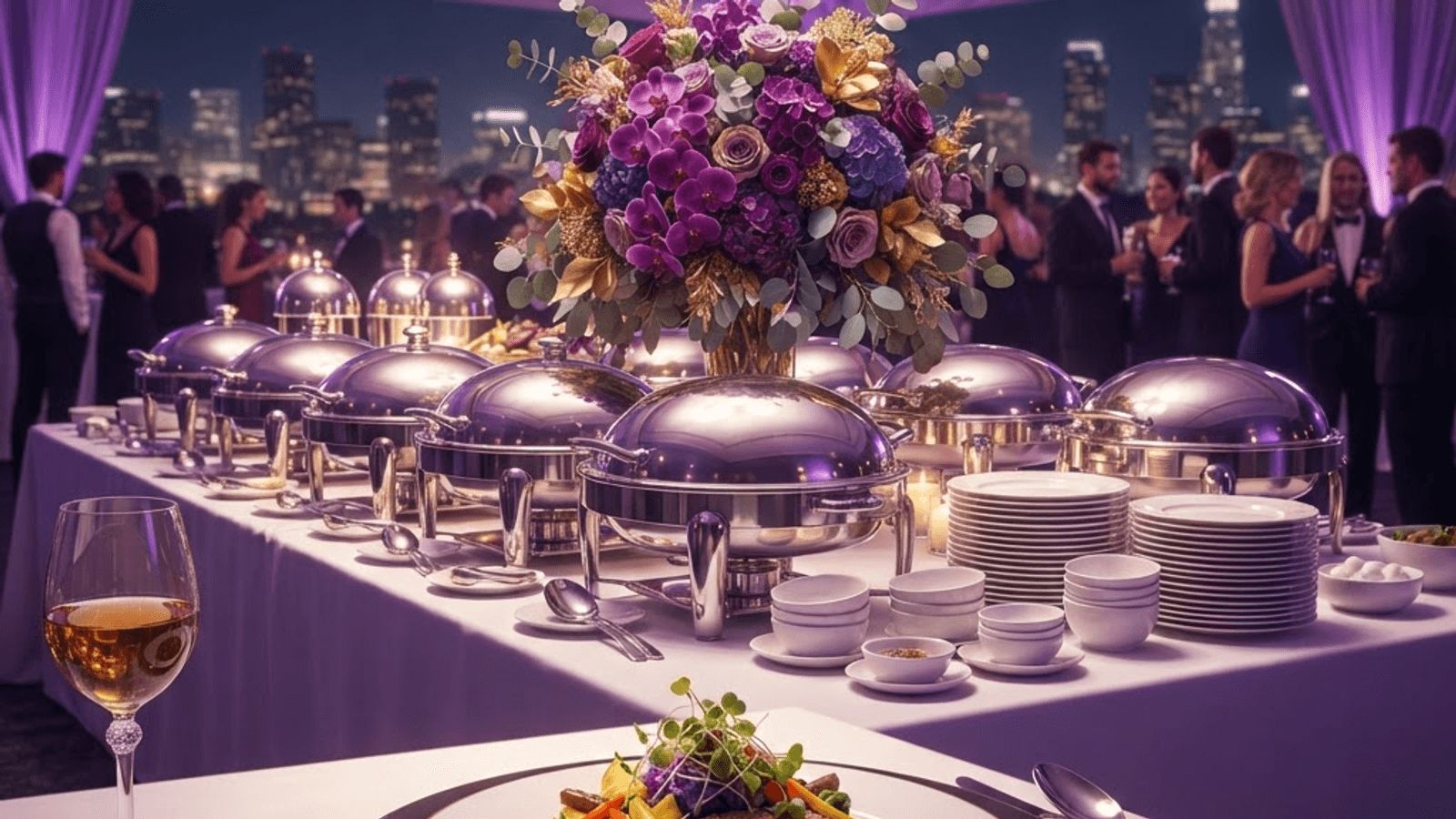
Understanding Fayetteville's Catering Landscape
Few cities put catering to the test quite like Fayetteville. Military promotion ceremonies, retirements, and unit functions demand punctual service for large headcounts. Wedding season fills spring and autumn weekends. Corporate clients need reliable weekday lunch delivery. Church and community events require volume at modest cost. A caterer who thrives here has to manage logistics as skillfully as flavor.
That pressure has produced a market with clear specialization. Some operations are built for barbecue at scale. Others focus on plated service with formal staffing. A third group concentrates on corporate drop-off. Choosing well begins with recognizing which category your event actually falls into.
What Distinguishes Reliable Caterers
Food quality is the baseline expectation, not the differentiator. The caterers people recommend repeatedly excel at the surrounding details: accurate headcount guidance, realistic timelines, proper hot and cold holding, adequate staffing ratios, clean breakdown, and transparent contracts. They also handle dietary restrictions without treating them as an inconvenience, which matters increasingly as gluten-free, vegetarian, and allergen-aware requests become standard.
Licensing and food safety credentials deserve verification. A commercial kitchen, current health inspection, liability insurance, and trained staff are non-negotiable for events of any size. Venues frequently require documentation before allowing a caterer on site.
The Ten Leading Catering Companies
1. Cape Fear Catering Company. The most established full-service operation in the region. They handle plated dinners, elaborate buffets, and multi-station receptions with professional front-of-house staffing. Their event coordinators manage rentals, timelines, and venue logistics, which makes them a common choice for weddings above one hundred fifty guests.
2. Smokehouse on Bragg. Eastern North Carolina barbecue done at genuine scale. Whole hog, vinegar-based sauce, hushpuppies, slaw, and collards form the core menu. They are the default choice for large casual gatherings, fundraisers, and unit functions where hearty regional food matters more than formality.
3. All American Event Catering. Built specifically around military ceremonies and government functions. They understand base access procedures, strict start times, and protocol requirements. Reliability under rigid scheduling is their central reputation.
4. Sweet Grass Southern Kitchen. Elevated Southern cuisine with a seasonal orientation. Shrimp and grits stations, bourbon-glazed pork, buttermilk fried chicken, and vegetable sides sourced from regional farms. Popular for rehearsal dinners and milestone celebrations where guests expect familiar food executed carefully.
5. Hay Street Corporate Catering. A weekday-focused drop-off specialist. Boxed lunches, breakfast spreads, and meeting platters delivered on tight windows with accurate labeling. Their online ordering and standing recurring orders appeal to offices and training programs.
6. Sandhills Global Flavors. A multicultural caterer offering Mediterranean, Middle Eastern, Indian, and Latin American menus. Their strength is authentic spicing rather than generalized fusion, and they accommodate halal and vegetarian requirements comfortably.
7. Cross Creek Grill and Catering. An on-site cooking specialist. Grill stations, low-country boils, and fish fries prepared in front of guests. The interactive element works well for informal outdoor events and company picnics.
8. Magnolia Grace Weddings and Events. A boutique caterer that limits bookings to maintain quality. Custom tasting-driven menus, coordinated linens and place settings, and detailed service choreography. Best suited to smaller, design-focused weddings.
9. Fort Bragg Food Truck Collective. A coordinated group of mobile vendors bookable individually or as a cluster. Tacos, wood-fired pizza, Korean fusion, and dessert trucks. Increasingly popular for casual receptions and employee appreciation days.
10. Longleaf Plant Based Catering. Fully vegetarian and vegan catering that avoids imitation-heavy menus in favor of vegetable-forward cooking. They frequently serve as the accommodating provider for mixed-diet groups and health-oriented corporate clients.
Budgeting Realistically
Catering costs are driven by service style more than ingredient cost. Drop-off delivery is least expensive. Buffet service with attendants sits in the middle. Plated dinners with full staffing cost substantially more because labor scales with guest count. Understanding this hierarchy allows meaningful cost control without sacrificing food quality.
Watch for line items beyond food: staffing hours, rental equipment, linens, china versus disposable service, travel fees, gratuity, and overtime provisions. Ask for an itemized proposal so comparisons across providers are genuinely equivalent. A lower per-plate figure often hides charges that surface later.
Planning Timeline and Practical Details
For weddings, secure a caterer eight to twelve months ahead, particularly for spring and October dates. Corporate events typically need two to four weeks, though recurring orders can be arranged with less notice. Large community events benefit from at least a month.
Provide accurate guest counts and confirm the final number by the contractual deadline, since caterers purchase and staff against that figure. Discuss venue constraints early: kitchen access, electrical capacity, water availability, parking for loading, and outdoor shade or shelter. Fayetteville's summer heat and humidity are genuine operational factors, and experienced caterers will raise them proactively.
Questions Worth Asking
Ask how many events the caterer will run on your date and whether senior staff will be present at yours. Request references from comparable events, not just their most impressive ones. Clarify how leftovers are handled, what the cancellation terms are, and who is responsible for cleanup and trash removal. Confirm whether tastings are offered and whether they carry a fee that credits toward booking.
Final Thoughts
Fayetteville's catering market is deep enough that nearly any event style can be served well, from a vinegar barbecue plate for four hundred to an intimate plated dinner for thirty. The determining factor is fit. Match the provider's core specialty to your event's actual requirements, insist on a detailed written contract, and communicate constraints openly. Those three habits account for most of the difference between a smooth event and a stressful one.