
Carpentry Is Several Trades Under One Name
Homeowners often search for a carpenter without realizing the term covers distinctly different specialties. Rough carpentry involves structural framing, floor systems, walls, roof structures, and sheathing. Finish carpentry covers interior trim, doors, casing, baseboard, crown molding, stairs, and railings. Cabinetmaking and millwork is a shop-based craft producing built-ins, kitchen cabinetry, and architectural woodwork. Exterior carpentry addresses decks, porches, pergolas, siding substrate, and soffit and fascia. Restoration carpentry focuses on repairing and replicating historic elements.
A skilled rough framer may produce disappointing trim work, and a master finish carpenter may not want to touch a load-bearing wall. Matching the right specialty to your project is the single most effective way to get a satisfying result.
Why St. Paul Homes Need Carpentry Expertise
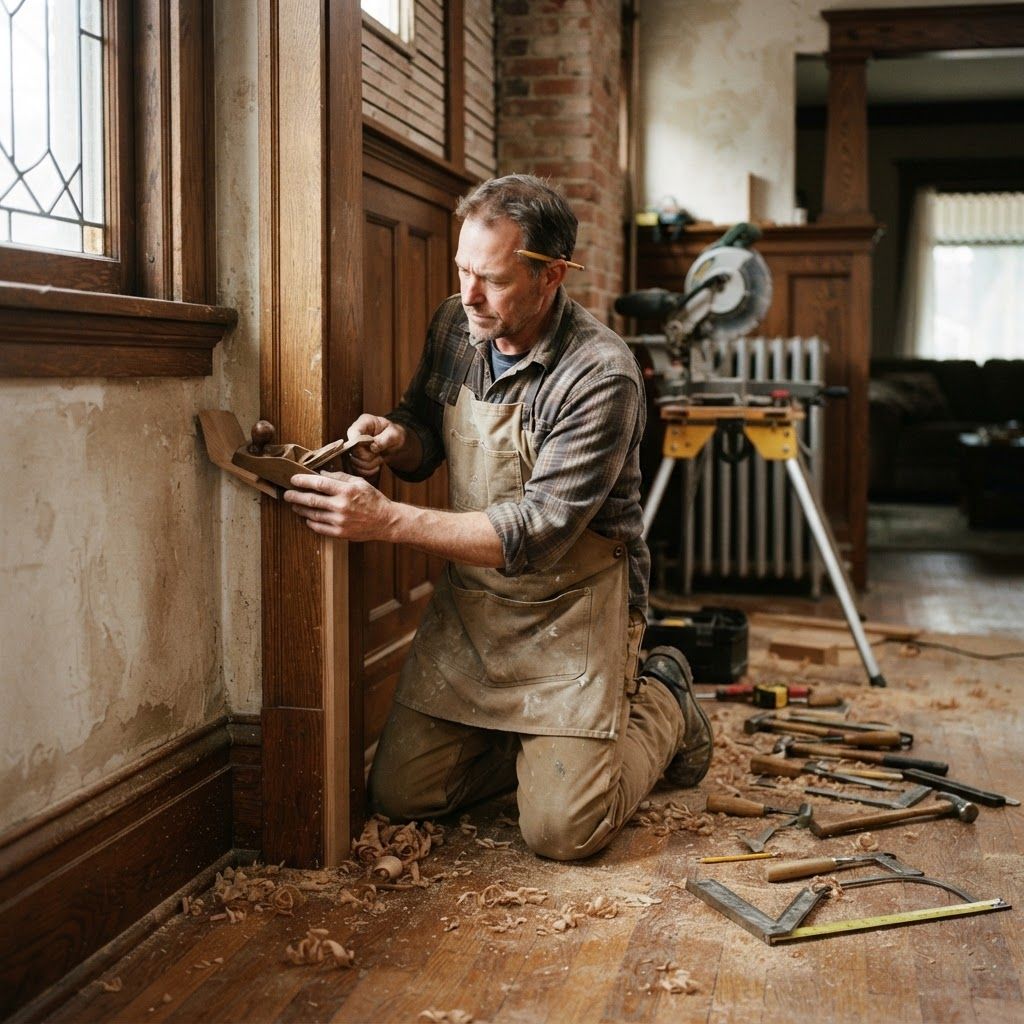
The city's older housing inventory features trim profiles, wood species, and joinery details that are no longer stocked at building supply retailers. Quarter-sawn oak casing, tall baseboards with distinct cap profiles, coffered ceilings, and built-in buffets are common in Victorian and craftsman homes throughout Summit Hill, Macalester-Groveland, and Como. Replacing damaged pieces with modern stock trim is visually obvious and reduces home value.
Craftsmen who can run custom profiles on a shaper or source reproduction moldings, match stain and finish on existing woodwork, and repair rather than replace original elements are genuinely valuable. Exterior carpentry faces different pressures, primarily moisture and freeze-thaw damage on porches, decks, and exposed trim, where proper flashing, drainage, and material selection determine longevity.
Ten Carpentry Services Serving St. Paul
Heritage Millwork and Trim replicates historic profiles and repairs original woodwork, including staircases and built-in furniture.
Summit Finish Carpentry specializes in interior trim packages, custom doors, wainscoting, and detailed casework installation.
Northern Frame Builders handles rough framing for additions, dormers, garages, and structural modifications with engineered beam installation.
Capital Custom Cabinetry operates a shop producing kitchen cabinetry, vanities, entertainment built-ins, and office millwork.
Riverfront Deck and Porch Works focuses on exterior structures with attention to ledger flashing, footing depth, and rot-resistant material choices.
Bungalow Woodcraft serves arts and crafts homes with period-appropriate detailing, box beams, and window seat construction.
Frostline Exterior Carpentry addresses siding substrate repair, soffit and fascia replacement, and storm-damaged exterior wood.
Union Park Stair and Rail concentrates on stairs, balustrades, and handrail systems including code-compliant retrofits in older homes.
Great River Timber Framing works in heavy timber and mass timber, producing exposed structural elements and pavilion structures.
Eastside Carpentry Collective completes the list as a general carpentry service handling repairs, small remodels, and punch list work.
Materials and Craft Considerations
Wood selection matters more than most homeowners expect. Interior trim in older homes is often oak, fir, maple, or pine depending on era and budget, and mixing species produces uneven stain absorption. Painted trim allows more flexibility, and medium density fiberboard offers stability and smooth finish at lower cost though it performs poorly with moisture.
Exterior applications require rot resistance. Cedar remains popular for its natural durability and appearance, while treated lumber serves structural components. Composite decking has captured significant market share for surfaces because it eliminates annual staining, though framing beneath it still needs proper treatment and ventilation.
Moisture content is an underappreciated detail. Wood installed at high moisture content shrinks in the dry winter heating season, opening joints and cracking paint. Quality carpenters acclimate material inside the conditioned space before installation.
Trends in Residential Woodwork
Warm wood tones have returned strongly after a long period of painted white dominance. Walnut, white oak, and rift-sawn finishes appear in cabinetry, feature walls, and floating shelves. Slat wall paneling and fluted millwork are widely requested for accent applications.
Built-in storage is increasing as homeowners maximize compact urban homes. Mudroom lockers, under-stair drawers, window bench seating, and floor-to-ceiling pantry cabinetry add function without expanding footprint. Home office built-ins with integrated cable management have become a standard request rather than a specialty item.
Hiring the Right Carpenter
Ask to see photographs of work in the specific category you need, and if possible view a completed project in person, because photographs flatter joinery. Discuss whether work is shop-built or built on site, since shop fabrication generally produces tighter tolerances and better finishes. Clarify who handles finishing, as some carpenters install raw and leave staining to a painter.
Confirm licensing and insurance for structural work, and understand that finish carpentry contracts should specify material grade, profile drawings or samples, and how existing conditions such as out-of-plumb walls will be handled. Older homes are rarely square, and accommodating that gracefully is a hallmark of skill.
Conclusion
Carpentry quality is what people actually touch and see in a home, which makes it worth investing in the right specialist. The ten St. Paul services above span framing, finish trim, cabinetry, restoration, exterior structures, and timber work. Identify your specific category, review comparable completed projects, and prioritize craftsmen who ask detailed questions before quoting.